President calls for resolving all outstanding issues with India

DHAKA – President Mirza Fakhrul Islam Alamgir today laid emphasis on quick resolving the outstanding issues between Bangladesh and India through discussions to further strengthen and sustain the existing relations between the two countries. “Mutual trust and confidence between the peoples of the two countries would increase further if matters of mutual interest were resolved through fair and mutually acceptable solutions,” he said.

He made the remarks when Indian High Commissioner to Bangladesh Dinesh Trivedi paid a courtesy call on the President at Bangabhaban here this morning. President’s Press Secretary Md Sarwar Alam said during a briefing after the meeting. The President urged India to take effective measures to ensure a fair share of the waters of common rivers, including the Ganges and the Teesta.

Indian High Commissioner to Bangladesh Dinesh Trivedi informed the President that his government was taking positive measures in this regard. The President said Bangladesh attaches special importance to its relations with India as its closest neighbour and an important trade and development partner. President Alamgir said Bangladesh is interested in building a respectful, forward-looking, mutually respectful and mutually beneficial partnership with India while upholding sovereign equality, national interests and dignity, and the welfare of the people.

During the meeting, the Indian High Commissioner congratulated Mirza Fakhrul Islam Alamgir on assuming office as President. Mentioning that India attaches great importance to its relations with Bangladesh, High Commissioner Trivedi reiterated his country’s commitment to further expanding cooperation between the two countries in various fields, including bilateral relations.

He said his country is keen to further consolidate, improve and strengthen relations between the two countries based on mutual respect, trust and cooperation. The President thanked the High Commissioner for his congratulations and requested him to convey his sincere gratitude and greetings to the President of India.

“There is immense scope for further expanding cooperation in various fields, including trade, water resources management, technology, connectivity, culture and people-to-people relations between the two countries,” the president said.

India and Bangladesh can work more closely to achieve common peace, development and prosperity by utilizing the capabilities and potential of the peoples of both countries, he added. The Indian High Commissioner expressed hope that the two countries would continue to work together and sought the President’s cooperation in discharging his responsibilities.

The President wished him a successful tenure and expressed hope that relations between the two countries would become more fruitful, positive and people-oriented in his tenure. Senior officials from the President’s Office, the Ministry of Foreign Affairs and the Indian High Commission were present during the meeting.

Russia Deepens Role in Myanmar’s Dawei Deep-Sea Port Project

Shibbir Ahmed, New York — Russia is deepening its involvement in Myanmar’s long-delayed Dawei deep-sea port and special economic zone project, as the two countries seek to revive the strategic development in the country’s southern Tanintharyi Region.

The Dawei project, which includes a deep-sea port, industrial zone and major energy facilities, has returned to the center of Myanmar-Russia economic cooperation after years of delays over financing and implementation.

During a meeting in Vladivostok on September 1, Myanmar Vice President U Nyo Saw and Russian Deputy Prime Minister Yury Trutnev discussed the Dawei project along with energy, trade and tourism cooperation. No new financing agreement, project value or construction timetable was announced following the meeting.

Russia’s interest in Dawei has become more concrete in recent months. In June, Myanmar’s Launglon Economic Development Company and Russia’s state-controlled Inter RAO signed a memorandum of understanding for a power plant linked to the Dawei deep-sea port project.

At a Russia-Myanmar business forum in Moscow in August, Russian Economic Development Minister Maxim Reshetnikov said Moscow was seeking majority stakes for Russian companies investing in projects within the Dawei special economic zone during the investment payback period. The planned development includes a deep-water port, a 660-megawatt power plant, an oil refinery and industrial and warehouse facilities.

Strategic location

Dawei is located on Myanmar’s Andaman Sea coast in Tanintharyi Region. Supporters of the project say its location could provide an alternative trade route between the Indian Ocean and Southeast Asia, potentially reducing dependence on the Strait of Malacca.

Myanmar officials have promoted the project as a potential gateway linking the Indian Ocean with Thailand and other parts of the region. The proposed transport connections could eventually link Dawei with Thailand’s eastern economic areas and the wider Southern Economic Corridor.

The project was originally developed with Thai participation but stalled after difficulties securing financing and implementing the required infrastructure. Myanmar’s official port authority records show that the earlier agreement with Italian-Thai Development was terminated after the developer failed to secure the required funding.

Military campaign around project area

The renewed push to revive Dawei has coincided with an intensified military campaign in areas surrounding the proposed development. Reuters reported in August that Myanmar’s military had deployed hundreds of troops to clear areas designated for the Russia-backed Dawei special economic zone. The operation involved fighting with local resistance groups and the displacement of civilians.

Human rights organization Fortify Rights separately reported allegations of killings, torture and forced displacement during military operations around the project area. The organization said the operations were taking place against the backdrop of accelerating Myanmar-Russia cooperation over Dawei.

Despite renewed political support from Moscow and Naypyidaw, major questions remain over financing, security and the feasibility of completing the multibillion-dollar project amid Myanmar’s continuing conflict.

If successfully revived, Dawei could become one of the most strategically significant infrastructure projects on Myanmar’s Andaman Sea coast, with potential implications for trade routes connecting Southeast Asia and the Indian Ocean.


UN Calls for Independent Oversight of Bangladesh Security Forces

Shibbir Ahmed, UN, New York: The United Nations has called for the establishment of a strong and independent national institution to oversee the activities of Bangladesh’s security and law enforcement agencies. UN High Commissioner for Human Rights Volker Türk made the remarks on Monday, September 7, during the 63rd session of the UN Human Rights Council in Geneva, while addressing global human rights issues and developments in Bangladesh.

Türk reiterated the UN’s call for effective and independent oversight of law enforcement agencies in Bangladesh. He stressed the importance of ensuring accountability and providing mechanisms for independent investigations into allegations of human rights violations involving security and law enforcement personnel.

Recommendations Following the July-August 2024 Events

The UN’s latest remarks follow its fact-finding report on the human rights situation surrounding the July-August 2024 protests in Bangladesh. The UN Human Rights Office published its fact-finding report on February 12, 2025, containing a series of recommendations concerning accountability, institutional reform, independent investigations and civilian oversight.

The recommendations also called for strengthening the independence and effectiveness of Bangladesh’s National Human Rights Commission, including ensuring that it has the necessary authority and capacity to investigate allegations of human rights violations involving security forces.

Oversight, Not Direct UN Control

The UN’s call does not mean that the United Nations is seeking to directly control or supervise Bangladesh’s security forces. Rather, the recommendation calls for Bangladesh to establish an independent and effective national oversight mechanism capable of monitoring security and law enforcement agencies and independently investigating allegations of human rights abuses. The latest statement by the UN human rights chief is part of the organization’s continuing call for stronger accountability, institutional reform and human rights protections in Bangladesh.


25 Years After 9/11: How America Will Remember the Attacks From New York to Washington

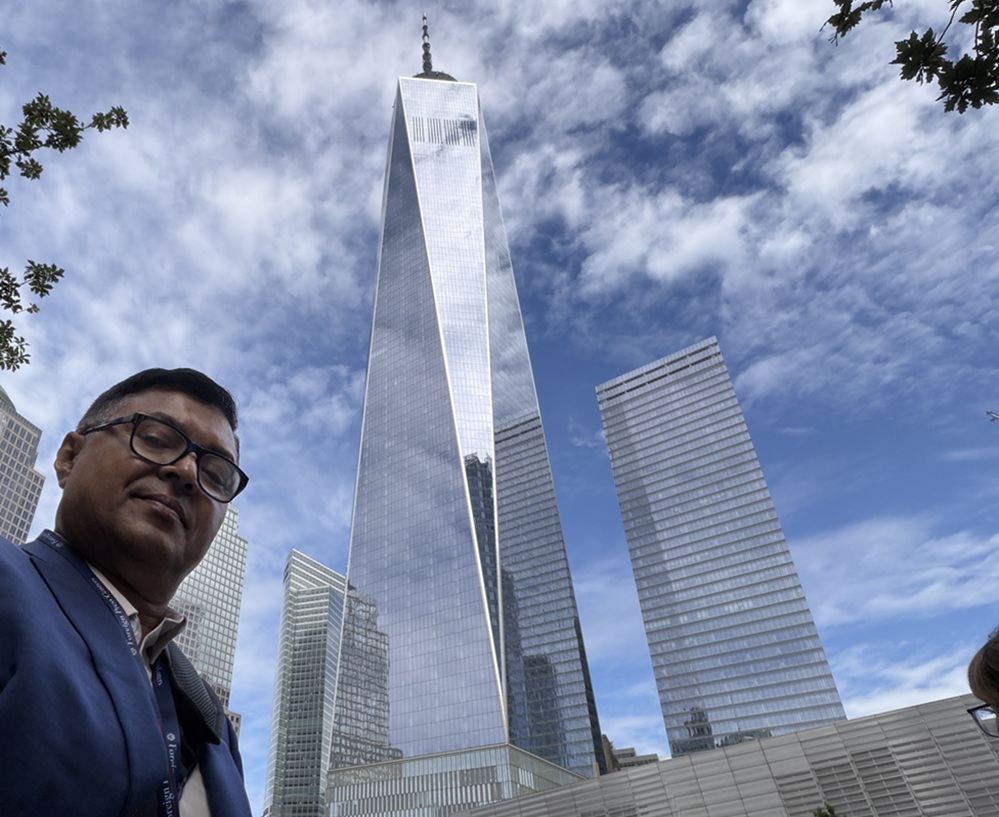
Shibbir Ahmed, New York: Twenty-five years have passed since the devastating terrorist attacks of September 11, 2001. A quarter-century later, the loss of nearly 3,000 lives, the sacrifice of thousands of first responders, and the attacks’ lasting health and social consequences remain deeply embedded in the American memory. This year, New York, Washington and Pennsylvania will mark the 25th anniversary of 9/11 with a series of commemorations and public events.

Main Commemoration in New York

The main 9/11 commemoration will take place Friday at the 9/11 Memorial Plaza in Lower Manhattan, with family members of the victims participating in the ceremony. The program will begin at 8:40 a.m. and is primarily a private gathering for victims’ families, although the ceremony will be streamed live online.

Family members will read the names of those killed in the 2001 attacks as well as victims of the 1993 World Trade Center bombing. Moments of silence will mark several key moments of the attacks, including the aircraft impacts, the collapse of the Twin Towers, the attack on the Pentagon and the crash of Flight 93.

A special moment of silence will also honor those who died in the years following the attacks from 9/11-related illnesses. Vice President JD Vance and other administration officials are expected to attend the New York commemoration. President Donald Trump, meanwhile, will mark the 25th anniversary at the Pentagon instead of attending the New York ceremony.

First Moment of Silence at 8:46 a.m.

At 8:46 a.m. on September 11, 2001, the first hijacked aircraft, American Airlines Flight 11, struck the North Tower of the World Trade Center. The moment will be marked with the first moment of silence during the New York commemoration.

The ceremony will also remember the impact of the second aircraft on the South Tower, the collapse of both towers, the attack on the Pentagon and the crash of Flight 93 in Pennsylvania.

A total of 2,753 people were killed in New York, while 184 people died at the Pentagon in Arlington, Virginia. Another 40 passengers and crew members were killed when United Airlines Flight 93 crashed in Pennsylvania.

New Exhibition at the 9/11 Museum

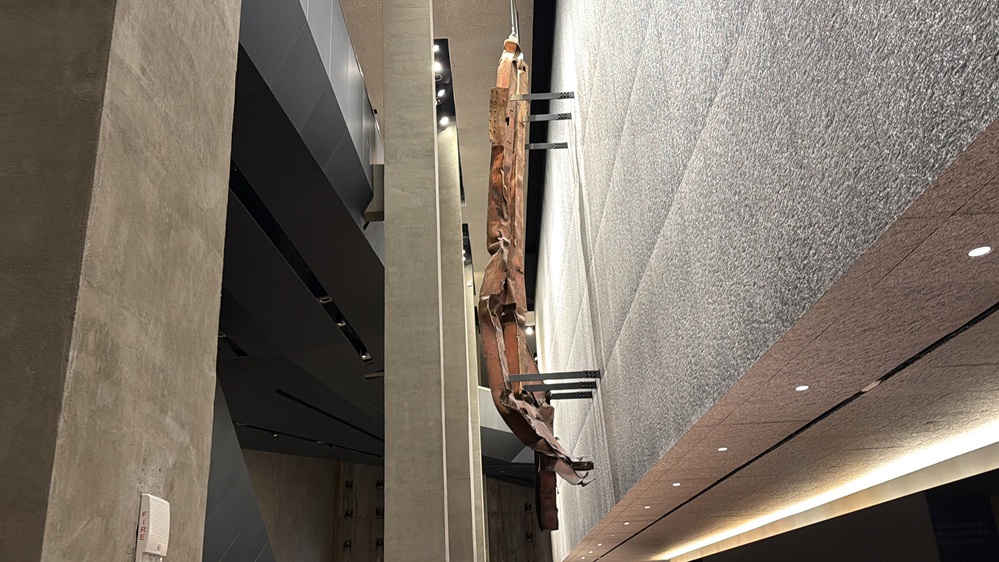
For the 25th anniversary, the National September 11 Memorial & Museum in New York is launching a new exhibition titled “In Their Honor: 25 Years of 9/11-Inspired Service.”

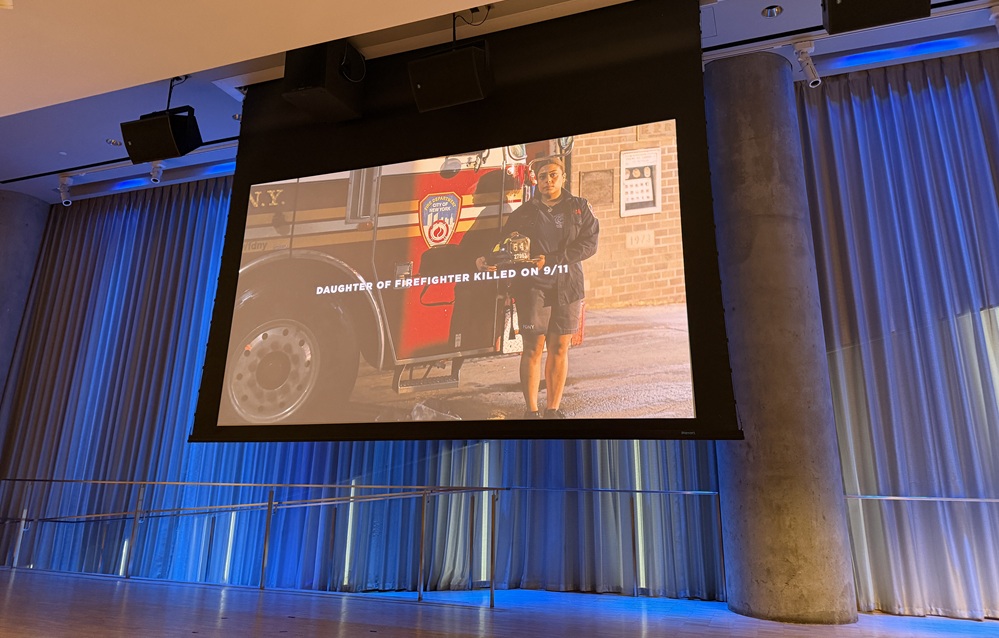
Opening to the public on September 12, the exhibition will highlight stories of service, sacrifice and humanity over the 25 years since the attacks. It explores how individuals and communities transformed grief into public service and acts of compassion.

The museum is also introducing a new digital educational experience designed to help a new generation understand the history of 9/11 and its long-term impact. According to the museum, nearly 100 million Americans were either not yet born or were too young to remember the attacks. Connecting this generation with the history and legacy of 9/11 is one of the major goals of this year’s anniversary programs.

Trump to Mark Anniversary at Pentagon

In Arlington, Virginia, President Donald Trump is expected to attend and speak at the 25th anniversary commemoration at the Pentagon Memorial. The Pentagon was the third major target of the September 11 attacks. At 9:37 a.m., American Airlines Flight 77 struck the Pentagon. A total of 184 people were killed, including people inside the building as well as passengers and crew members aboard the aircraft. Vice President Vance will attend the main commemoration in New York.

Pennsylvania Also to Hold Commemorations

At the Flight 93 National Memorial in Pennsylvania, a commemorative ceremony will take place Friday from 8:30 a.m. to 10:30 a.m. The names of the 40 passengers and crew members aboard Flight 93 will be read, followed by the ringing of the Bells of Remembrance. A second ceremony will take place from 1 p.m. to 2:30 p.m., featuring additional commemorative activities and a public wreath-laying ceremony at the memorial.

New York’s Nighttime “Tribute in Light”

After a full day of remembrance, New York’s skyline will once again be illuminated by the historic Tribute in Light—two powerful beams of light representing the Twin Towers destroyed in the attacks. For the 25th anniversary, a special program titled “9/11 Tribute in Light: Live from Lower Manhattan” is scheduled to air nationally beginning at 8 p.m. on major television networks and other platforms.

The program will connect audiences across the country with the commemoration in New York and the annual Tribute in Light, bringing the day of remembrance to a national audience.

New Initiative in New York City

As part of this year’s 25th anniversary observance, New York City is officially recognizing September 11 as a Day of Remembrance and Service. The administration of Mayor Zohran Mamdani is emphasizing citywide remembrance, moments of silence, educational programs and volunteer service.

The city has also established a new Continuity and Mission Assurance Team, aimed at ensuring that essential city government operations and services can continue during emergencies while strengthening preparedness and coordination among city agencies.

25 Years Later, the Memory of 9/11 Endures

Twenty-five years later, 9/11 remains far more than a historical event. It continues to shape the security, politics, foreign policy and public health of New York, Washington and the United States as a whole.

This year’s commemorations are therefore not limited to honoring those who were killed. They also recognize first responders, rescue workers, survivors, families who lost loved ones and a new generation born after the attacks. A quarter-century later, the message remains the same: Never Forget.


Bangladesh’s Khalilur Rahman Set to Take Helm of 81st UN General Assembly

Shibbir Ahmed, UN, NEW YORK — Bangladesh Foreign Minister Dr. Khalilur Rahman is set to assume the presidency of the 81st session of the United Nations General Assembly on Tuesday, placing a Bangladeshi diplomat at the helm of the UN’s most representative body at a critical moment for global diplomacy. Rahman will formally open the 81st General Assembly session at United Nations Headquarters in New York at 3 p.m. local time on September 8, succeeding Germany’s former foreign minister Annalena Baerbock. The session will run through September 7, 2027.

His year-long presidency comes as the international community faces continuing conflicts, climate emergencies, development challenges and growing concerns over trust in multilateral institutions. The United Nations has identified the theme of the 81st session as “Restoring Trust, Managing Transformation: A United Nations That Delivers for All.”

Rahman was elected president of the 81st session in June after defeating Cyprus’ candidate, Andreas Kakouris, in a closely contested secret-ballot vote. He received 99 votes, compared with 91 for Kakouris, out of 190 ballots cast.

The presidency marks Bangladesh’s return to the top post of the General Assembly after four decades. The first Bangladeshi to hold the position was former Foreign Minister Humayun Rasheed Choudhury, who presided over the 41st session in 1986–87.

Rahman’s tenure will coincide with several major developments at the United Nations, including the high-level General Debate from September 22 to 28 and the selection of a successor to Secretary-General António Guterres, whose second term ends on December 31, 2026.

The 81st session is expected to address a wide range of global issues, including conflicts, climate change, sustainable development, pandemic preparedness, nuclear disarmament and reform of the United Nations.

For Bangladesh, Rahman’s presidency represents a significant diplomatic milestone and provides the country with a prominent platform to contribute to international consensus-building during a period of major geopolitical and institutional change.


Nepal Flood Disaster: UN Seeks $49.6 Million to Help 84,000 People

KATHMANDU — The United Nations and humanitarian partners have launched a $49.6 million emergency appeal to provide life-saving assistance to more than 84,000 people affected by catastrophic flash floods and landslides in northern Nepal.

The disaster, which struck on August 26, devastated communities across the region, destroying homes, roads and other critical infrastructure and leaving thousands of people in urgent need of humanitarian assistance. The UN humanitarian community said the appeal is aimed at supporting those most severely affected by the disaster.

The emergency response is focused on providing essential supplies and services, including food, clean water, emergency shelter, healthcare and protection assistance for affected communities.

The scale of the disaster has also placed enormous pressure on Nepal’s search-and-rescue operations. According to Nepalese authorities cited by Reuters, more than 1,294 people have been killed, while thousands remain missing following the floods and landslides.

The disaster caused particularly severe damage along the Trishuli River, where floodwaters, rocks, mud and debris swept through communities and infrastructure. Hydropower facilities and access roads were also heavily damaged.

Rescue teams have continued searching for survivors in areas cut off by the disaster. In a dramatic development, two workers were rescued alive from a hydropower tunnel nine days after the disaster struck.

The humanitarian crisis is compounded by the destruction of homes and basic infrastructure. Nepalese officials have estimated that thousands of houses will need to be rebuilt, while overall property, housing and infrastructure losses have reached billions of dollars.

The UN and its humanitarian partners say the immediate priority is to reach people who have lost their homes and livelihoods and to prevent further suffering as recovery efforts begin.

The emergency appeal will support relief operations in the hardest-hit communities and help humanitarian agencies deliver assistance to people who urgently need it.

The disaster is among the most serious natural emergencies Nepal has faced in recent years, with the effects extending beyond immediate loss of life to homes, livelihoods, transportation networks and vital infrastructure.

As search-and-rescue operations continue, the United Nations is urging international support for the emergency response and emphasizing the urgent humanitarian needs of tens of thousands of survivors.


U.S.-Iran Clash Near Strait of Hormuz, Oil Tankers Hit

WASHINGTON DC — The United States and Iran exchanged attacks around the strategically vital Strait of Hormuz, sharply escalating tensions after the U.S. military struck three Iranian oil tankers following Iranian missile attacks on American Navy vessels.

The U.S. Central Command said American forces targeted three Iranian crude-oil carriers on Saturday after Iran’s Islamic Revolutionary Guard Corps launched ballistic missiles toward two U.S. Navy ships. No American personnel were reported injured in the attacks.

The strikes targeted vessels including a tanker near Iran’s Kharg Island, a major hub for the country’s oil exports. The escalation has raised fresh concerns about the security of commercial shipping through the Strait of Hormuz, one of the world’s most important energy corridors.

Iran subsequently claimed that its forces struck an unmanned U.S. vessel attempting to enter the Strait of Hormuz. The United States had not immediately confirmed the Iranian claim, according to The Associated Press.

Iranian authorities have also threatened further action against vessels they consider to be using unauthorized routes in the region. The exchange of attacks comes as military tensions between Washington and Tehran continue to intensify following the collapse of an earlier ceasefire.

The Strait of Hormuz is a critical global energy chokepoint, and disruption there could have consequences far beyond the Middle East. Shipping traffic through the waterway has already fallen significantly amid the conflict, while oil markets remain highly sensitive to developments in the region.

The latest confrontation also comes as OPEC+ prepares to meet Sunday. The group is expected to maintain its current oil-production policy amid continuing disruption to energy exports through the Strait of Hormuz.

The situation remains fluid, with both sides issuing competing claims about attacks on vessels. Independent confirmation of some Iranian military claims was not immediately available.


One in Five Children in 21 Countries Experienced Technology-Facilitated Sexual Abuse: UNICEF

Shibbir Ahmed, New York — An estimated 20 million children aged 12 to 17—nearly one in five internet-using children—experienced at least one form of technology-facilitated sexual exploitation or abuse in a single year across 21 countries, according to a new report released by UNICEF.

The report, Through Children’s Eyes: How Digital Technologies Enable Child Sexual Abuse, highlights the growing risks children face through social media, online games, messaging services and other digital platforms.

UNICEF said more than 15 million children were exposed to unwanted sexual content, while about 9 million were pressured to engage in sexual conversations or share sexual images against their will. Another 4 million had sexual images of themselves shared without their consent.

Social media accounts for most cases

Nearly 60 percent of reported experiences occurred on mainstream social media platforms, including Facebook, Instagram, Snapchat, TikTok and WhatsApp, according to UNICEF. Another 14 percent of cases occurred through online games, with perpetrators exploiting platform features and children’s trust.

The findings also challenge the perception that online abuse is primarily committed by strangers. UNICEF said 57 percent of cases involved someone the child already knew, including peers, friends, romantic partners or family members. At the same time, 38 percent of children first encountered the perpetrator online, including through fake accounts and private messaging.

Severe impact on children’s well-being

The report found that children who experienced technology-facilitated sexual exploitation or abuse were four times more likely to report suicidal thoughts or behaviours and self-harm, while also reporting significantly higher levels of anxiety.

In Mexico and North Macedonia, the risk of suicidal thoughts or behaviours was more than eight times higher among children who had experienced abuse. In Pakistan, the risk of self-harm was more than seven times higher.

Despite the scale of the problem, most cases remain hidden. More than 40 percent of children never told anyone about their experiences, while fewer than 1 percent of cases were reported to authorities, such as police, social workers or helplines. UNICEF said the most common reason children remained silent was that they did not know where to seek help or whom to tell.

21 countries covered by the research

The UNICEF research covered approximately 21,000 internet-using children aged 12 to 17, along with in-depth interviews with 100 young people who experienced abuse during childhood. The first round of research, conducted primarily in 2020–2021, covered Cambodia, Ethiopia, Indonesia, Kenya, Malaysia, Mozambique, Namibia, the Philippines, Tanzania, Thailand, Uganda and Viet Nam.

The second round, conducted in 2024–2025, expanded the research to Armenia, Brazil, Colombia, the Dominican Republic, Mexico, Montenegro, North Macedonia, Pakistan and Serbia. UNICEF stressed that because the survey included internet-using children, the findings represent internet-using children rather than all children, particularly in countries where internet access remains limited.

UNICEF calls for stronger online protection

UNICEF is urging governments, technology companies and other stakeholders to strengthen protections for children online. The agency called for safer digital platforms, stronger privacy protections, restrictions on unsolicited contact from adults, improved systems for detecting and reporting abuse, and stronger laws and accountability measures.

It also urged governments and communities to provide trusted reporting and support services so children can seek help safely. UNICEF Executive Director Catherine Russell said governments and technology companies must do more to protect children in digital spaces.

The findings come as children increasingly use digital platforms for education, entertainment and social interaction, making online safety an increasingly urgent child-protection issue.


Trump Envoys Arrive in Moscow for Russia-Ukraine Peace Push

MOSCOW — U.S. President Donald Trump’s envoys Steve Witkoff and Jared Kushner arrived in Moscow on Saturday as part of a renewed diplomatic effort to end the Russia-Ukraine war. The two U.S. representatives met Russian President Vladimir Putin at the Kremlin for talks focused on efforts to find a possible path toward ending the conflict. Putin described the situation in Ukraine as difficult and complex, while praising Trump’s efforts to seek a diplomatic solution to the war.

Trump has said his envoys are carrying a proposal aimed at bringing an end to the conflict. The latest diplomatic initiative comes as Washington continues to push Moscow and Kyiv toward negotiations despite major disagreements between the two sides. Witkoff and Kushner are also expected to travel to Kyiv on Sunday for talks with Ukrainian President Volodymyr Zelenskyy.

As part of the diplomatic effort, Russia announced a temporary 72-hour pause in strikes on Kyiv during the visit, according to reports. Zelenskyy has also agreed to suspend Ukrainian strikes on Moscow during the talks.

However, fighting continues in other parts of Ukraine, and significant differences remain between Moscow and Kyiv over issues including territory, security guarantees and Ukraine’s future relationship with NATO. The latest meetings represent one of the most significant diplomatic efforts by the Trump administration to advance negotiations since returning to the White House. The outcome of the Moscow and Kyiv meetings could determine whether the latest peace initiative develops into broader negotiations between Russia and Ukraine.


U.S. Strikes 3 Iranian Oil Tankers After Missile Attacks on Navy Ships

WASHINGTON — The United States military said Saturday that it struck three Iranian crude-oil tankers after Iran’s Islamic Revolutionary Guard Corps (IRGC) launched ballistic missiles toward two U.S. Navy warships operating in the region. U.S. Central Command (CENTCOM) said a U.S. aircraft carrier and a guided-missile destroyer successfully evaded multiple Iranian attacks. No American personnel were injured, according to the command.

CENTCOM said U.S. forces permanently disabled the M/T Downy off the coast of Iran’s Kharg Island and the M/T Stark 1 near Jask. American forces also destroyed the unladen M/T Kylo, also known as the Noxen, in the Gulf of Oman after the crew was directed to abandon the vessel, according to CENTCOM. The U.S. military said the three tankers were part of what it described as a multibillion-dollar “shadow network” allegedly used to finance the IRGC and its regional proxies.

“Let the message to the IRGC be clear,” CENTCOM Commander Adm. Brad Cooper said. “If you shoot at two of our ships, we will impose an even higher economic cost.” Cooper added that the United States would continue defending its forces and, if necessary, could target Iran’s oil fleet.

Iran condemns the strikes

Iran has condemned the U.S. attacks and warned that continued attacks on Iranian vessels could lead to further military retaliation. The strikes represent a significant escalation in the confrontation between Washington and Tehran, particularly because they directly target Iranian oil shipping. One of the attacks occurred near Kharg Island, Iran’s major oil-export hub.

The latest exchange of fire also raises concerns about the security of commercial shipping and energy supplies in and around the Strait of Hormuz, one of the world’s most strategically important oil-shipping routes.