Atlanta Hosts Solo Musical Evening Featuring Chandrashekhar Dutta

ATLANTA, GA — Bengali music lovers gathered in Atlanta on Friday evening, September 18, for a special solo musical program featuring acclaimed singer Chandrashekhar Dutta, known for his performances of Rabindra Sangeet, Nazrul Sangeet and modern Bengali songs.

The musical evening was organized by Tirtha O Parampara, a local cultural organization, under the overall supervision of Sanjukta Roy and Nil Majumdar, with support from local artists, writers, poets and distinguished members of the Bengali community.

Held at a local Desi Street restaurant, the event brought together members of Atlanta’s Bengali community for an evening of music and cultural celebration. Dutta performed a selection of Bengali songs, captivating the audience with his voice and expressive performances.

The program created a warm and nostalgic atmosphere for attendees, with the organizers describing the evening as a reflection of Bangladesh’s rich musical and cultural heritage. The venue took on the feel of a “mini Bangladesh” as familiar Bengali melodies filled the room.

The audience responded enthusiastically to Dutta’s performances, with his successive renditions drawing appreciative reactions from listeners throughout the evening. Providing instrumental accompaniment were Amitava Sen, Surajit Bandyopadhyay, Subhadra Gupta, Ankan Basu and Golam Mahiuddin.

The event concluded with remarks from organizers Sanjukta Roy and Nil Majumdar, who thanked the invited guests, artists and audience members for their participation and support. They also expressed hope for continued community cooperation in organizing cultural programs in the future. The evening served as another gathering point for Atlanta’s Bengali community, bringing together music, culture and a shared connection to Bengali heritage.


Jalalabad Association of America Holds Colorful ‘Summer Bash’ in Festive Atmosphere

Staff Correspondent: The Jalalabad Association of America Inc., one of the leading social organisations representing people from greater Sylhet living in the United States, hosted its much-anticipated ‘Summer Bash’ in a vibrant and festive atmosphere.

The event brought together Bangladeshi expatriates from Sylhet and their families, creating a lively gathering aimed at preserving cultural traditions, strengthening community bonds and promoting friendship and harmony among the expatriate community.

The programme was organised under the overall leadership of Association President Moinul Islam and General Secretary Ataul Gani Asad. A dedicated celebration committee worked to ensure the smooth and successful execution of the event.

The committee was led by Convener Sheikh Jamal Hossain, Chief Convener Laies Ahmed (Minu), Chief Coordinator Moin Uz Zaman Chowdhury, and Member Secretary Helim Uddin. Kamrul Hossain and Shahinul Islam served as Joint Member Secretaries. Other members of the celebration committee included A. Rahim (Kadir), Zainal Uddin Layek, Masuk Mia, Syed Lokman, Badrul Uddin, and Dewan Md. Tazzir.

Taking a break from their busy lives in the United States, expatriate Bangladeshis attended the Summer Bash with their families in large numbers. The event featured social gatherings, friendly conversations, family activities, colourful stalls and a vibrant cultural programme.

The cultural segment featured popular artists from Bangladesh, the United Kingdom and the local Bangladeshi community, who entertained the audience with a variety of songs. Performers included Selim Chowdhury, Rizia Parvin, Kamruzzaman Bakul, Wahid from London, Shah Mahbub, Baul Kala Mia, Nasir Uddin, Roksana Mirza, Nazu Akand, Aftab Johnny, Silma, and Apu Rahman’s group.

The event was further energised by the event management and sound system provided by Soundgear, contributing to the overall festive atmosphere. Around 20 colourful stalls were also set up at the venue, attracting considerable attention from visitors. The stalls added a fair-like dimension to the celebration and provided another attraction for families attending the programme.

According to the organisers, one of the main objectives of the event was to introduce the younger generation of expatriate Bangladeshis to their cultural heritage, traditions and roots. The organisers also emphasised the importance of such gatherings in strengthening social connections and fostering unity among the greater Sylhet community in the United States.

Through the collective efforts of the celebration committee and the enthusiastic participation of expatriate Bangladeshis, the Jalalabad Association of America’s ‘Summer Bash’ became a memorable celebration of Sylheti culture, community and togetherness.


FOBANA at 40: Leadership Dispute Splits Convention Across Four U.S. Cities

NEW YORK — The Federation of Bangladeshi Associations in North America (FOBANA), one of the longest-running platforms representing Bangladeshi communities in North America, is marking nearly four decades amid a deepening leadership dispute that has resulted in separate conventions being organized in four U.S. cities.

The divisions have raised questions about the future direction of the organization, with critics accusing rival groups of moving away from FOBANA’s original objectives and focusing instead on personal influence and leadership control.

FOBANA was established as a platform intended to bring Bangladeshi community organizations together in North America. Over the years, its annual convention has become an important gathering for Bangladeshi Americans, featuring cultural programs, community discussions and organizational activities. However, disagreements over leadership and organizational control have increasingly divided the community platform.

Four conventions reflect growing divisions

The latest dispute has resulted in four separate FOBANA conventions being held in different U.S. cities, highlighting the extent of the organizational split. The competing groups have each claimed legitimacy and sought to maintain their own leadership structures, while disagreements have continued over the organization’s direction and representation of Bangladeshi community organizations in North America.

The fragmentation has also prompted criticism from members of the Bangladeshi diaspora who believe FOBANA should return to its original mission of strengthening cooperation among community organizations.

Some community representatives have accused the competing leadership factions of using FOBANA as a vehicle for personal influence, rather than concentrating on broader community interests.

Questions over FOBANA’s future

The leadership conflict comes at a time when the Bangladeshi-American community in North America has grown significantly. Community organizations now play an increasingly visible role in cultural preservation, youth engagement, charitable activities and advocacy.

Supporters of a unified FOBANA argue that a single representative platform would give Bangladeshi community organizations greater influence and help coordinate activities across North America.

The competing conventions, however, have made it increasingly difficult to maintain that unified role. Community leaders and observers say resolving the dispute will require the different factions to prioritize FOBANA’s founding objectives over personal or organizational rivalries.

As FOBANA approaches its 40-year milestone, the organization faces a critical question: whether it can overcome its internal divisions and rebuild a common platform for Bangladeshi community organizations across North America. For many in the diaspora, the anniversary is therefore not only a celebration of FOBANA’s history but also an opportunity to reconsider what the organization should represent in the decades ahead.


Promoting the Saree on the World Stage at New York’s Times Square: ‘Saree Goes Global’

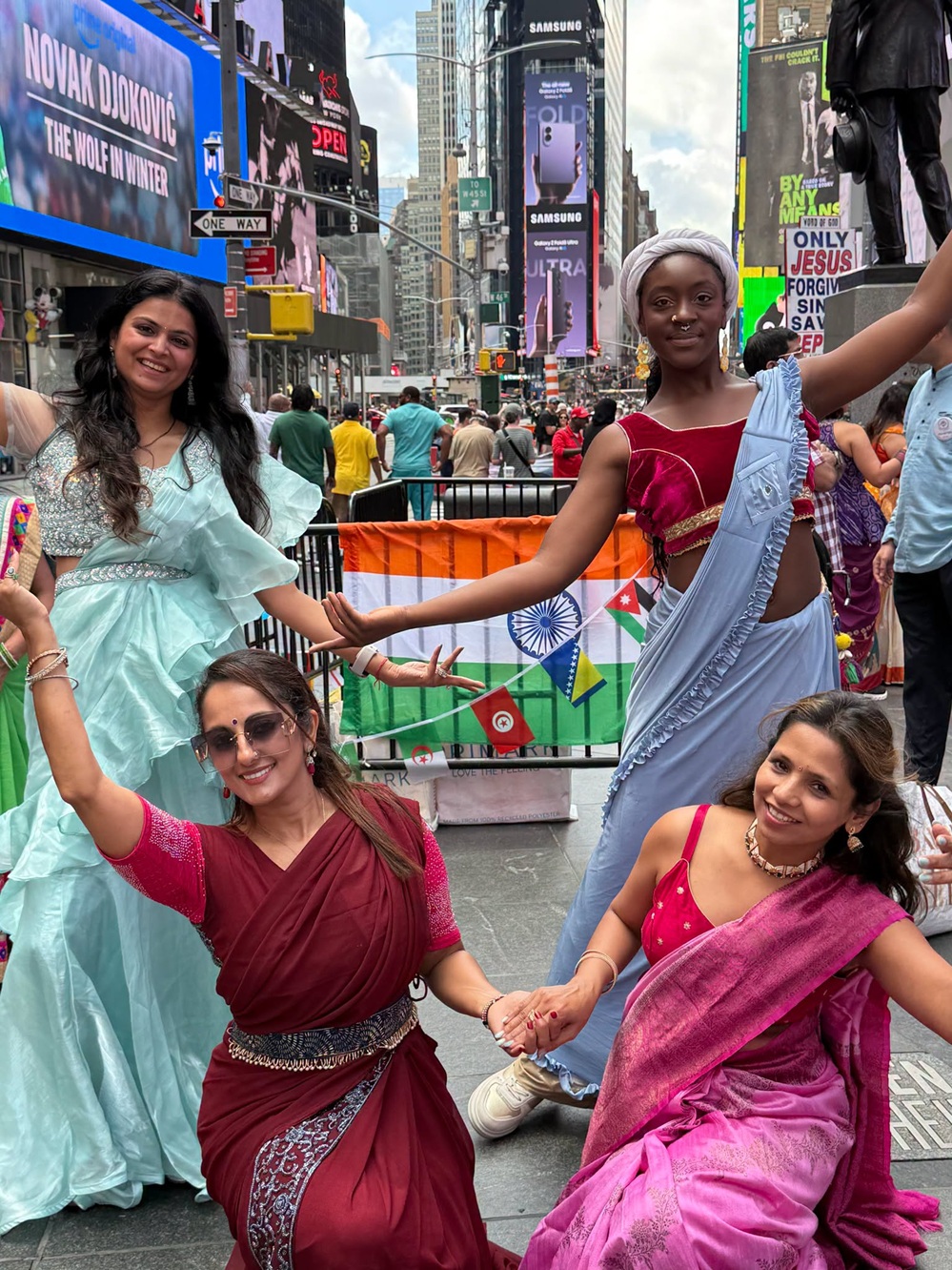
Shibbir Ahmed, New York: Once again, the rich heritage, beauty, and cultural diversity of the saree were showcased on the world stage at New York City’s iconic Times Square, one of the world’s busiest and most recognizable urban destinations. On Sunday, August 23, the third annual ‘Saree Goes Global USA 2026’ event was held at Father Duffy Square in Times Square.

The event, held from 11 a.m. to 2 p.m. local time, brought together participants from various U.S. states as well as different parts of the world. Women dressed in sarees of different colors, designs, and styles took part in the Saree Walkathon and ramp walk. The program also featured music, dance, and other cultural performances.

The event was organized by New York-based Uma Global in partnership with the Consulate General of India in New York. Organizers said the primary objective of the event is to present the saree not merely as a garment, but as a global symbol of heritage, culture, art, unity, and women’s empowerment.

The presence of women from different countries dressed in colorful sarees transformed the bustling Times Square area into a vibrant celebration of culture. Through various types of sarees, traditional textiles, and intricate designs, the event highlighted the rich history of South Asian weaving, textiles, and craftsmanship.

Dr. Deepti Jain, founder of the ‘Saree Goes Global’ movement, has been leading the initiative. Dr. Rita Kakati-Shah, president of New York-based Uma Global, has also played an important role in organizing the event. Through their efforts, the initiative seeks not only to introduce the saree to people around the world but also to preserve the heritage of weavers and artisans and promote international recognition of their craftsmanship.

The ‘Saree Goes Global’ event at Times Square has now entered its third year. Previous editions have attracted participants from countries and regions including India, Bangladesh, the United Kingdom, the United States, Nepal, Sri Lanka, Malaysia, Singapore, and the West Indies. The second edition in 2025 brought together participants from Bangladesh and other countries, turning Times Square into a vibrant showcase of cultural diversity.

More than 500 women participated in the inaugural event in 2024. Women from at least nine countries, including Bangladesh, gathered at Times Square wearing sarees and showcased their respective cultures and traditions through music, dance, and the Saree Walkathon.

According to the organizers, the saree has no geographical boundaries. It is a cultural heritage passed down from generation to generation and has the power to bring people from different countries and cultures together. Hosting the event at a globally renowned location such as Times Square provides an important platform for taking that heritage to an international audience.

Through ‘Saree Goes Global,’ the organizers are therefore promoting more than just a traditional garment. The initiative also carries messages of women’s identity and empowerment, cultural diversity, traditional craftsmanship, and harmony among people around the world.


44th ‘India Day Parade’ 2026 Held in Grand Celebration in New York

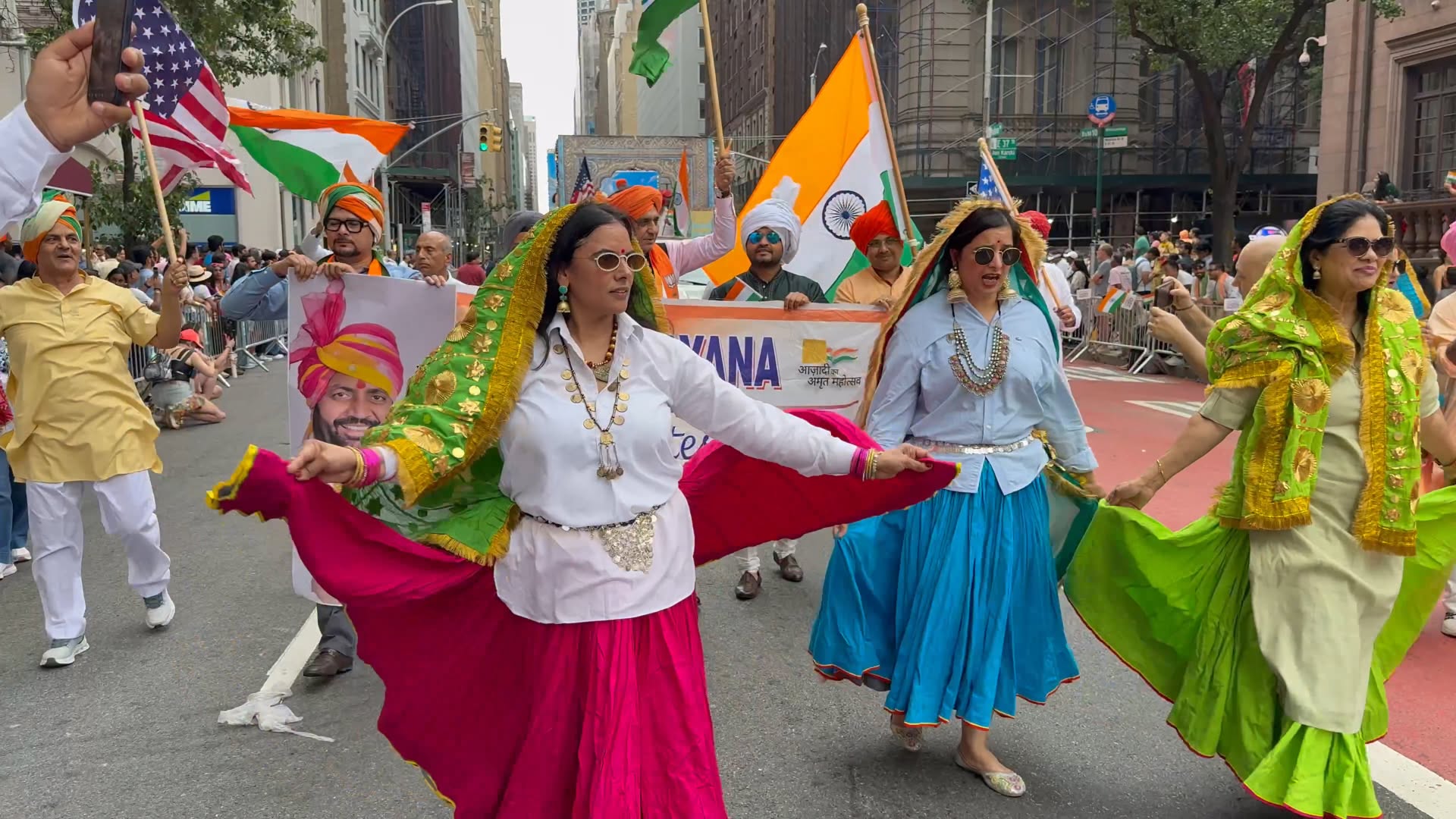
Shibbir Ahmed, New York: The 44th annual ‘India Day Parade’ was held in Manhattan, New York, on Sunday, August 16, as part of celebrations marking India’s 80th Independence Day. The grand parade along Madison Avenue showcased the rich culture, heritage, and diversity of India. Thousands of people participated in the parade, while large crowds gathered along both sides of the avenue to enjoy the festivities.

Organized by the Federation of Indian Associations (FIA), this year’s parade carried the theme ‘Harmony in Heritage.’ According to the organizers, the event is one of the largest celebrations of Indian culture in the United States.

The parade began around noon on Madison Avenue. The procession came alive with the participation of various cultural and social organizations, business groups, regional associations, marching bands, and dance troupes. According to information released by the organizers, more than 40 colorful floats and over 50 marching groups took part in this year’s celebration.

Floats decorated in the three colors of the Indian national flag—saffron, white, and green—made their way along Madison Avenue. Traditional clothing, dance, music, and cultural performances representing different Indian states and regions showcased the country’s remarkable cultural diversity. Indian-Americans of all ages, from children and teenagers to senior members of the community, participated in the parade.

New York Governor Kathy Hochul, along with elected officials, political leaders, business leaders, and community representatives, attended the parade. Governor Hochul joined the opening ceremony and participated in the procession alongside other distinguished guests.

Indian film and entertainment personalities were also among the major attractions of this year’s parade. Actress Pooja Hegde was one of the special guests. Cast members and performers from the popular Indian television show ‘Taarak Mehta Ka Ooltah Chashmah’ also took part in the parade, drawing enthusiastic responses from spectators.

The parade created a festive atmosphere throughout Madison Avenue and the surrounding areas. Large crowds lined the streets, many holding Indian flags and cheering as the procession passed by. The participation of children and young people was particularly notable.
For New York’s Indian-American community, the India Day Parade is more than a celebration of India’s Independence Day. It is also an important occasion for preserving and passing on Indian culture and heritage to younger generations living in the diaspora. At the same time, the parade highlights the contributions of Indian-Americans to the multicultural society of the United States.

According to organizers, the celebrations extended beyond the parade, with food, cultural, and entertainment programs taking place throughout the day. Food vendors, cultural performances, and community booths were set up around Madison Avenue, adding to the festive atmosphere.

The weekend-long India Day celebrations began on Saturday with the hoisting of the Indian national flag at Times Square and a special lighting of the Empire State Building in the colors of the Indian flag. Sunday’s grand parade brought the weekend’s celebrations to a colorful conclusion.

The 44th ‘India Day Parade’ in the heart of Manhattan once again highlighted India’s culture, heritage, and the unity of the Indian diaspora. Under the theme ‘Harmony in Heritage,’ this year’s celebration also emphasized the strong cultural ties between India and the United States.

Note: There are slight differences among reports regarding the parade route. According to official FIA information, the route ran along Madison Avenue from East 38th Street to East 27th Street. NBC New York described the route as covering 13 blocks between East 39th Street and East 26th Street.


Amar Ekushey Boi Mela postponed, will not be held in December

The Amar Ekushey Boi Mela, a cornerstone of Bangladesh’s literary culture, will not be held this December as previously planned. The fair is now scheduled to take place after the upcoming national election. Based on the recommendations of the Bangladesh Publishers & Booksellers Association (BAPUS) and other stakeholders, the previously announced dates for the 2026 edition have been postponed.

On Sunday night, a notification regarding the date of Amar Ekushey Boi Mela 2026 stated that this decision was made by the Ministry of Home Affairs on September 21, 2025. The notification further stated that, following consultations with publishers and other stakeholders, a new date will be set at a later time.

Although the Amar Ekushey Boi Mela is traditionally held in February each year, this time the date was initially scheduled for December due to the election and Ramadan, according to the Bangla Academy.

On September 18, Bangla Academy Director General Dr Mohammad Azam stated that Amar Ekushey Boi Mela 2026 would be held from December 17, 2025.


Anthem of Laksam ‘Mayar Shohor Laksam’

Anthem of Laksam’s song ‘Mayar Shohor Laksam’ has been released. The lyrics and music of the song are written by writer and journalist Shibbir Ahmed. The song was released on YouTube on Thursday, August 7. The author himself collected and created the video of the song.

The video of the song features scenes of important structures in Laksam such as educational institutions, administration, lakes, rivers, people, and markets. The video also includes images of the Dakatiya River and the famous Laksam Junction, known for its ‘Koto Laksam Koto Bati’. The video shows scenes of Laksam’s traditional Nawab house, Laksam High School, Faizunnesa Government College, as well as mosques and temples.

The song’s writer, Shibbir Ahmed, has expressed hope that the lyrics and melody of the song will touch the hearts of the people of Laksam. He described the song he wrote as a ‘Laksam song and this song will be the Anthem of Laksam’. He said that the song depicts the history and traditions of Laksam in simple language.

It is worth mentioning here that Shibbir Ahmed is the son of Laksam. He was born and raised in this city. The streets of this city are full of the writer’s memories.

YouTube link of the song: