Bangladesh seeks US waiver to import Russian fuel

DHAKA  – Foreign Minister Dr Khalilur Rahman has requested the United States to grant Bangladesh a special waiver to import refined diesel and other petroleum products from Russian sources to ease energy pressures. The request was made during a meeting with US Energy Secretary Chris Wright at the Department of Energy in Washington D.C. on Tuesday, according to a message received here today.

During the talks, the foreign minister highlighted Bangladesh’s ongoing energy challenges stemming from global supply chain disruptions, particularly ahead of the critical planting season, and stressed the need to ensure uninterrupted fuel supply for farmers and safeguard food security.

Rahman explained that Bangladesh could not take advantage of the earlier limited world-wide waiver by US on Russian oil at sea since none of the tankers were bound for Bangladesh at that time. Besides, the two sides discussed the options to buy more refined oil out of Russian crude from third countries to meet immediate need.

US Energy Secretary Wright acknowledged the energy challenges Bangladesh is facing and expressed his country’s commitment to support Bangladesh during these difficult times to help ensure its energy security.

He said the US will positively consider the requests of Bangladesh and assured that he and his team would work closely with the relevant departments of the US government to this end. The two sides also discussed longer-term cooperation for sustainable energy solutions for Bangladesh and the prospects of increasing procurement of US energy products.

Secretary Chris Wright was assisted by Chief of Staff to the Secretary Carl Cole, Senior Advisor to the Secretary Audrey Robertson, Senior Advisor to the Secretary Andrew Rapp, Director, Office of Asian Affairs Margaux Murali and Fellow, Office of Asian Affairs Hamna Khan. From Bangladesh side, Bangladesh Ambassador to the USA Tareq Md Ariful Islam, Deputy Chief of Mission DM Salahuddin Mahmud and Economic Minister Dr. Md. Fazle Rabbi attended the meeting with the Foreign Minister.


47 countries voice full support for Bangladesh govt at ILO session

DHAKA – The newly-formed government of Bangladesh has received congratulations and full support from 47 countries during discussions on Bangladesh at the 356th Governing Body session of the International Labour Organization (ILO) in Geneva. The countries expressed their commitment to work in cooperation with Prime Minister Tarique Rahman’s government, which assumed office with a public mandate through a free, fair and credible election, according to a message received here Today.

The discussion also addressed a case filed in June 2019 under Article 26 of the ILO Constitution by five worker representatives of the International Trade Union Confederation, accusing the then government of failing to comply with Conventions 81, 87, and 98.

In response, the previous government submitted a five-year labour sector reform roadmap to the ILO Governing Body in 2021. Progress on the roadmap has been reviewed in eight Governing Body sessions over the past five years, and the current government today presented the ninth progress report.

Representatives from all participating countries voiced their support for the current government. Of the 56-member Governing Body, 19 member states, 28 countries from two regional groups, and employers’ representatives praised the new government’s strong commitment to legal and administrative reforms in the labour sector and urged the rapid settlement of the ongoing case.

Bangladesh’s delegation included Minister of Labour, Employment, and Expatriates’ Welfare Ariful Haque Chowdhury and Prime Minister’s Adviser on Labour, Employment, and Education Mahdi Amin. Bangladesh’s Permanent Representative to Geneva Nahida Sobhan and Secretary of Labour Abdur Rahman Tarafdar were also present.

At the outset of the discussion, Adviser Mahdi Amin conveyed warm greetings from Prime Minister Tarique Rahman to all Governing Body members and highlighted the Prime Minister’s personal commitment to labour rights, worker protection, and social justice. He noted that the Bangladeshi people had given the government a strong electoral mandate emphasizing citizens’ rights, human rights, rule of law, freedom of speech, broad-based employment creation, quality education, skills development, and merit-based growth. The adviser said these priorities align with the ILO’s Decent Work Agenda.

He also informed the session that a parliamentary special committee had been formed to enact the Bangladesh Labour Law Amendment Ordinance 2025 and assured that the government would expedite the process. He stressed that the government is positively disposed toward amendments developed through tripartite discussions, which will enable inclusive, sustainable, and employment-driven development.

Reaffirming Prime Minister Tarique Rahman’s firm commitment to institutionalizing democracy, strengthening democratic values, and ensuring workers’ rights, the adviser sought continued support from the ILO and other stakeholders. After extensive discussions, it was unanimously decided that the next session on the case will be held in March next year.


UN Secretary-General Reaffirms Strong Support and Solidarity with Bangladesh

Shibbir Ahmed, New York: António Guterres, Secretary-General of the United Nations, has reaffirmed the organization’s unwavering support and solidarity with Bangladesh during a meeting held at the United Nations Headquarters.

The meeting took place with Bangladesh’s Foreign Minister, Dr. Khalilur Rahman, where the Secretary-General extended his sincere congratulations to the newly formed government of Bangladesh.

During the discussion, Guterres highly praised Bangladesh’s continued humanitarian leadership and generosity in hosting displaced Rohingya people. He acknowledged the country’s significant role in providing shelter and assistance to one of the world’s most vulnerable populations.

The meeting also covered a range of current global issues. Dr. Rahman highlighted the challenges faced by developing and vulnerable countries amid the ongoing global oil crisis, emphasizing its disproportionate and unequal impact on poorer nations.

On behalf of the Prime Minister, Dr. Rahman invited the Secretary-General to visit Bangladesh at a convenient time. Guterres warmly accepted the invitation and expressed his appreciation.

At the conclusion of the meeting, both sides reaffirmed their commitment to strengthening cooperation between Bangladesh and the United Nations to address global challenges and advance sustainable development goals.


Former Adviser Asif Claims “Deep State” Planned to Keep Interim Govt Until 2029

Dhaka: Asif Mahmud Sajeeb Bhuiyan, former adviser to the interim government and spokesperson of the National Citizen Party (NCP), has alleged that a so-called “deep state” had devised a strategy to keep the interim government in power until 2029. He made these remarks at a discussion titled “From Blood-Stained Independence to Reforms and Referendum: The Political Duty of Implementation”, organized by Dhaka Metropolitan South NCP at the party’s central office in Banglamotor on Thursday afternoon, marking Independence Day.

Asif said that during the early days of their tenure in government, they were approached by powerful institutions—referred to as the “deep state”—with an offer. “They told us: ‘Sheikh Hasina’s tenure runs until 2029. You complete that term, and we will support you,’” he stated.

He added that the proposal came with specific conditions, including facilitating certain interests and following a roadmap designed to keep opposition figures—particularly from the BNP—out of elections.

According to him, the plan involved prolonging legal cases against BNP leaders so they would remain ineligible to contest elections. “If their sentences were not overturned, they would not be able to participate even if elections were held,” he said, mentioning Tarique Rahman as an example.

Asif claimed that a full strategy had been presented to them on how to remain in power through compromise, but emphasized, “We did not agree to it.”

He also accused large corporations of hoarding fuel, alleging that parts of the BNP were involved in such syndicates. Drawing from his experience in the previous government’s purchasing committee, he questioned how a crisis could emerge within a month when reserves were supposed to last two months, suggesting involvement of individuals close to the government.

Criticizing BNP further, he alleged that the party had appointed its loyalists as administrators in various institutions, undermining democracy. “If those appointed as administrators later contest elections, what fairness remains for others?” he asked.

Asif maintained that their government remained committed to democracy and ensured elections were held fairly. “To prevent any controversy, we voluntarily resigned before the election,” he said. However, he criticized the current government for appointing two key figures from the previous administration to ministerial positions, despite earlier demands for resignations to ensure a level playing field.

NCP Joint Convener Sarwar Tushar also spoke at the event, criticizing how the study of history in Bangladesh remains confined to narrow debates—particularly over who declared independence first. He emphasized that true history encompasses the broader struggles, sacrifices, and contributions of the people. “Unfortunately, the narrative of history changes with every change in government,” he said.

Tushar expressed disappointment that despite hopes for reform following recent mass uprisings, political parties are still failing to honor their commitments to the public. He drew parallels with unimplemented reform proposals following the 1990 political transition, suggesting a similar pattern continues today.
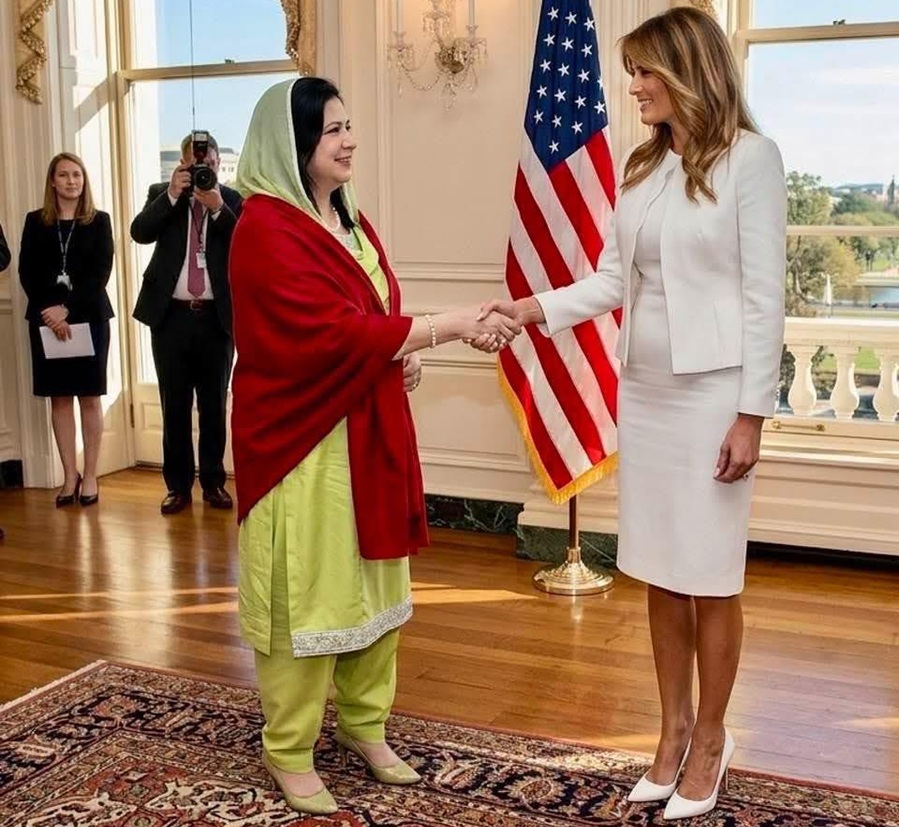


Dr. Zubaida Rahman Meets U.S. Special Envoy in Washington, D.C.

Washington, D.C. — Dr. Zubaida Rahman, a prominent physician and social worker, held a meeting with U.S. Special Envoy Charles J. Harder, according to a verified Facebook post by the BNP Media Cell.

The discussion focused on key issues related to the development of future generations, ensuring a safe and healthy environment for children, and advancing sustainable progress in education and public health sectors. Particular emphasis was placed on family-based support programs, child nutrition and mental development, and fostering inclusive societies through mutual cooperation.

Among those present at the meeting were Dr. Morshed Hasan Khan, Tarek Md. Ariful Islam, Dr. Shah Muhammad Aman Ullah, Mehnaz Mannan, and D. M. Salahuddin Mahmud.


Dr. Zubaida Rahman Addresses Global Coalition Summit at the White House

Washington, D.C. — Dr. Zubaida Rahman delivered a speech at the “Fostering the Future Together Global Coalition Summit,” held in Washington, D.C., at the invitation of U.S. First Lady Melania Trump. The two-day summit was inaugurated on Tuesday at the U.S. State Department.

Dr. Rahman, wife of Prime Minister Tarique Rahman, addressed the opening session, emphasizing the transformative potential of artificial intelligence (AI) in education. She called on developed nations to support Bangladesh in leveraging AI responsibly to bring meaningful reforms to its education system.

She highlighted that the government is working to deliver innovative technologies and healthcare services to children at their doorsteps. “It is a great honor for me to join you all at this historic ‘Fostering the Future Together Global Coalition Summit,’” she said, expressing gratitude to the First Lady for bringing together global leaders to focus on children’s future and shared commitments.

“We believe that the future of every nation is written in the lives of its children,” Dr. Rahman stated. “The education we provide today and the values we instill will shape the nations of tomorrow.”

Speaking from her perspective as a physician, she reaffirmed her commitment to ensuring quality healthcare for every child, with a strong emphasis not only on treatment but also on preventive care from early stages of life.

Dr. Rahman also stressed the role of technology, particularly ed-tech, in bridging the gap between urban and rural communities. She underscored the importance of ensuring the safe and ethical use of these technologies so that children can grow up in a secure and supportive environment.

On women’s empowerment, she noted Bangladesh’s strong legacy, referencing former Prime Minister Khaleda Zia for her contributions to human rights and for introducing free education for girls up to the 12th grade. She added that the current government is committed to extending free education for women up to the postgraduate level.


United States Suspends Visas for Bangladeshi Citizens

The United States Department of State has temporarily suspended the issuance of visas for citizens of Bangladesh. The U.S. Embassy in Dhaka announced this in a statement on Monday (March 23). According to the embassy, it is the responsibility of the U.S. government to protect taxpayers’ interests and ensure that immigrants do not misuse public welfare benefits after entering the country. A recent review found that the usage rate of such benefits is comparatively higher among citizens of certain countries, and Bangladesh is included in that list.

The objectives behind this decision include reducing pressure on public welfare programs, safeguarding taxpayer funds, and reassessing immigration policies. This suspension is not limited to immigrant visas only. It also includes Tourist visas, Student visas and other non-immigrant visas

The statement further mentioned that this temporary suspension will allow for a comprehensive review of the visa screening and selection process. The goal is to ensure that future policies prioritize the interests of U.S. citizens. It is worth noting that no specific timeline has yet been announced regarding how long this suspension will remain in effect or when normal visa services will resume.


Bangladesh joins Indo-Pacific Energy Forum in Tokyo

DHAKA – Minister for Power, Energy and Mineral Resources Iqbal Hassan Mahmood has arrived in Tokyo to participate in the Indo-Pacific Energy Security Ministerial and Business Forum being held on March 14-15.

The forum is jointly hosted by the chair and vice chair of the US National Energy Dominance Council, US Secretary of the Interior Doug Burgum, US Secretary of Energy Chris Wright, and Japan’s Minister of Economy, Trade and Industry Akazawa Ryosei.

Energy ministers and senior representatives from several Indo-Pacific countries including Australia, Brunei, Indonesia, Japan, Malaysia, New Zealand, Philippines, Singapore, the Republic of Korea, Thailand, Timor-Leste and Vietnam are also attending the two-day forum.

During the meeting, participating ministers will discuss ways to strengthen energy security across the Indo-Pacific region, with a focus on ensuring the supply of abundant, reliable, affordable, secure and dispatchable energy.

On the sidelines of the forum, Iqbal Hassan Mahmood is expected to hold bilateral meetings with ministers and other delegations from participating countries, including the United States, Japan and Brunei. He is also scheduled to meet representatives of private sector companies to explore opportunities for enhanced cooperation with Bangladesh in the energy sector and related sectors.


Dhaka, Delhi can transform geographical proximity into new economic opportunities: Pranay Verma

DHAKA – Indian High Commissioner to Bangladesh Pranay Verma today said Bangladesh and India can really transform their geographical proximity into new economic opportunities through setting a forward-looking and people-centric agenda. Pranay made the remarks while talking to reporters at Bangladesh Secretariat after meeting Finance Minister Amir Khosru Mahmud Chowdhury.

Their discussion centered on cooperation in financial sector, emerging areas such as digital economy and artificial intelligence, as well as improving the ease of doing business to promote greater investment and deepen economic cooperation between the two countries. They discussed ways to enhance trade and economic ties between the two friendly neighbours and make economic engagement more convenient for both sides.

“The whole idea is how we can enhance our trade and economic ties, how we can strengthen our economic connectivity and how we can promote our economic cooperation,” he said.

The Indian High Commissioner said trade is already taking place through various channels and stressed the need to make it more convenient as part of improving the ease of doing business. He said they also discussed cooperation in the financial sector and taxation reforms, as well as greater use of technology to make economic participation more inclusive.

The High Commissioner shared India’s successful experience in financial inclusion, describing the discussion as a very forward-looking conversation. The Indian envoy said the meeting was overall very positive, noting that both countries have large economies and forward-looking societies with significant potential to work together.


Bangladesh shines in US apparel market despite overall import decline

DHAKA – Despite an overall contraction in the United States apparel import market in 2025, Bangladesh registered strong growth, reinforcing its position as a key supplier to the world’s largest consumer market. According to data from the Office of Textiles and Apparel (OTEXA), total US apparel imports stood at $77.88 billion during January–December 2025, marking a 1.74 percent decline compared to the same period in 2024.

In terms of volume, measured in square meter equivalent (SME), US apparel imports fell by 3.70 percent, while the average unit price increased by 2.03 percent, indicating continued pricing pressure amid softer demand. In contrast to the overall downturn, US apparel imports from Bangladesh rose to $8.20 billion in 2025 — the second-highest annual figure on record — registering an impressive 11.71 percent growth over January–December 2024.

For December 2025 alone, imports from Bangladesh increased by 3.33 percent compared to December 2024. Bangladesh’s share in total US apparel imports reached 10.53 percent in 2025, consolidating its position as one of the top sourcing destinations for American buyers.

Among other major suppliers to the US market in 2025, Vietnam accounted for 21.50 percent of total apparel imports, followed by China with 13.66 percent. India held 6.35 percent, Cambodia 6.20 percent, and Indonesia 5.98 percent.

While China continues to lose ground in the US apparel market, Bangladesh and Vietnam displayed similar trends in terms of value growth, unit price movement and volume performance. However, Vietnam still maintains a significantly larger overall market share.

The data also show that growth in the second half of 2025 was weaker than in the first half for the overall US apparel market. Imports during the final three months of the year were lower than expected, amid uncertainty surrounding reciprocal tariffs and subdued consumer demand.

Even in this challenging environment, Bangladesh’s strong export performance underscores its competitiveness, product diversification, and growing compliance strength in the global apparel supply chain.

Talking to BSS, Mohiuddin Rubel, former Director of the Bangladesh Garment Manufacturers and Exporters Association (BGMEA) and Additional Managing Director of Denim Expert Ltd., said even in the uncertain environment with reciprocal tariffs and declining overall demand, Bangladesh performed quite well overall.

“China is clearly losing ground in the US apparel market, while Bangladesh and Vietnam are showing similar trends in value, unit price, and volume growth, although Vietnam still holds a much larger overall share.” he added. Rubel also said Bangladesh’s sustained growth in the US market reflects buyers’ confidence and the industry’s ability to adapt to shifting global dynamics.