U.S. Business Delegation in Dhaka Signals Growing Investment Interest in Bangladesh

Shibbir Ahmed: A high-level U.S. business delegation representing 25 American companies has arrived in Dhaka to explore new investment opportunities in Bangladesh, highlighting growing interest among leading U.S. businesses in the country’s energy, technology, agriculture, and financial sectors.

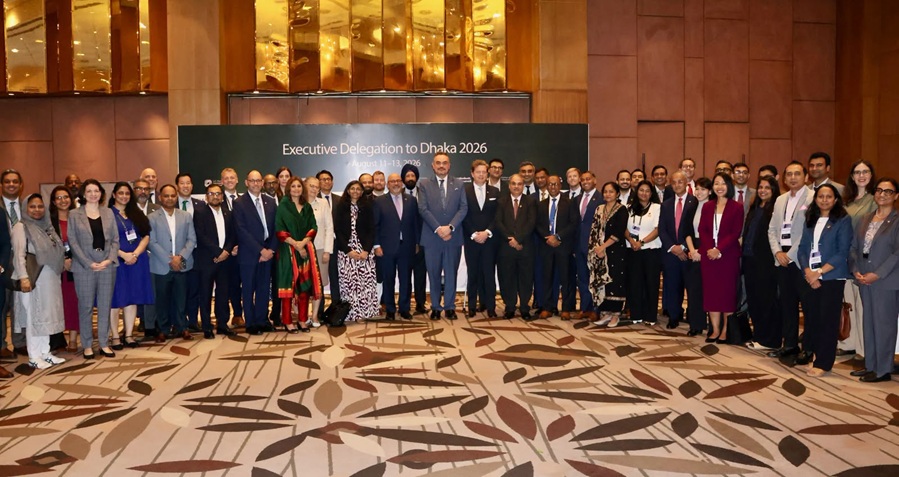
The executive delegation of the U.S.-Bangladesh Business Council (USBBC) arrived in Dhaka on August 11 and participated in meetings and business programs through August 13. Representatives of major American companies, including Chevron, Excelerate Energy, Visa, and Mastercard, were among those taking part in the visit.

The delegation’s visit is being viewed as an important initiative to deepen the longstanding economic relationship between Bangladesh and the United States, which spans more than five decades.

U.S. Ambassador to Bangladesh Brent T. Christensen welcomed the delegation to Dhaka, saying that leading American companies from the energy, technology, agriculture, and finance sectors had come to explore opportunities and build on more than 50 years of U.S.-Bangladesh economic ties.

Focus on Trade and Investment

The delegation’s primary objective is to explore new investment opportunities and potential business partnerships in Bangladesh. Energy, infrastructure, technology, digital services, healthcare, agriculture, and financial services are among the sectors attracting particular attention from U.S. businesses.

During meetings with Bangladeshi officials, representatives of the U.S. business community discussed ways to expand bilateral trade and investment and strengthen private-sector cooperation.

The delegation also met with Bangladesh’s Foreign Affairs Adviser Humayun Kabir, with discussions focusing on expanding economic relations and creating greater opportunities for U.S. investment in areas including industry, infrastructure, energy, technology, the digital economy, and healthcare.

Atul Keshap, President of the U.S.-Bangladesh Business Council and a former U.S. ambassador, also emphasized the potential for expanding business cooperation between the two countries.

$5 Billion Investment Goal

The U.S. business delegation’s visit comes as the American Chamber of Commerce in Bangladesh (AmCham) has set an ambitious target for mobilizing additional U.S. investment in Bangladesh.

AmCham has said it aims to help mobilize up to $5 billion in additional U.S. investment over the next five years, involving existing member companies as well as potential new American investors.

The investment target was discussed during an August 11 meeting between Prime Minister Tarique Rahman and an AmCham executive delegation.

The discussions also covered measures to improve Bangladesh’s investment climate, including reforms related to taxation, value-added tax, customs procedures, and other issues affecting businesses.

AmCham has said that its member companies have already invested more than $5 billion in Bangladesh. If the new investment target is achieved, the U.S. corporate presence in Bangladesh could expand significantly.

Energy and Technology Attract Strong Interest

The participation of companies such as Chevron and Excelerate Energy underscores the importance of Bangladesh’s energy sector to American investors.

Bangladesh has growing demand for reliable energy and infrastructure, creating potential opportunities for U.S. companies with expertise in energy production, liquefied natural gas, infrastructure, and related technologies.

The participation of global financial technology companies such as Visa and Mastercard also points to growing interest in Bangladesh’s rapidly developing digital economy and financial-services sector.

With a large population, expanding consumer market, growing digital economy, and increasing demand for infrastructure and energy, Bangladesh offers a range of potential opportunities for international investors.

New Opportunities Following the Trade Agreement

The U.S. business delegation’s visit comes several months after Bangladesh and the United States signed the Agreement on Reciprocal Trade earlier this year.

The agreement created a new framework for expanding bilateral trade and improving market access between the two countries.

Against this backdrop, the business delegation’s visit can be viewed as more than a routine commercial engagement. It represents an effort to translate recent progress in government-to-government economic relations into concrete investment, business partnerships, and private-sector cooperation.
For Bangladesh, increased U.S. investment could bring more than capital. New investments could also contribute to technology transfer, skills development, employment generation, and greater integration into global supply chains.

For American companies, Bangladesh represents a large and evolving South Asian market with opportunities in manufacturing, energy, digital services, financial technology, infrastructure, and consumer-oriented businesses.

A New Chapter in Economic Relations?

For more than five decades, Bangladesh-U.S. economic relations have been strongly associated with trade, particularly Bangladesh’s ready-made garment exports to the American market. Recent developments, however, suggest that the economic relationship could be entering a broader phase.

The visit by U.S. Special Envoy Sergio Gor to Bangladesh earlier this month, followed by the arrival of the high-level U.S. business delegation and AmCham’s $5 billion investment target, indicates growing engagement not only between the two governments but also between the private sectors of both countries.

The challenge now will be turning growing investor interest into actual projects. To attract and retain more U.S. investment, Bangladesh will need to maintain policy stability, improve transparency, streamline regulatory procedures, strengthen infrastructure, and ensure a more predictable business environment.

The latest U.S. business delegation’s visit therefore represents both an opportunity and a test for Bangladesh. Whether the growing interest of American companies can be converted into long-term investment, new jobs, technology partnerships, and expanded trade will be an important measure of the next phase of Bangladesh-U.S. economic relations.


Bangladesh-U.S. Relations Gain New Momentum as Washington Deepens Economic and Strategic Engagement

Shibbir Ahmed, Washington, D.C.: Bangladesh-U.S. bilateral relations appear to be entering a new phase, with growing engagement on trade and investment alongside broader discussions on strategic cooperation, regional security, and the Rohingya crisis. The two countries’ trade agreement earlier this year and the recent visit to Bangladesh by U.S. Special Envoy for South and Central Asia Sergio Gor have brought renewed attention to the economic and strategic dimensions of the relationship.

Gor visited Bangladesh from July 30 to August 1. Following the visit, the U.S. Embassy in Dhaka said the trip underscored the breadth and depth of the Bangladesh-U.S. relationship and reaffirmed Washington’s commitment to strengthening bilateral strategic and economic ties.

Renewed Interest in Investment

During a meeting with Sergio Gor, Bangladesh Prime Minister Tarique Rahman called for greater U.S. investment and stronger economic engagement between the two countries. The discussions covered trade, investment, the Rohingya crisis, and a range of issues of mutual interest.

Gor expressed a positive assessment of Bangladesh’s political and economic stability. He pointed to recent positive developments in the country and suggested that changes in the U.S. travel advisory could send a favorable message to American investors about Bangladesh as an investment destination.

The two sides also discussed potential U.S. investment in Bangladesh and opportunities for financing through the U.S. International Development Finance Corporation (DFC). The possibility of a future visit to Bangladesh by a delegation from the U.S.-Bangladesh Business Council was also discussed.

If these initiatives translate into concrete projects, they could expand opportunities for U.S. companies in areas such as infrastructure, energy, technology, manufacturing, and other emerging sectors.

A New Framework for Trade Relations

One of the most significant recent developments in Bangladesh-U.S. economic relations has been the signing of the Agreement on Reciprocal Trade (ART) earlier this year. Signed on February 9, 2026, the agreement seeks to expand market access and provide a new framework for bilateral trade. According to information from the Office of the U.S. Trade Representative, Bangladesh has committed to providing various market-access benefits for U.S. industrial and agricultural products, including machinery, medical equipment, information and communications technology products, energy-related products, and agricultural goods.

For Bangladesh, access to the U.S. market, export opportunities, and increased American investment remain important economic priorities. Against this backdrop, Gor’s visit can also be viewed as part of the broader effort to translate the commitments of the February trade agreement into deeper commercial and investment ties.

Strategic Importance Beyond Economics

Bangladesh’s geographic position also adds a strategic dimension to its relationship with the United States. Located along the Bay of Bengal and within the broader Indo-Pacific region, Bangladesh has increasing economic and geopolitical significance.

During Gor’s visit, discussions extended beyond trade and investment to issues related to regional cooperation and security. There are also opportunities for expanding bilateral cooperation in areas such as technology, investment, and security.

Recent international analyses have highlighted the growing strategic engagement between Washington and Dhaka. Bangladesh’s expanding economic relationship with China, changing dynamics with India, and the broader competition among major powers in the Bay of Bengal have all contributed to increased international attention toward Bangladesh.

However, viewing Bangladesh-U.S. relations solely through the lens of competition with China or India would overlook the broader interests shaping the bilateral relationship. Trade, investment, security, technology, and humanitarian cooperation all have their own significance in the relationship.

Rohingya Crisis Remains a Major Area of Cooperation

The Rohingya crisis remains another important pillar of Bangladesh-U.S. relations. During his Bangladesh visit, Sergio Gor visited a Rohingya refugee camp in Ukhia, Cox’s Bazar. Rohingya representatives called for continued international support for a safe, voluntary, sustainable, and dignified repatriation process.

Bangladesh has hosted a large Rohingya refugee population since hundreds of thousands fled violence in Myanmar. The country has repeatedly sought stronger international support for humanitarian assistance and a sustainable solution to the crisis. The United States remains an important humanitarian partner for Bangladesh on the Rohingya issue. As a result, humanitarian cooperation continues to complement the broader economic and strategic relationship between the two countries.

Why Bangladesh Matters More to Washington

Bangladesh is one of South Asia’s major economies, with a large consumer market and a substantial workforce. Its manufacturing base, particularly the ready-made garment sector, along with its growing services and technology sectors, offers opportunities for foreign investors.

For the United States, Bangladesh is an important trading partner and a potentially significant market for American companies. For Bangladesh, the United States remains one of its most important export destinations.

This creates a degree of economic interdependence between the two countries. Washington has an interest in expanding trade and investment opportunities in Bangladesh, while Dhaka is seeking greater access to the U.S. market, more American investment, technology cooperation, and stronger economic partnerships. Bangladesh’s location along the Bay of Bengal and its role in the wider Indo-Pacific further enhance its importance.

Implementation Will Be the Real Test

Despite the recent diplomatic momentum, the key question is whether political engagement and economic agreements will translate into measurable long-term results. The implementation of commitments under the Reciprocal Trade Agreement, the level of interest shown by U.S. companies in new investments in Bangladesh, and the future trajectory of bilateral trade will help determine the next phase of the relationship.

At the same time, Bangladesh will need to maintain a balanced foreign policy while protecting its economic interests and managing relations with major powers, including the United States, China, and India.

Recent developments suggest that Bangladesh-U.S. relations are no longer limited to traditional trade or garment exports. Trade, investment, technology, humanitarian cooperation, regional security, and Indo-Pacific geopolitics are increasingly shaping a broader and more multidimensional partnership.

Sergio Gor’s visit and the Reciprocal Trade Agreement signed earlier this year are two significant indicators of this evolving relationship. The next challenge will be turning the current diplomatic and economic momentum into sustained, mutually beneficial partnership.


US Pacific Fleet commander to visit Bangladesh

Dhaka: Admiral Steve Koehler, commander of the US Pacific Fleet, will arrive in Dhaka on Tuesday for a three-day official visit from August 4 to 6, US Embassy Dhaka acting spokesperson Mara Bird said on Monday. During his visit, Admiral Koehler is scheduled to meet senior Bangladeshi officials to discuss the longstanding US-Bangladesh defence partnership and opportunities to expand cooperation in maritime security, humanitarian assistance, disaster response and professional military education, she said.


Bangladesh reaffirms multilateral commitment during U.S. Army War College visit

Shibbir Ahmed, UN, New York: Bangladesh has reaffirmed its commitment to multilateralism, UN peacekeeping and international cooperation during a visit by a delegation from the United States Army War College to the Permanent Mission of Bangladesh to the United Nations today.

Welcoming the delegation Bangladesh’s Permanent Representative to the United Nations Ambassador Salahuddin Noman Chowdhury underscored the country’s longstanding engagement with the UN, rooted in its constitutional commitment to international peace and security. He noted that Bangladesh remains one of the largest contributors to UN Peacekeeping Operations, with Bangladeshi peacekeepers serving with distinction in some of the world’s most challenging conflict zones.

The Ambassador briefed the delegation on the activities of Bangladesh’s Permanent Mission including its engagement to build on its legacies in peacekeeping, sustainable development, women empowerment and climate justice. Reaffirming Bangladesh’s strong support for the United Nations, Ambassador Chowdhury stressed that dialogue, compromise and consensus-building remain essential to addressing contemporary global challenges and strengthening international cooperation.


Bangladesh calls for stronger global cooperation on safe migration at UN forum

Shibbir Ahmed, UN, New York: Bangladesh called for stronger global cooperation to curb irregular migration, protect migrant rights and ensure fair recruitment, decent work and fair wages for migrant workers.

Speaking at the General Debate of the Second International Migration Review Forum at United Nations Headquarters, Expatriates’ Welfare and Overseas Employment Minister Ariful Haque Choudhury said Bangladesh was strengthening accountability and expanding migrants’ access to justice through a “whole-of-government and whole-of-society” approach.
He said the country had formed a Migration Compact Taskforce and adopted a National Action Plan for 2026–2030 to advance safe, orderly and regular migration under the United Nations Global Compact for Migration (GCM).

The minister said Bangladesh had fulfilled seven of its 10 commitments made at the first review forum, submitted six new pledges and joined two regional initiatives, while presenting its first Voluntary National Review on GCM implementation. Describing climate change as a growing reason of migration, he called for predictable financing and technical support for climate-affected countries. He reaffirmed Bangladesh’s commitment to working with partners to promote safe migration and dignified return and reintegration of migrants.


Chevron Corporation delegation calls on PM

DHAKA – A delegation of Chevron Corporation today paid a courtesy call on Prime Minister Tarique Rahman. The delegation met the Prime Minister at his Cabinet Division office in the Bangladesh Secretariat here this afternoon, said Prime Minister’s Additional Press Secretary Atikur Rahman.

Chevron Corporation’s Base Assets and Emerging Countries (BAEC) Division President Javier La Rosa and Chevron Bangladesh President Eric M Walker were among the delegation members.

Power, Energy and Mineral Resources Minister Iqbal Hassan Mahmood Tuku, Prime Minister’s Adviser for Finance and Planning Rashed Al Mahmud Titumir and State Minister for Power, Energy and Mineral Resources Aninda Islam Amit were present at the meeting.


Bangladesh calls for accelerated nuclear disarmament at NPT Review Conference

Shibbir Ahmed, United Nation, New York: Bangladesh has called for renewed and strengthened global commitment to nuclear disarmament and non-proliferation at the 11th Review Conference of the Treaty on the Non-Proliferation of Nuclear Weapons (NPT) held at the United Nations Headquarters in New York today.

Speaking at the General Debate, Bangladesh’s Permanent Representative, Ambassador Salahuddin Noman Chowdhury, stressed that despite eight decades of the United Nations, the vision of a nuclear-weapon-free world remains unfulfilled. He warned that continued nuclear proliferation poses a grave threat to international peace and security, while also undermining global development aspirations.

Highlighting Bangladesh’s firm commitment to disarmament, the Ambassador noted that the country has consistently advocated for both nuclear and conventional disarmament and has voluntarily remained non-nuclear despite being located in a nuclear-armed region.

Ambassador Chowdhury urged nuclear-weapon States to fulfil their legal obligations under Article VI of the NPT and called for the universalization of disarmament treaties. He also reaffirmed Bangladesh’s strong commitment to advancing global disarmament through dialogue, trust-building, and collective action towards a safer world free from the threat of nuclear weapons.


Bangladesh Highlights Progress on Chittagong Hill Tracts Peace Accord at UN Forum

Shibbir Ahmed, New York, United Nations: Bangladesh has presented its progress on implementing the Chittagong Hill Tracts (CHT) Peace Accord at the 25th session of the United Nations Permanent Forum on Indigenous Issues, currently being held at the United Nations Headquarters.

Speaking at the forum, Mohammad Mizanur Rahman, Secretary of the Ministry of Chittagong Hill Tracts Affairs, outlined the government’s initiatives to implement the peace accord and promote the development, cultural preservation, and rights of indigenous and ethnic communities.

He emphasized that the Constitution of Bangladesh guarantees equal rights to all citizens regardless of religion, ethnicity, caste, gender, or place of birth. Regarding the implementation of the peace accord, he noted that the process is ongoing through an inclusive and participatory approach. Out of the 72 provisions of the accord, 65 have been fully implemented, 3 partially implemented, and 4 are currently in progress.

Rahman also highlighted measures taken to ensure security in the CHT region, maintain environmental balance, and resolve land disputes through land surveys and management initiatives. He informed the forum about broader development efforts undertaken by the government in the region.

He further stated that the government has recently appointed a Special Assistant on ethnic affairs with the status of State Minister, reinforcing its commitment to inclusive governance and participation of indigenous communities in decision-making processes.

In addition, the government’s initiatives to reduce poverty and inequality were highlighted, including expanded social safety nets, rural infrastructure development, digital connectivity, and livelihood diversification programs.

On preserving cultural and linguistic diversity, Rahman reaffirmed the government’s commitment to protecting the unique heritage of indigenous communities. He noted ongoing efforts to expand education and healthcare services, including scholarships, multilingual and e-learning systems, district hospitals, Upazela health complexes, community clinics, and mobile medical teams.

Addressing climate change, he mentioned that the government has adopted a plan to plant two million trees in the hill districts as part of broader environmental initiatives.

The two-week session of the United Nations Permanent Forum on Indigenous Issues is being held from April 20 to May 1, 2026. The Bangladesh delegation, led by Secretary Mohammad Mizanur Rahman, includes the Chairman of the Chittagong Hill Tracts Development Board, Major General (Retd.) Anup Kumar Chakma, along with representatives from the Prime Minister’s Office, Ministry of Foreign Affairs, and members of indigenous communities from both hill and plain regions.

The Permanent Forum on Indigenous Issues operates under the United Nations Economic and Social Council and works on global indigenous issues related to economic and social development, culture, environment, education, health, and human rights.


Bangladesh urges information integrity and inclusive global communication at UN

Shibbir Ahmed, New York: Bangladesh called for enhanced global efforts to ensure information integrity, combat misinformation and promote inclusive communication at the 48th session of the Committee on Information at United Nations Headquarters in New York today.

Addressing the general debate of the committee that takes place annually at the UN headquarters and deals with global communication, public information, and outreach efforts, Bangladesh’s Permanent Representative Ambassador Salahuddin Noman Chowdhury highlighted the growing challenges posed by misinformation, disinformation, hate speech and the misuse of artificial intelligence and digital platforms, which are fueling divisions and eroding trust across societies. He stressed the need for responsible use of information and communication technologies as well as for bridging the digital divide both between and within countries.

Highlighting Bangladesh’s contributions to UN peacekeeping including the deployment of women peacekeepers, the Permanent Representative called for continued efforts to counter anti-peacekeeping narratives and to promote accountability and environmental responsibility.

Ambassador Chowdhury also drew attention to disinformation-driven crises, including the Rohingya situation in Myanmar and the humanitarian crisis in Gaza, calling for accurate information dissemination and increased global awareness. He reaffirmed Bangladesh’s strong commitment to strengthening global communication efforts in line with the principles and values of the United Nations.


Bangladesh Pushes Fair Finance, LDC Graduation at UN Forum

Shibbir Ahmed, New York: Bangladesh called for urgent global action to bridge the widening SDG financing gap and to establish a fair, inclusive and responsive international financial system. At the General debate in ECOSOC Financing for Development Forum 2026 held at the UN Headquarters in New York today, Bangladesh’s Permanent Representative Ambassador Salahuddin Noman Chowdhury underscored that geopolitical conflicts, declining ODA, climate shocks, trade barriers and energy uncertainties were shrinking the policy space for developing countries. In this context, Bangladesh had sought an extension of its LDC graduation preparatory period to ensure a smooth and sustainable transition.

The Permanent Representative also highlighted the country’s progress in political and economic recovery with the government focusing on macroeconomic stability, rebuilding business confidence, strengthening the banking sector, promoting investment, and expanding direct support to vulnerable people.

Stressing the need to lower debt costs, avoid inefficient infrastructure-related debt, and channel FDI into productive, job-creating sectors with technology transfer, Ambassador Chowdhury called for a more representative global financial system, climate justice, action on loss and damage, and the return of stolen assets to their rightful owner.