Landau Calls for Shift From Aid to Investment in U.S. Economic Diplomacy

Shibbir Ahmed, New York — U.S. Deputy Secretary of State Christopher Landau has called for a stronger focus on trade and private investment as a long-term alternative to traditional foreign aid, saying economic diplomacy should play a central role in strengthening relationships between countries. Speaking at a Trade Over Aid Deals Showcase on September 25, Landau said economic and commercial issues had for decades taken a back seat in diplomacy, which he argued had too often focused primarily on political, military and security matters.

‘Economic and commercial issues should be treated as a core element of diplomacy’, Landau said, arguing that governments have a responsibility to create prosperity, economic opportunities and jobs for their people. Landau said economic projects can create lasting relationships that survive changes in government. While acknowledging that aid programs can help countries remain afloat, he argued that long-term economic projects can provide more sustainable value by generating investment, infrastructure, employment and economic growth.

He also emphasized that foreign investment does not necessarily mean a loss of national sovereignty. According to Landau, governments should establish clear terms and conditions for investments so that both investors and host countries understand their respective obligations and potential returns.

‘Investment is an engine of growth’, Landau said, urging governments and businesses to view foreign capital as an opportunity to expand economic activity rather than as a threat to sovereignty. He described investment relationships as potentially “win-win” arrangements, saying capital inflows can support infrastructure, jobs and economic growth while also strengthening political and commercial ties between countries.

U.S. private sector at the center

Landau said one of his priorities as deputy secretary is to improve communication between the U.S. government and American companies seeking investment opportunities overseas. He noted that during trips around the world, he frequently hears foreign governments asking why American companies are absent from projects where businesses from other countries have submitted bids.

Landau said he had previously focused largely on American companies directly operating overseas, including construction, infrastructure, oil and mining firms. He said he now sees a greater role for U.S. financial capital, particularly from New York City, which he described as the world’s financial capital.

‘There are trillions of dollars here that can be deployed around the world,’ Landau said, arguing that attracting capital providers could help connect foreign investment opportunities with American operating companies. He said he recently met with major capital providers to discuss why they were not investing in certain countries and what obstacles were preventing greater U.S. participation.

Calls for a more coordinated U.S. approach

Landau also acknowledged concerns from private investors about the fragmented nature of the U.S. government’s economic engagement overseas. He said investors sometimes want the U.S. government to have a financial stake or other involvement in projects to reduce risks associated with political changes in foreign countries.
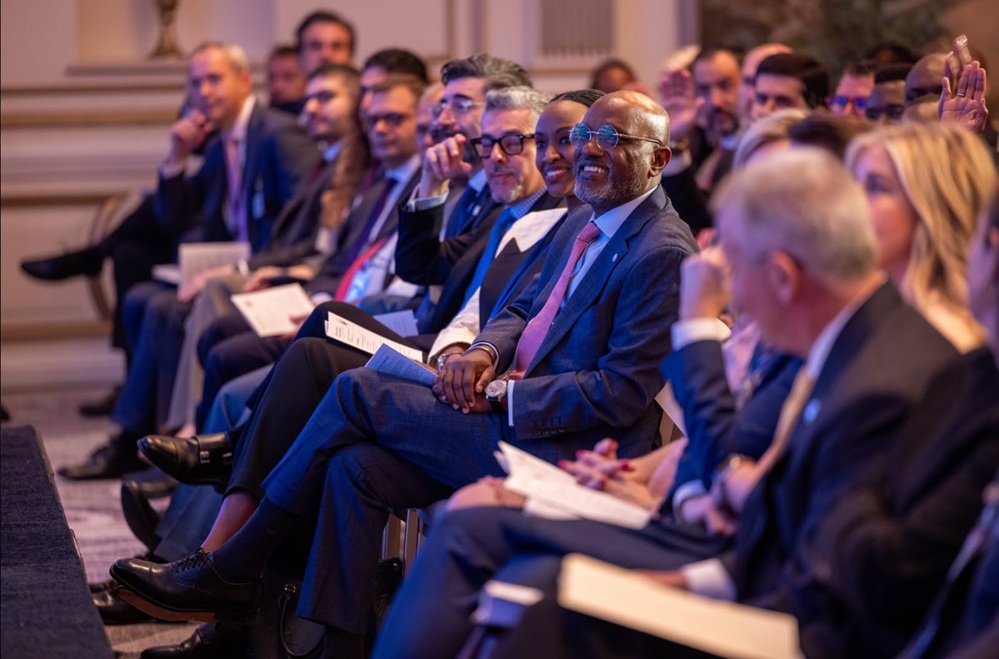
Government officials, private-sector representatives and international participants attend the “Trade Over Aid Deals Showcase” as U.S. officials discuss expanding trade and investment opportunities.

Landau said he wants the State Department, Commerce Department, Export-Import Bank, Development Finance Corporation and Millennium Challenge Corporation to work more closely together and make the U.S. government a more accessible “one-stop shop” for businesses seeking to invest overseas.

He cited the Pacific Islands as one region where he believes greater investment opportunities exist. Landau said he had organized a business summit and investment roundtable in Honolulu in February with Pacific Island leaders and U.S. private-sector representatives to identify sectors where investment could be expanded.

Landau said the U.S. government’s role is to improve communication between governments, businesses and investors and help identify opportunities for private capital. Concluding his remarks, Landau reaffirmed his commitment to expanding the global role of American businesses and called for what he described as an “unprecedented golden era for the American private sector around the world.”


ADB approves $200m for Dhaka power upgrade

Dhaka: The Asian Development Bank (ADB) has approved a $200 million loan to help Bangladesh modernise and strengthen its electricity distribution network in fast-growing industrial and urban areas around Dhaka. The project aims to improve the reliability, efficiency and resilience of electricity supply for businesses and households, according to an ADB statement yesterday.

Under the Power Distribution Network Enhancement Project, the Bangladesh Rural Electrification Board (BREB) will upgrade distribution infrastructure across 13 Palli Bidyut Samities serving rapidly growing industrial and urban areas around the capital. The project will install 1,150 megavolt-amperes (MVA) of new transformer capacity across 52 substations and increase the capacity of 12 existing substations by 115 MVA.

It will also construct or upgrade more than 2,600 kilometres of overhead and underground distribution lines and install insulated conductors to improve network reliability, efficiency and safety. Another 900 fault locator sets will be deployed to speed up fault detection and service restoration. The project will also build river-crossing transmission structures and switching stations to modernise system operations.

“This project will help future-proof the power system in key growth corridors around Dhaka through advanced technologies, stronger infrastructure, and enhanced resilience measures,” said ADB Country Director for Bangladesh Qingfeng Zhang.

The ADB loan is part of a broader financing package for the project. The government will provide about $108 million in cofinancing, while BREB will contribute about $141 million. The Republic of Korea’s e-Asia and Knowledge Partnership Fund will provide a $1 million technical assistance grant.


Biman to Sign Deal for 11 More Boeing Aircraft

Shibbir Ahmed, New York: Biman Bangladesh Airlines is set to sign an agreement in New York to purchase 11 additional commercial aircraft from U.S. aircraft manufacturer Boeing. The agreement is scheduled to be signed Wednesday on the sidelines of Prime Minister Tarique Rahman’s visit to New York for the 81st session of the United Nations General Assembly.

U.S. Ambassador to Bangladesh Brent T. Christensen welcomed the deal. In a social media post, he congratulated Boeing and Biman Bangladesh Airlines, describing the purchase of 11 additional commercial aircraft as another mutually beneficial achievement for U.S.-Bangladesh relations.

Christensen also said he was looking forward to witnessing the signing ceremony in New York. The new agreement for 11 aircraft is in addition to a $3.7 billion deal signed with Boeing on April 30. Under that agreement, Biman Bangladesh Airlines agreed to purchase 14 aircraft, including eight Boeing 787-10 Dreamliners, two Boeing 787-9s and four Boeing 737-8s.

With the additional 11 aircraft, Biman’s planned purchases from Boeing will rise to 25 aircraft. However, the specific models, total purchase price, financing arrangements and delivery schedule for the additional 11 aircraft have not yet been disclosed.

The purchase is part of Biman Bangladesh Airlines’ plans to expand and modernize its fleet. At the same time, Biman is considering a separate proposal to purchase 10 Airbus aircraft. The additional aircraft are expected to support the airline’s fleet expansion and meet growing demand in the aviation sector. The new aircraft are also intended to help Biman expand its international network and enhance passenger services.


Tarique Rahman, World Bank President Discuss Bangladesh’s Development Priorities

Shibbir Ahmed, New York — Bangladesh Prime Minister Tarique Rahman and World Bank Group President Ajay Banga discussed Bangladesh’s development priorities and economic progress during a meeting at the United Nations Headquarters on Tuesday. The meeting took place on the sidelines of the 81st session of the United Nations General Assembly, according to the Prime Minister’s Assistant Press Secretary KM Nazmul Haque.

The two sides discussed issues of mutual interest and exchanged views on strengthening the World Bank’s cooperation with Bangladesh in its development activities. They also explored potential new areas of partnership that could support Bangladesh’s development priorities and economic progress in the coming years.

The meeting was part of Tarique Rahman’s bilateral engagements during his visit to New York for the UN General Assembly, where he is scheduled to participate in discussions on major international and development issues.


Global Financial Architecture Must Support Sustainable Development: Titumir

Shibbir Ahmed, New York — Dr. Rashed Al Mahmud Titumir, Adviser to the Prime Minister on the Ministries of Finance and Planning, has called for comprehensive reform of the global financial architecture to ensure affordable, predictable and vulnerability-sensitive financing for developing countries.

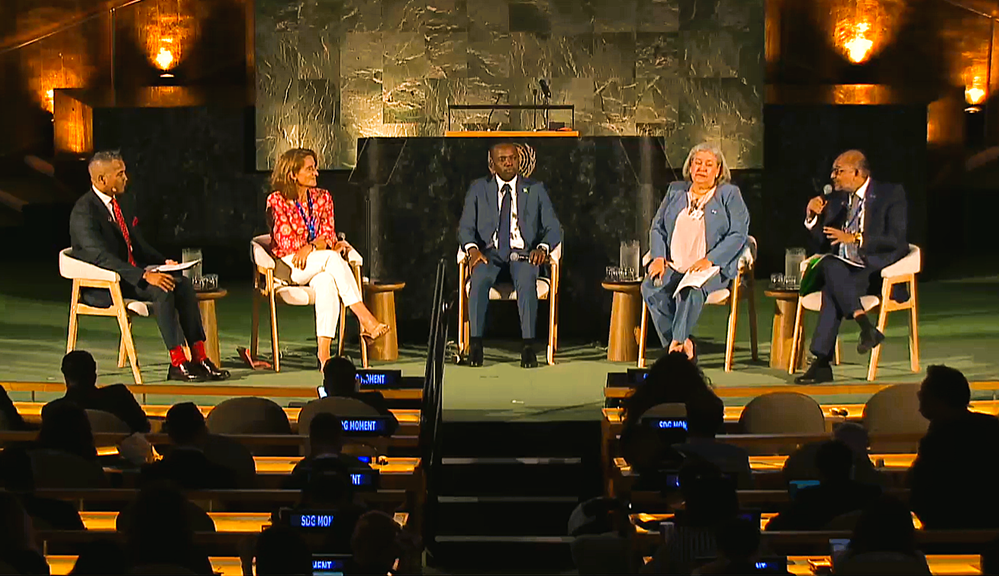
Speaking at the Leaders’ Dialogue on “Leading SDG Action” during the 2026 SDG Moment at the United Nations General Assembly Hall in New York, Dr. Titumir said the global financial system must move beyond simply financing development and instead create the conditions necessary to sustain it.

“Our broader vision should be collective and forward-looking: a global financial architecture that does not merely finance development, but creates the conditions in which development can be sustained,” he said. Dr. Titumir outlined five priorities for reforming the international financial architecture, particularly the role of multilateral development banks.

He called for a shift from responding to crises after they emerge toward anticipating vulnerabilities; greater representation and voice for vulnerable countries in international financial institutions; longer-term, lower-cost and predictable financing; closer alignment of international financing with national development strategies through coordinated, multi-year financing; and flexible transition support and preferential arrangements for countries graduating from the least developed country (LDC) category, including Bangladesh.

Bangladesh Adviser to the Prime Minister Dr. Rashed Al Mahmud Titumir speaks at the Leaders’ Dialogue on “Leading SDG Action” during the 2026 SDG Moment at the United Nations Headquarters in New York on September 18, 2026. Photo: Khabor

The Bangladeshi adviser also highlighted the country’s SDG Village initiative, describing it as an integrated, community-led approach to translating the Sustainable Development Goals into tangible improvements at the local level.

The 2026 SDG Moment, held on September 18 at UN Headquarters, brought together representatives of UN member states, international organizations and civil society to discuss accelerating action toward the Sustainable Development Goals ahead of the 2030 deadline.

The Leaders’ Dialogue also featured Teresa Ribera of the European Commission, Aristide Médénou, Minister of Economy and Finance of Benin, and Beatriz Carles de Arango, Minister for Social Development of Panama. The discussion was moderated by Sherwin Bryce-Pease of the South African Broadcasting Corporation.


Bangladesh Seeks IAEA Support for Rooppur Power Supply

DHAKA — Science and Technology Minister Faqir Mahbub Anam has sought support from the International Atomic Energy Agency (IAEA) to expedite the supply of electricity from Bangladesh’s Rooppur Nuclear Power Plant to the national grid.

He made the request during a bilateral meeting between a Bangladesh delegation and IAEA Director General Rafael Mariano Grossi at the agency’s headquarters in Vienna, Austria, on Thursday, according to an official handout.

The Bangladesh delegation was led by Mahbub Anam. The meeting focused on expanding the peaceful applications of nuclear technology, strengthening nuclear safety and security, and enhancing cooperation between Bangladesh and the IAEA. The minister thanked Grossi and the IAEA for their continued support in promoting the peaceful use of nuclear technology and strengthening international cooperation.

The two sides also discussed further strengthening Bangladesh’s capacity in nuclear science and technology through technical cooperation, human resource development, education, training and research. Mahbub Anam said Bangladesh has benefited from the IAEA’s technical cooperation programme for more than five decades in areas including healthcare, agriculture, food security, water management, industry and energy.

He noted that Bangladesh recently signed its Country Programme Framework (CPF) for 2026–2032, which he said would create new opportunities for technical cooperation in the years ahead. Describing the Rooppur Nuclear Power Plant as a historic milestone for Bangladesh’s energy security, the minister said the country had made significant progress toward carbon-free electricity generation through fuel loading at Unit 1 of the plant.

“This has opened up new possibilities for meeting the country’s growing electricity demand, ensuring energy security and addressing climate change,” he said. Mahbub Anam reaffirmed Bangladesh’s commitment to maintaining the highest international standards of nuclear safety, security and responsible management. He also highlighted Bangladesh’s accession to the Joint Convention on the Safety of Spent Fuel Management and on the Safety of Radioactive Waste Management, describing it as a reflection of the country’s commitment to a safe and responsible nuclear programme.

The meeting also discussed cooperation under the IAEA’s Rays of Hope: Cancer Care for All initiative. Mahbub Anam thanked Grossi and the IAEA Secretariat for their leadership in advancing the programme. Bangladesh joined the Rays of Hope initiative in 2025 and is working with the IAEA to develop it into an effective national-level programme. The minister said one of the initiative’s priorities is establishing an integrated, one-stop cancer care centre to provide more coordinated, accessible and patient-centred treatment.

He stressed the importance of further IAEA technical cooperation in capacity building, knowledge exchange and developing a sustainable cancer treatment system in Bangladesh. Mahbub Anam also welcomed the IAEA-WHO Impact Review Mission, scheduled for November 2026, saying it would provide an opportunity for an evidence-based assessment of Bangladesh’s national cancer control capacity and help establish practical priorities for improving cancer care.

Emphasising the need to bring the benefits of science and technology closer to the people, the minister said nuclear technology should contribute not only to technological advancement but also to improving living standards, strengthening climate resilience, increasing agricultural productivity and expanding healthcare services.

He urged the IAEA to expand opportunities for international education, training, fellowships and joint research for Bangladeshi students, scientists and researchers. The minister said Bangladesh aims to build a more integrated, equitable and sustainable cancer care system and ensure that the benefits of nuclear science and technology reach people who need them most.

He also called for deeper international cooperation with the IAEA in promoting peaceful nuclear technology, strengthening nuclear safety and security, and supporting sustainable development. Science and Technology Secretary Md Anwar Hossain, Bangladesh Ambassador and Permanent Representative to Vienna Toufique Hasan, Bangladesh Atomic Energy Commission Chairman Dr M Moinul Islam, and Joint Secretary of the Science and Technology Ministry Sheikh Mohammed Tauhidul Islam attended the meeting.


U.S. Sanctions Iranian Digital Asset Network Over Sanctions Evasion

Shibbir Ahmed, Washington DC — The United States has imposed new sanctions on an Iranian digital asset network accused of helping the Iranian regime evade sanctions and move funds through cryptocurrency. The U.S. Department of the Treasury’s Office of Foreign Assets Control (OFAC) announced the measures on September 17 as part of Operation Economic Outcast, a broader U.S. campaign targeting Iran’s financial networks and sources of revenue.

The sanctions target BitBank, an Iranian digital asset exchange controlled by Iranian financier Babak Zanjani, along with its developer, Pishtaz Simorgh Electronic Trade Company. Three individuals associated with Zanjani—Hossein Ali Zaker Hossein, Mohammad Mahdi Zaker Hossein, and Seyed Adel Heidari—were also designated.

According to the Treasury Department, the targeted entities and individuals form part of an Iranian digital asset-based sanctions-evasion infrastructure. U.S. officials said BitBank has been used to transfer payments received by the Iranian regime and that the broader network was involved in laundering funds and transferring hundreds of millions of dollars in Bitcoin to Iran’s Islamic Revolutionary Guard Corps (IRGC).

Treasury Secretary Scott Bessent said the action demonstrates that cryptocurrency-based financing linked to the Iranian regime remains within the reach of U.S. sanctions authorities.

The latest measures were issued under Executive Order 13902, which authorizes sanctions targeting certain sectors of Iran’s economy, including its digital asset sector. Treasury said the expanded use of the authority is intended to disrupt Iran’s efforts to use digital assets to circumvent U.S. sanctions.

The action is part of Operation Economic Outcast, launched by the Treasury Department on August 24, 2026. The campaign focuses on financial networks, facilitators and channels that U.S. authorities say Iran uses to generate revenue, evade sanctions and finance activities linked to the regime.

Treasury has warned that entities involved in money laundering or sanctions evasion on behalf of Iran could face restrictions on access to the U.S. financial system. The department has also increased the potential exposure to secondary sanctions for foreign entities that continue certain business dealings with Iran.

The latest action follows a series of U.S. sanctions targeting Iranian financial and economic networks, including measures against foreign banks and other entities accused of facilitating Iran’s access to international financial channels.


DFC Approves $8 Billion in Global Investments

Shibbir Ahmed, WASHINGTON, D.C. — The U.S. International Development Finance Corporation (DFC) Board of Directors has approved more than $8 billion in new investments aimed at expanding U.S. exports, strengthening critical infrastructure and energy security, and supporting American technology and businesses in international markets.

The DFC said the investments include projects in Ukraine, Jordan, Sub-Saharan Africa and emerging markets, with additional support for critical minerals in West Africa. The agency described the package as part of its effort to advance U.S. economic and national security interests.

One major component will support U.S. exports to emerging markets through a counter-guarantee for the International Finance Corporation’s Global Trade Finance Program. The arrangement is designed to help foreign banks expand trade-finance capacity and facilitate purchases of American goods.

In Ukraine, DFC will provide financing to Vodafone Ukraine to strengthen telecommunications infrastructure, including the development of secure and reliable 5G networks. The agency also approved financing for a 200-megawatt/400-megawatt-hour battery energy storage portfolio across six Ukrainian sites. The project, developed by DTEK with technology from U.S.-based Fluence, is designed to improve the stability and resilience of Ukraine’s electricity grid. DFC said the storage system could provide enough power for approximately 600,000 homes for two hours.

In Jordan, DFC approved a loan for the National Carrier Project Company to support construction, operation and maintenance of a seawater desalination plant and water-conveyance system. Political-risk insurance will also be provided for equity investors Meridiam and Suez.

In Sub-Saharan Africa, DFC will make an equity investment in WIOCC Group to expand digital infrastructure across the continent. WIOCC operates telecommunications, data-center and fiber-network infrastructure spanning 30 African countries, according to DFC.

DFC is also supporting a critical-minerals project in West Africa. The agency said some additional transactions remain confidential because of commercial sensitivities and may require further steps, including congressional notification, before they can be formally committed and closed.


Rooppur to Supply 300MW Next Month

DHAKA — Russian Ambassador to Bangladesh Alexander Grigoryevich Khozin has said the Rooppur Nuclear Power Plant is expected to supply 300 megawatts (MW) of electricity to Bangladesh’s national grid by next month.

The ambassador made the remarks during a courtesy meeting with Federation of Bangladesh Chambers of Commerce and Industry (FBCCI) Administrator Md Fazlul Hoque at the FBCCI office in Gulshan on Wednesday afternoon. Khozin said work is underway to resolve technical issues at the nuclear power plant, with nearly 4,000 Russian experts and engineers currently involved in the process.

During the meeting, the Russian envoy also agreed to jointly establish a Russia-Bangladesh Business Council aimed at expanding trade, investment and broader economic cooperation between the two countries.

He said Russia is also planning to organize a Russia-Bangladesh Business Forum in Moscow, providing an opportunity for businesses from both countries to establish direct contacts and explore potential partnerships.

According to the ambassador, a formal announcement about the proposed forum is expected during a meeting of the Intergovernmental Commission, scheduled to be held in Dhaka in early November. The business forum is expected to facilitate greater interaction between Bangladeshi and Russian traders and create new opportunities for bilateral business cooperation.

To further strengthen trade ties, FBCCI Administrator Fazlul Hoque urged Russia to give greater priority to Bangladesh’s ready-made garment (RMG) sector, along with other emerging areas of mutual economic interest. The discussions highlighted the two countries’ interest in expanding economic and commercial relations while exploring new avenues for investment and private-sector cooperation.


Bangladesh RMG Exports to US Jump 25.65%

DHAKA — Bangladesh’s readymade garment (RMG) exports to the United States surged 25.65 percent year-on-year in August, marking the highest monthly growth recorded in the US market, according to data from the Export Promotion Bureau (EPB). Bangladesh exported more than $817 million worth of garments to the US in August of the 2026-27 fiscal year, compared with $650.34 million during the same month a year earlier.

During July-August of FY2026-27, Bangladesh’s RMG exports to the US reached $1.61 billion, registering an 11.42 percent increase from the corresponding period of FY2025-26. The average monthly RMG export to the US during the first two months of the current fiscal year stood at $806.46 million, compared with an average of $645.38 million in FY2025-26. The strong performance was largely driven by the sharp increase recorded in August.

The United States remains Bangladesh’s largest single market for RMG exports. In FY2025-26, Bangladesh exported around $9.04 billion in merchandise to the US, up 4.09 percent from the previous fiscal year. Of that amount, approximately $7.74 billion came from RMG products, while non-garment exports accounted for about $1.30 billion.

Bangladesh’s non-RMG exports to the US include leather and leather goods, jute products, home textiles, agricultural and processed food products, plastics and melamine products, pharmaceuticals, footwear, textiles and yarn, and light engineering products.

US market offers further growth opportunities

Apparel industry leaders say Bangladesh has significant room to expand its presence in the US market, particularly through product diversification and increased production of higher-value garments. Mohammad Fazlul Hoque, an apparel entrepreneur and administrator of the Federation of Bangladesh Chambers of Commerce and Industry (FBCCI), said the August increase was partly linked to the deadline for placing orders for winter apparel.

“Despite various global crises, Bangladeshi entrepreneurs have an inherent capacity to compete,” he said, adding that exporters are receiving better orders from US buyers for the coming months. Hoque said greater product diversification could help Bangladesh substantially increase exports to the US.

Fazle Shamim Ehsan, executive president of the Bangladesh Knitwear Manufacturers and Exporters Association (BKMEA) and managing director of Fatullah Apparels Ltd, said changing global conditions have created opportunities for Bangladeshi exporters. He stressed that reliable energy supplies and policy continuity would be important for fully utilizing those opportunities.

Mahmududdin Rubel, CEO of Bangladesh Apparel Voice, described the current pace of RMG exports to the US as encouraging. He estimated that if the current trend continues over the next 12 months, Bangladesh’s RMG export earnings from the US could reach $9 billion in FY2026-27. He also emphasized the importance of product diversification, higher value addition and improved quality to strengthen Bangladesh’s position in the US apparel market.

Focus shifts to export diversification

Alongside garments, Bangladesh is seeking to expand exports of leather, jute, home textiles, agricultural and processed food products, pharmaceuticals, plastics and light engineering goods to the US. The Commerce Ministry has identified pharmaceuticals, leather and leather products, agricultural goods, light engineering and information and communication technology as priority sectors for expanding trade with the United States.

Bangladesh earned around $48 billion from total merchandise exports in FY2025-26, with the United States accounting for approximately $9.04 billion, making it the country’s largest single export destination.

The sharp growth in RMG exports during the opening months of FY2026-27 has renewed attention on Bangladesh’s potential to expand its share of the US apparel market while diversifying its overall export base.