Houthis Seize Strategic Red Sea Island, Raising Global Trade Risks

Shibbir Ahmed, NEW YORK — Iran-aligned Houthi forces have seized the strategic Mayun Island at the southern entrance to the Red Sea, tightening their grip around the Bab el-Mandeb Strait and raising fresh concerns over global shipping and energy supplies.

The Houthis also took control of Yemen’s Red Sea port city of Mokha on Thursday and have advanced along the coast toward strategic islands, according to Reuters and the Associated Press. The developments represent the group’s most significant territorial gains since a 2022 truce largely halted Yemen’s civil war.

Mayun Island, also known as Perim, sits in the Bab el-Mandeb Strait, a critical maritime chokepoint connecting the Red Sea with the Gulf of Aden. About 12% of global goods normally pass through the waterway, making any prolonged disruption a potential threat to international trade.

The latest Houthi advance comes as shipping through the nearby Strait of Hormuz has already been severely disrupted by the wider Middle East conflict. Saudi Arabia has increasingly relied on the Red Sea route to move oil after traffic through Hormuz became heavily restricted.

The potential loss of secure access to both major maritime corridors has heightened concerns among energy traders and shipping companies. Reuters reported that Saudi crude production fell to about 6 million barrels per day in August, its lowest level in more than three decades, partly because of disruptions linked to attacks on shipping around the Bab el-Mandeb.

Oil markets have responded sharply to the growing risks. Brent crude rose above $100 a barrel this week, while U.S. West Texas Intermediate crude also crossed the $100 threshold as traders assessed the possibility of further supply disruptions.

Saudi Arabia has responded to the Houthi advance with military action. A Houthi-controlled broadcaster reported that Saudi forces carried out airstrikes on the airport in Mokha after the port city fell to the group. There were no immediate reports of casualties or significant damage.

The escalation has also raised fears of a renewed wider conflict inside Yemen. More than 46,000 people have fled their homes since the latest fighting began, according to the U.N. migration agency, while Yemen’s internationally recognized government has indicated that it intends to launch a counteroffensive to recover territory captured by the Houthis.

For international shipping, the main concern is whether the Houthis will use their new positions to further restrict commercial traffic through the Bab el-Mandeb. Shipping through the waterway had already fallen substantially after Houthi attacks on commercial vessels beginning in late 2023, prompting many shipping companies to reroute vessels around Africa.

With both the Bab el-Mandeb and Strait of Hormuz facing serious security challenges, businesses are preparing for potentially higher transportation and energy costs. Any prolonged disruption could affect oil prices, shipping rates and the movement of goods between Asia, the Middle East and Europe.

The latest developments have therefore transformed the Houthi advance from a regional military development into a growing concern for global trade and energy markets.


Oil Stays Above $100 as Middle East Tensions Disrupt Supplies

Shibbir Ahmed, New York — Oil prices remained above $100 a barrel on Friday, putting both major benchmarks on track for their strongest weekly gains in months as escalating violence in the Middle East disrupted key shipping routes and heightened concerns over global supplies.

Brent crude futures rose earlier in the session to above $108 a barrel before giving back some of those gains. U.S. West Texas Intermediate crude also traded above $100, after both benchmarks jumped more than 6% on Thursday.

Brent was last trading around $104 a barrel, while WTI fell below the $100 mark later in the session. Despite the pullback, both contracts remained sharply higher for the week. Reuters reported that Brent and WTI were on track for weekly gains of more than 8%.

The latest price moves have been driven largely by growing risks to oil shipments through the Strait of Hormuz and the Red Sea, two critical routes for global energy supplies. Increased attacks on tankers and other shipping have raised concerns that disruptions could persist.

Iran-aligned Houthi forces also seized Yemen’s port of Mocha, according to reports, adding to concerns about shipping through the Bab al-Mandeb Strait and the wider Red Sea region. At the same time, traffic through the Strait of Hormuz remains heavily restricted.

The Strait of Hormuz is one of the world’s most important oil transit routes. Oil flows through the waterway have fallen sharply from levels seen before the latest escalation in fighting, putting additional pressure on already tight global supplies.

Supply concerns have also been reinforced by disruptions to energy infrastructure in the region. Reuters reported that Saudi Arabia’s crude production fell to about 6 million barrels per day in August, its lowest level in roughly three decades, following attacks on energy facilities.

The disruption is also being felt in fuel markets. U.S. diesel prices have climbed to record levels, increasing costs for transportation, agriculture and other industries. Higher energy prices are also raising concerns about renewed inflationary pressure around the world.

Oil prices had already risen sharply in recent weeks as the conflict involving the United States and Iran intensified. Brent crude crossed the $100 threshold on Wednesday for the first time since July, and Thursday’s rally pushed both Brent and WTI above $100.

Markets remain focused on whether diplomatic efforts can restore safe passage through key shipping routes. Any sustained improvement in shipping conditions could ease some of the recent price pressure, while further attacks or prolonged restrictions could keep oil prices elevated.

For now, traders remain cautious as the conflict continues to threaten one of the world’s most important energy supply corridors.


Mastercard-IFC Launch $500 Million Initiative for Emerging Markets

Shibbir Ahmed, NEW YORK: Mastercard and the International Finance Corporation (IFC), a member of the World Bank Group, have launched a $500 million global risk facility aimed at expanding digital financial access in emerging markets.

Announced on September 9, the initiative is designed to help banks, fintech companies and other financial institutions in emerging markets participate more easily in international payment networks. The program will initially focus on emerging markets in Europe and Latin America.

The initiative seeks to reduce financial and risk-related barriers that can prevent local financial institutions from expanding digital payment services. By helping institutions manage international payment-related exposure, the facility is expected to support broader access to secure and modern financial services.

According to the World Bank Group, many banks and fintech companies in emerging markets face difficulties meeting the financial requirements needed to participate in global payment systems. These barriers can leave millions of consumers and small businesses dependent on cash and excluded from the digital economy. The initiative aims to help address that gap by expanding access to digital payments for consumers and businesses, including small enterprises and underserved communities.

According to IFC, the program could support a significant expansion of digital payment activity through participating financial institutions. The initiative is expected to potentially enable around $280 billion in additional digital payment volume, facilitate the issuance of approximately 360 million new cards and bring about 90 million new active users into digital payment systems.

Women are expected to account for a significant share of the new users, with approximately 39 million women potentially gaining access through the initiative. IFC Managing Director Makhtar Diop said expanding digital payments in emerging markets can help create economic opportunities and bring more people and businesses into the formal financial system.

Mastercard said the initiative is intended not only to increase access to financial services but also to strengthen security, trust and resilience across digital payment ecosystems. The program reflects growing efforts to expand financial inclusion in emerging markets, where digital payments are increasing but access to international payment infrastructure remains uneven. By reducing barriers for local financial institutions, Mastercard and IFC aim to help more consumers and businesses participate in the formal digital economy.


World Bank: AI Offers Developing Countries a Rare Path to Faster Growth

Shibbir Ahmed, WASHINGTON DC  — Artificial intelligence could give developing countries a rare opportunity to accelerate economic growth, improve public services and address long-standing development challenges, according to the World Bank’s World Development Report 2026: The Promise of Artificial Intelligence.

The report examines the potential impact of artificial intelligence on 5.6 billion people living in low- and middle-income countries and argues that developing economies do not need to build the world’s most advanced AI systems to benefit from the technology. Instead, the World Bank recommends that countries follow a three-part approach: adopt, adapt and advance.

The report says developing countries can begin by adopting existing AI tools in areas such as health care, agriculture, education and government services. They can then adapt those technologies to local languages, institutions, data and development needs.

AI-powered tools are already helping farmers improve weather-related decisions, supporting medical screening and assisting teachers in preparing educational materials, according to the World Bank.

The institution warns, however, that the benefits of AI will not be automatic. Reliable infrastructure, digital connectivity, education, skills, strong institutions and access to relevant data will be essential if developing economies are to translate AI adoption into higher productivity and broader prosperity.

The report also highlights the risk of a widening global AI divide. A small number of countries and companies currently dominate advanced AI models, semiconductor production and data-center infrastructure, potentially creating new forms of technological dependence.

For most developing economies, the World Bank says building frontier AI models from scratch is unlikely to be a realistic near-term strategy because of the enormous costs involved in computing infrastructure, data and specialized talent.

Instead, countries should focus on practical applications that expand access to expertise and improve productivity while building the infrastructure and skills needed for deeper participation in the AI economy.

The World Bank describes the rapid spread of AI as a historic opportunity for developing economies, noting that AI is spreading faster than earlier general-purpose technologies such as electricity and the internet.

The report argues that strategic adoption and adaptation could allow developing countries to capture significant economic and social gains without having to compete directly with the world’s largest technology companies in developing frontier AI systems.


Oil Prices Break Above $100 as U.S.-Iran Conflict Escalates

Shibbir Ahmed, NEW YORK — Oil prices climbed above $100 a barrel on Wednesday as escalating tensions between the United States and Iran raised fresh concerns about disruptions to global energy supplies and shipping through the strategically vital Strait of Hormuz.

Brent crude, the international benchmark, rose above the $100 mark as investors reacted to the widening confrontation in the Middle East. The surge reflects growing fears that continued military escalation could threaten oil flows through the Strait of Hormuz, a critical route for global energy shipments.

The latest increase came amid heightened tensions following U.S. military action involving Iranian oil tankers and Iran’s subsequent missile attacks toward a U.S.-used military facility in Jordan.

The Strait of Hormuz has become a central focus of the crisis. A prolonged disruption in the waterway could have significant consequences for global oil markets because a substantial share of the world’s petroleum shipments passes through the narrow strategic corridor.

Higher crude prices are also raising concerns about renewed inflationary pressure. A sustained increase in energy costs could push up prices for gasoline, transportation and other goods, potentially complicating efforts by central banks to control inflation.

Financial markets have responded cautiously to the escalation. Investors are closely watching developments between Washington and Tehran for signs that the conflict could expand further or threaten critical energy infrastructure and shipping routes. The rise above $100 a barrel represents a major psychological threshold for global energy markets and underscores the economic risks posed by the widening U.S.-Iran confrontation.

Analysts say oil prices could remain volatile as long as uncertainty persists over the security of shipping through the Strait of Hormuz and the possibility of further military escalation in the region.


Trump Bans Some Canadian Imports as Trade War Escalates

Shibbir Ahmed, Washington DC: President Donald Trump has ordered new restrictions blocking the import of certain Canadian products into the United States, escalating the growing trade dispute between Washington and Ottawa.

Under proclamations issued on September 8, 2026, the United States will prohibit imports of specified Canadian dairy products, alcoholic beverages and motor vehicles, with the new restrictions taking effect September 29. The White House said the measures are intended to respond to what it describes as continued Canadian discrimination against U.S. commerce.

The move comes as Canada has imposed retaliatory tariffs on about $20 billion worth of U.S. goods, with duties ranging from 15% to 50%. The measures mark another major escalation in the trade dispute between the two longtime allies.

The latest U.S. action goes beyond tariffs by completely excluding certain Canadian products from the U.S. market. The White House says that if any part of the import ban is invalidated, the previously imposed 50% tariff would apply instead to the affected products.

The dispute has also widened beyond tariffs. Trump has threatened additional action against Canadian companies, including aircraft manufacturer Bombardier, while Canada has signaled that it intends to diversify its trade relationships and reduce its dependence on the U.S. market.

The escalating measures are raising concerns about the future of the United States-Mexico-Canada Agreement (USMCA) and the economic relationship between the two countries.


US Sanctions 36 Individuals and Entities, Including 27 Iranian Airlines

Shibbir Ahmed | Washington, DC: The United States has imposed sweeping new sanctions targeting Iran’s aviation sector, placing 36 individuals and entities—including 27 Iranian airlines—under sanctions. The US Treasury Department announced the measures on Tuesday, saying the action was taken under “Operation Economic Outcast” to increase pressure on Iran’s aviation industry, aircraft procurement activities and related networks.

US authorities allege that the sanctioned individuals and entities were involved in procuring and transferring aircraft, aviation technology and other sensitive equipment for Iran. They are also accused of supporting Iranian aviation networks used to transport weapons, personnel and illicit cargo.

27 Iranian Airlines Sanctioned

The Treasury Department’s Office of Foreign Assets Control (OFAC) designated 27 Iranian airlines for operating in Iran’s aviation sector. The airlines include Air Shiraz, Asa Jet Airline, ATA Airlines, Atlas Aviation Group, Ava Airlines, Chabahar Airlines, Fly Kish Airlines, Iran Air Tour, Iran Aseman Airlines, Kish Airlines, Karun Airlines, Qeshm Air, Saha Airlines, Sepehran Airlines, Taban Airlines, Varesh Airlines and Zagros Airlines, among others. According to Washington, the latest measures represent one of the most significant sanctions actions against Iran’s commercial aviation sector in recent years.

Mahan Air Support Network Also Targeted

The United States also imposed sanctions on several companies and individuals in third countries accused of supporting Mahan Air, an Iranian airline that is already under US sanctions. According to the Treasury Department, intermediaries based in the United Arab Emirates and Türkiye played a role in transferring US-made or US-controlled aircraft to Mahan Air.

US authorities said that at least three Boeing 777 aircraft were transferred to Mahan Air through a network during the summer of 2026. The United States alleges that several companies based in the UAE and Oman were involved in the network.

Aviation Authorizations Suspended

Alongside the new sanctions, OFAC suspended three previously issued authorizations related to aviation operations involving Iran. The authorizations had permitted, under certain circumstances, the use of Iranian airspace and the operation of US-origin or US-controlled commercial aircraft in Iran by non-US airlines. US authorities said aviation safety-related matters would continue to be considered separately on a case-by-case basis.

Warning to Financial Institutions

The Financial Crimes Enforcement Network (FinCEN) also issued a separate alert to financial institutions. The agency urged banks and other financial institutions to increase scrutiny of suspicious transactions linked to Iran’s efforts to procure commercial aircraft and aircraft parts.

The Treasury Department alleges that Iran has used intermediaries and front companies across Europe, the Middle East, Africa and Asia to obtain aircraft, aviation components and dual-use technologies while concealing their ultimate destination.

Part of ‘Operation Economic Outcast’

The latest sanctions are part of the United States’ “Operation Economic Outcast,” an initiative announced in August aimed at increasing pressure on financial networks and revenue streams linked to the Iranian government.

The Treasury Department said assets and interests belonging to sanctioned individuals and entities that fall under US jurisdiction will be blocked. US citizens and companies are generally prohibited from engaging in financial or commercial transactions with those designated.

Foreign companies and financial institutions could also face the risk of US sanctions for engaging in significant transactions with sanctioned individuals or entities. US authorities said the latest measures are intended to further isolate Iran’s aviation sector from the international financial system.


Oil Prices Surge Toward $100 as Middle East Tensions Intensify

Shibbir Ahmed, NEW YORK: Oil prices surged toward $100 a barrel on Tuesday as escalating violence in the Middle East raised fresh concerns about global energy supplies. Brent crude futures climbed as high as $99.46 a barrel, the highest level since July 24, before easing slightly. U.S. West Texas Intermediate crude also rose sharply, reaching $94.73 a barrel, its highest level since June 8.

The latest surge came after Iran-backed Houthi forces launched attacks on several southern Saudi Arabian cities and energy facilities. The attacks injured at least 73 people and sparked fires at Saudi energy sites, adding to concerns about disruptions to oil production and exports. At around 0956 GMT, Brent was trading at about $98.39 a barrel, up 1.43%, while WTI stood at approximately $93.73, up 2.46%, according to Reuters.

Growing supply concerns

Investors are increasingly concerned that continued attacks on energy infrastructure could further tighten global oil supplies. The situation is particularly sensitive because the conflict is unfolding across the Gulf region and around critical shipping routes. Any prolonged disruption to oil production or transportation could have consequences for fuel prices, inflation and economic growth worldwide. Iran has also threatened what it described as “economic warfare” against the United States, adding another layer of uncertainty to already volatile energy markets.

Markets under pressure

The rise in oil prices is also affecting global financial markets. Higher energy costs are raising concerns about inflation and increasing pressure on central banks as they assess interest-rate policy. U.S. stock futures were lower in early trading Tuesday, while Asian markets also faced pressure amid rising geopolitical tensions and higher energy costs.

Analysts are watching closely to see whether Brent can break above the $100-a-barrel threshold. Reuters reported that although supply disruptions are significant, alternative export routes, rising production outside OPEC and weaker demand are helping prevent prices from moving decisively above $100 for now.

For consumers and businesses, a sustained rise in crude prices could translate into higher gasoline, diesel, transportation and production costs in the weeks ahead. With fighting continuing and energy infrastructure increasingly caught in the conflict, global markets remain highly sensitive to developments across the Middle East.


Russia Deepens Role in Myanmar’s Dawei Deep-Sea Port Project

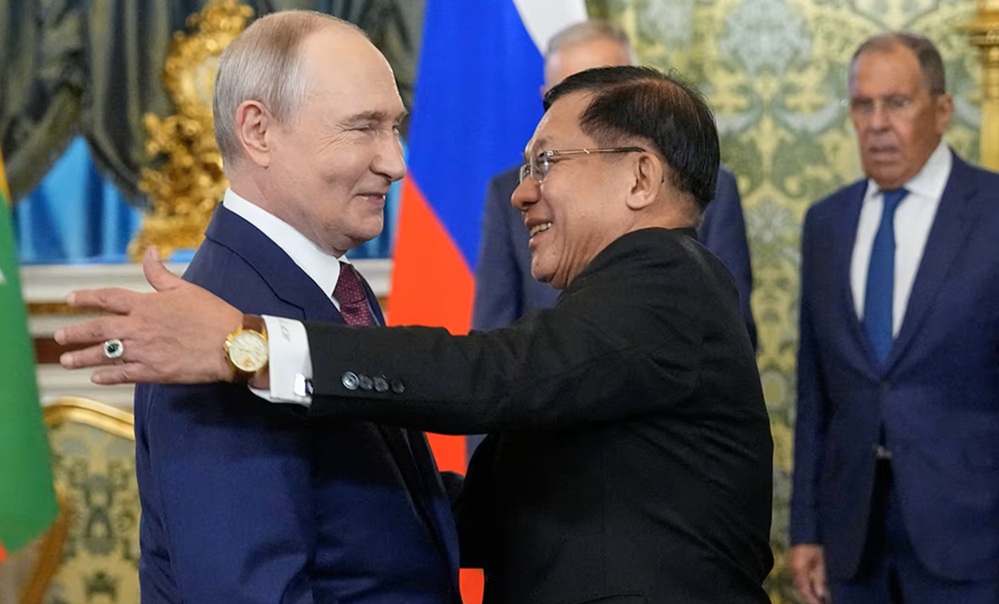
Shibbir Ahmed, New York — Russia is deepening its involvement in Myanmar’s long-delayed Dawei deep-sea port and special economic zone project, as the two countries seek to revive the strategic development in the country’s southern Tanintharyi Region.

The Dawei project, which includes a deep-sea port, industrial zone and major energy facilities, has returned to the center of Myanmar-Russia economic cooperation after years of delays over financing and implementation.

During a meeting in Vladivostok on September 1, Myanmar Vice President U Nyo Saw and Russian Deputy Prime Minister Yury Trutnev discussed the Dawei project along with energy, trade and tourism cooperation. No new financing agreement, project value or construction timetable was announced following the meeting.

Russia’s interest in Dawei has become more concrete in recent months. In June, Myanmar’s Launglon Economic Development Company and Russia’s state-controlled Inter RAO signed a memorandum of understanding for a power plant linked to the Dawei deep-sea port project.

At a Russia-Myanmar business forum in Moscow in August, Russian Economic Development Minister Maxim Reshetnikov said Moscow was seeking majority stakes for Russian companies investing in projects within the Dawei special economic zone during the investment payback period. The planned development includes a deep-water port, a 660-megawatt power plant, an oil refinery and industrial and warehouse facilities.

Strategic location

Dawei is located on Myanmar’s Andaman Sea coast in Tanintharyi Region. Supporters of the project say its location could provide an alternative trade route between the Indian Ocean and Southeast Asia, potentially reducing dependence on the Strait of Malacca.

Myanmar officials have promoted the project as a potential gateway linking the Indian Ocean with Thailand and other parts of the region. The proposed transport connections could eventually link Dawei with Thailand’s eastern economic areas and the wider Southern Economic Corridor.

The project was originally developed with Thai participation but stalled after difficulties securing financing and implementing the required infrastructure. Myanmar’s official port authority records show that the earlier agreement with Italian-Thai Development was terminated after the developer failed to secure the required funding.

Military campaign around project area

The renewed push to revive Dawei has coincided with an intensified military campaign in areas surrounding the proposed development. Reuters reported in August that Myanmar’s military had deployed hundreds of troops to clear areas designated for the Russia-backed Dawei special economic zone. The operation involved fighting with local resistance groups and the displacement of civilians.

Human rights organization Fortify Rights separately reported allegations of killings, torture and forced displacement during military operations around the project area. The organization said the operations were taking place against the backdrop of accelerating Myanmar-Russia cooperation over Dawei.

Despite renewed political support from Moscow and Naypyidaw, major questions remain over financing, security and the feasibility of completing the multibillion-dollar project amid Myanmar’s continuing conflict.

If successfully revived, Dawei could become one of the most strategically significant infrastructure projects on Myanmar’s Andaman Sea coast, with potential implications for trade routes connecting Southeast Asia and the Indian Ocean.


Bangladesh raises annual travel forex entitlement to $18,000

DHAKA – Bangladesh Bank (BB) today increased the annual foreign exchange entitlement for Bangladeshi citizens travelling abroad to $18,000 from $12,000, aiming to facilitate genuine travel-related foreign exchange requirements. The central bank announced the decision through FE/PD-1 Circular No. 33, issued today by its Foreign Exchange Policy Department-1.

According to the circular, authorised dealers (ADs) may now release foreign exchange to an adult Bangladeshi national residing in Bangladesh for overseas travel during a calendar year up to $18,000 or its equivalent.

“With a view to facilitating genuine travel-related foreign exchange requirements of Bangladeshi nationals and considering the evolving needs of international travel, Bangladesh Bank decided to enhance the annual travel entitlement,” the circular said.

However, the foreign exchange entitlement for minors below 12 years of age will remain at 50 percent of the amount admissible for adults. The central bank also clarified that the release of foreign exchange in the form of US dollar notes will remain capped at $5,000 per person within the applicable annual entitlement.

All other instructions relating to the release of foreign exchange for travel abroad will remain unchanged, it said. Bangladesh Bank asked all authorised dealers to bring the contents of the circular to the notice of relevant clients.