US Embassy Reminds B1/B2 Visa Holders of Restrictions

DHAKA — The U.S. Embassy in Dhaka has reminded holders of B1/B2 visitor visas that the visa category does not permit certain activities, including birth tourism, paid employment and formal academic study for credit. The embassy issued the reminder Saturday through its verified social media account, outlining activities that visitors are not authorized to undertake while traveling to the United States on a B1/B2 visa.

According to the embassy, “birth tourism”—traveling to the United States primarily to give birth for the purpose of obtaining U.S. citizenship for a child—is not permitted under a B1/B2 visitor visa.

The embassy also reminded visa holders that they cannot work for or receive remuneration from a U.S. employer or business while in the United States on a visitor visa. Formal study for academic credit is likewise not permitted. Visitors seeking to pursue degree-level or other qualifying academic study generally need an appropriate student visa.

What B1/B2 visas allow

The B1/B2 category is a nonimmigrant visitor visa generally used for temporary business and tourism. The B1 component covers certain temporary business activities, including attending business meetings and consultations, participating in professional or business conferences, negotiating contracts and conducting other permitted business activities that do not constitute employment in the United States.

The B2 component generally covers tourism, vacations, visits to family or friends and medical treatment. The State Department also permits certain short recreational courses that are not taken for academic credit.

Activities prohibited on visitor visas

The U.S. Department of State says visitor visas cannot be used for employment, formal study, permanent residence or professional activities that require another visa category. The department specifically lists employment and study among activities that are not permitted on visitor visas. It also states that working as foreign press, including in print journalism and other information media, is not permitted on a visitor visa. Foreign journalists traveling to the United States to work in their profession generally need the appropriate media visa rather than a B1/B2 visitor visa.

Birth tourism

The State Department separately states that traveling to the United States primarily to give birth in order to obtain U.S. citizenship for the child is not a permissible basis for a visitor visa. The embassy’s reminder comes as the issue of birthright citizenship remains the subject of an ongoing legal and political debate in the United States. A federal judge on Wednesday blocked the Trump administration’s latest executive order seeking to restrict birthright citizenship, saying the order could not override Supreme Court precedent.

The Embassy’s latest message, however, concerns the permitted uses of the B1/B2 visitor visa and does not itself change the existing visa categories. Travelers are advised to ensure that the purpose of their trip matches the visa category under which they are entering the United States. The State Department notes that travelers who intend to engage in activities requiring another visa category should seek the appropriate visa or, where applicable, follow the required change-of-status procedures.


Syria Destroys Assad-Era Chemical Weapons as UN Hails First Verified Destruction Since 2014

Shibbir Ahmed, UNITED NATIONS, NY — September 4, 2026: Syria has begun destroying remnants of the chemical weapons programme inherited from the government of former President Bashar al-Assad, marking a major step in the country’s efforts to dismantle its clandestine chemical arsenal under international oversight.

The development was highlighted during a United Nations Security Council briefing on Syria’s chemical weapons programme, where UN officials reported that the Organisation for the Prohibition of Chemical Weapons (OPCW) had verified the destruction of chemical munitions in Syria for the first time since 2014.

UN High Representative for Disarmament Affairs Izumi Nakamitsu told the Council that the verified destruction represented “significant progress” in international efforts to eliminate Syria’s remaining chemical weapons capabilities.

According to UN and Reuters reporting, the destruction includes 42 aerial bombs, along with additional chemical-weapons-related production and storage facilities. The verification represents the first confirmed destruction of Syrian chemical munitions by the OPCW since the international disarmament process began more than a decade ago.

Remnants discovered after Assad’s fall

The latest operation follows the discovery earlier this year of previously undeclared chemical-weapons materials in Syria. In May, an OPCW expert team working with Syrian authorities reported finding previously undeclared chemical munitions, chemical substances, equipment and extensive documentation linked to the former government’s chemical weapons programme.

The OPCW said its investigation found dozens of previously undeclared chemical munitions, including aerial bombs of the same type associated with chemical attacks in Ltamenah in 2017 and Khan Shaykhun in 2017, as well as rockets of a type associated with the 2013 Ghouta chemical attack.

The discovery was significant because the OPCW had repeatedly raised questions about gaps and inconsistencies in Syria’s earlier declarations concerning the full extent of its chemical weapons programme. Following the fall of the Assad government in December 2024, Syria’s new authorities opened the door to renewed international inspections and cooperation with the OPCW.

International verification

The OPCW plays the central technical role in identifying, securing and destroying Syria’s remaining chemical weapons materials, while the issue continues to be addressed by the UN Security Council under its existing mandate.

The OPCW said in July that Syria’s rights and privileges under the Chemical Weapons Convention had been reinstated after the country’s new authorities demonstrated progress in cooperating with the organisation. The decision followed steps including amendments to Syria’s declaration, preparations for facility agreements and plans for verification and destruction activities.

The current process is therefore not simply a Syrian announcement of destruction. The significance lies in the fact that the destruction has been independently verified by the OPCW.

That distinction is crucial in international chemical-weapons disarmament, where verification is intended to establish that declared materials have actually been destroyed and cannot simply be transferred, concealed or reused.

Damascus promises further action

Syria’s representative to the United Nations, Ibrahim Olabi, told the Security Council that the destruction programme was intended to protect Syrians and prevent chemical weapons from falling into the wrong hands. The Syrian government has said it is cooperating with international experts to address the chemical weapons legacy left by the previous government.

The authorities are also preparing legal proceedings involving individuals allegedly connected to the former chemical weapons programme. Reuters reported that Syria is preparing trials involving 18 suspects, including senior figures allegedly connected to the programme.

The move could add an important accountability dimension to the international disarmament effort: not only destroying the remaining weapons and materials, but also investigating responsibility for their development and use.

Concerns over military activity

The Security Council discussion also reflected broader regional tensions. Syria’s UN representative criticized Israeli military actions in Syria, arguing that strikes could complicate chemical-weapons operations and place personnel involved in the destruction process at risk. Türkiye also raised concerns that Israeli military activity could make the disarmament effort more difficult.

Those claims remain part of the broader political dispute surrounding Syria and should be distinguished from the independently verified technical findings concerning chemical-weapons destruction.

A milestone after more than a decade

The latest development represents a significant change from the period when Syria’s chemical weapons programme was the subject of intense international confrontation. Syria joined the Chemical Weapons Convention in 2013, following international pressure after the deadly chemical attack in Ghouta. The OPCW subsequently supervised the removal and destruction of declared chemical weapons, but questions remained about whether Syria had fully disclosed the scope of its programme.
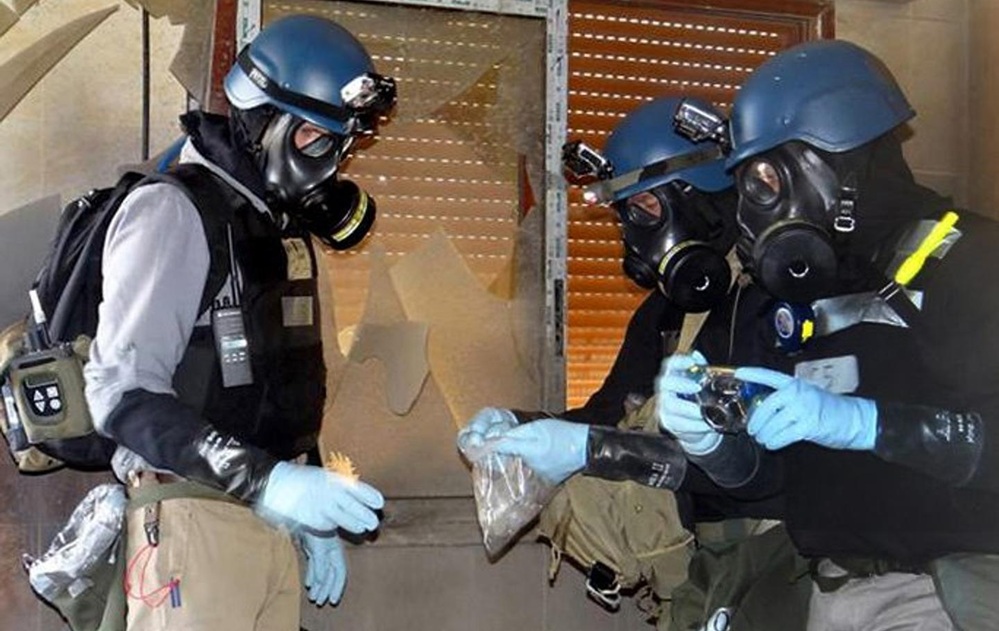
The discovery of previously undeclared materials in 2026 reinforced those concerns. The new Syrian authorities’ cooperation with the OPCW has now created an opportunity for international inspectors to revisit sites, collect documentation, identify undeclared materials and oversee their destruction.

The OPCW said its current work includes efforts to establish a complete and accurate inventory of remnants of the Assad-era programme and ultimately ensure their destruction in accordance with the Chemical Weapons Convention.

UN welcomes progress but warns work remains

The UN briefing made clear that the destruction of 42 aerial bombs and other materials does not mean the Syrian chemical weapons dossier is closed. International inspectors still have work to do to determine the full extent of the former programme, verify Syria’s declarations and oversee the destruction of remaining chemical-weapons-related materials.

The OPCW has previously said that more than 100 locations across Syria were considered potentially relevant to the former chemical weapons programme, with high-priority sites selected for investigation based on information gathered over many years.

For the United Nations and the OPCW, the immediate objective is therefore twofold: complete the inventory and ensure the irreversible destruction of everything that remains. The first verified destruction since 2014 nevertheless represents an important milestone.

After years of international disputes over Syria’s chemical weapons declarations, the combination of renewed Syrian cooperation, OPCW inspections and verified destruction could mark the beginning of a new phase in efforts to permanently eliminate the country’s chemical weapons legacy.

For the Security Council, however, the challenge remains ensuring that the process continues safely, transparently and under international verification until the entire inherited programme is accounted for and eliminated.


IsDB to provide $1.004b for modernization of Eastern Refinery

DHAKA – A financing agreement for “Modernization and Expansion of Eastern Refinery in Bangladesh” amounting to USD 1004.29 million was signed today during the visit of the Islamic Development Bank Group Chairman, Dr. Muhammad Al Jasser to Dhaka. The agreement has been signed between the Government of Bangladesh (GoB) and the Islamic Development Bank (IsDB).

Dr. Mohammad Mizanur Rahman, Additional Secretary, Economic Relations Division, Ministry of Finance, and Anasse Aissami, Director General, Country Programs, IsDB, signed the agreement on behalf of the GoB and IsDB, respectively. Prime Minister Tarique Rahman and Dr. Muhammad Al Jasser, Chairman, Islamic Development Bank Group, graced the signing ceremony. The above-mentioned project will be implemented by Bangladesh Petroleum Corporation (BPC) under the Energy and Mineral Resources Division.

Proper implementation of the project will enhance the BPC’s current refining capacity from 1.5 million MT to 4.5 million MT, contributing to further strengthening the country’s energy security, producing environmentally friendly (Euro-5 standard) petroleum oil, and reducing dependence on imported refined fuel oil, said an ERD press release.

IsDB is one of the trusted multilateral development partners of Bangladesh and has provided continuous support for the socioeconomic development of Bangladesh since its inception, in the form of grants, project loans, trade financing, private-sector financing, export credit guarantees, etc.

Immediately after the signing ceremony, the IsDB Group Chairman called on the Prime Minister and expressed his deep commitment to supporting Bangladesh’s development priorities. The Prime Minister emphasized that the IsDB should explore opportunities for low-cost financing for its members and stated that Bangladesh will extend all possible cooperation to further deepen the Bangladesh-IsDB partnership.


Trillion-dollar economy by 2034 not a slogan, it’s a plan: PM

DHAKA – Prime Minister Tarique Rahman today said the government’s goal of building a trillion-dollar economy by 2034 is not a slogan but a plan to double the size of the economy through exports, investments, and financial discipline. “Bangladesh has a new government, and Bangladesh has a new direction. Our goal is to build a trillion-dollar economy by 2034. This is not a slogan. It is a plan. We intend to double the size of our economy this decade through exports, investments, and financial discipline,” he said.

The Prime Minister made the remarks during the signing of a financing agreement under which the Islamic Development Bank (IsDB) will provide around US$1 billion for the modernization and expansion of Eastern Refinery Limited (ERL) at the Bangladesh Secretariat here today, said Prime Minister’s Deputy Press Secretary Hasan Shiplu.

Tarique Rahman said his government’s mission is to transform Bangladesh into a manufacturing hub and a gateway to the region. “Garments built our first growth story. Now we want electronics, pharmaceuticals, light engineering, and green industry to build the next one. We want factories that create jobs and jobs that create dignity,” he said.

The Prime Minister also highlighted the government’s social protection initiatives, including the Family Card and Farmer Card, while saying the Health Card is being processed. Against the backdrop of growing geopolitical tensions, disruptions to global supply chains, energy and food insecurity, climate change, technological transformation, and rising development-financing costs, he said partnerships had become more important than ever.

In this context, Prime Minister Tarique called for a new approach to Bangladesh-IsDB cooperation that would be “more innovative, responsive, results-oriented, and closely aligned with Bangladesh’s evolving development priorities.” To reiterate, Bangladesh is focusing more on IsDB and its affiliates as reliable sources of development financing, he said.

Welcoming Dr Al Jasser to Bangladesh, Prime Minister congratulated him on his re-election as chairman of the IsDB Group, saying the bank had achieved significant results for its member countries and the Muslim Ummah under his leadership over the past five years.

“We have every confidence that your second term will bring greater achievements, and my government looks forward to working side by side with you to achieve our mission,” he said.

Describing the financing agreement as a milestone, the premier said it was “more than a transaction” and a statement of confidence that the Islamic Development Bank believes in Bangladesh.

“For decades, the Islamic Development Bank has stood by Bangladesh, and we are proud to be a founding member of this Bank,” he said, adding, “That membership means a lot to us. It is built on more than finance. It is built on trust, solidarity, and shared purpose as members of the Islamic Ummah.”

The Prime Minister appreciated Dr Al Jasser’s leadership in establishing the Islamic Concessional Fund (ICF) as a low-cost financing window for developing-country members. He said Bangladesh was deeply committed to benefiting from the ICF and expressed hope that the fund would expand its concessional financing assistance to member countries amid growing global challenges.

The Prime Minister said officials of the ERD were working with their counterparts at the IsDB Regional Hub in Dhaka to identify potential projects. Turning to the broader role of the IsDB, the Prime Minister said the bank could help connect its member countries by leveraging their respective strengths. “Some member states lead in energy. Others lead in infrastructure. The Bank can be the bridge between them—let the members build with each other, not just alongside each other,” he said.

Prime Minister Tarique Rahman expressed gratitude to Dr Al Jasser for visiting Bangladesh and for his leadership in strengthening bilateral relations, saying, “Your presence today speaks to the strength of the bond between us. Let this occasion renew our shared commitment—to partnership, solidarity, innovation, and shared prosperity.”

“Let this occasion renew our shared commitment—to partnership, solidarity, innovation, and shared prosperity,” he added.

The Prime Minister added, “Today’s signing shows what partnership can do. It turns shared goals into real outcomes. The Eastern Refinery Modernization and Expansion Project is not just an energy investment. It is an investment in our energy security, our economic resilience, and our long-term capacity to grow.”

The financing agreement for ‘Modernization and Expansion of Eastern Refinery in Bangladesh’ amounting to USD 1004.29 million was signed between the Government of Bangladesh (GoB) and the Islamic Development Bank (IsDB).

Dr. Mohammad Mizanur Rahman, Additional Secretary, Economic Relations Division, Ministry of Finance, and Anasse Aissami, Director General, Country Programs, IsDB, signed the agreement on behalf of the GoB and IsDB, respectively.

Prime Minister Tarique Rahman and Dr. Muhammad Al Jasser, Chairman, Islamic Development Bank Group, graced the signing ceremony. The project will be implemented by Bangladesh Petroleum Corporation (BPC) under the Energy and Mineral Resources Division. Proper implementation of the project will enhance the BPC’s current refining capacity from 1.5 million MT to 4.5 million MT, contributing to further strengthening the country’s energy security, producing environmentally friendly (Euro-5 standard) petroleum oil, and reducing dependence on imported refined fuel oil.

IsDB is one of the trusted multilateral development partners of Bangladesh and has provided continuous support for the socioeconomic development of Bangladesh since its inception, in the form of grants, project loans, trade financing, private-sector financing, export credit guarantees, etc. Immediately after the signing ceremony, the IsDB Group Chairman called on the Prime Minister and expressed his deep commitment to supporting Bangladesh’s development priorities.


President Urges US to Simplify Visa Processing for Bangladeshis

DHAKA – President Mirza Fakhrul Islam Alamgir today urged the United States to simplify its visa processing procedures for Bangladeshi tourists and business people to facilitate people-to-people and business ties between the two countries. The President made the call when US ambassador to Bangladesh Brent T Christenen paid a courtesy call on him at Bangabhaban this morning.

During the meeting, the US envoy congratulated the President on his assumption of office as the President of Bangladesh. Recalling the past US investment and cooperation in the country’s agricultural development, the President called for further US investment and cooperation in the country’s development sector.

He also referred to Chevron’s investment and important role in the development of the country’s energy sector and urged increased US investment in Bangladesh’s energy, information technology, infrastructure, and health and high-tech industries sectors. The President also sought US cooperation in ensuring the safe, dignified and sustainable repatriation of the Rohingyas to their homeland.

Thanking the US ambassador, the President said, “The United States is one of the Bangladesh’s important development partners. The existing trade relations with the US are playing an important role in Bangladesh’s economic development.”

On international relations, the President said, “Bangladesh attaches the highest importance to the principles of independence, sovereignty, national interest, mutual respect and equality in its international relations.”

He expressed the hope that bilateral relations and trade agreements with the United States would be further expanded in the days to come through mutual respect while protecting common interests. Referring to the recent bilateral trade agreements with US, the President said, “This is an important development in expanding the trade relations between the two countries.”

“There is a scope to make the agreement more balanced and mutually beneficial, taking into consideration the economic realities and interests of both the countries,” he added.

The ambassador assured that the US would continue its cooperation with Bangladesh and stressed the importance of strengthening cooperation with ASEAN countries. He also reiterated his US’s interest in further deepening and diversifying relations with Bangladesh. Military secretary to the President and Press Secretary and senior officials were present during the meeting.


‘1945 World Order No Longer Reflects Reality’: Guterres Calls for UN Reform

Shibbir Ahmed | United Nations, New York — United Nations Secretary-General António Guterres has called for sweeping reforms to global institutions, arguing that the international system must adapt to a rapidly changing, increasingly multipolar world.

Addressing the Shanghai Cooperation Organization (SCO) summit in Bishkek on Tuesday, Guterres said global power relations were changing while many multilateral institutions continued to reflect the geopolitical realities of 1945.

“We must reform our multilateral institutions, including the United Nations and the Bretton Woods system, to reflect today’s realities,” Guterres said, calling for greater representation and influence for developing countries in order to build a fairer global order.

Guterres said the world was becoming increasingly multipolar and argued that the trend should be strengthened.

“Multipolarity is a condition for justice in global governance and international relations,” he said, describing it as a foundation for effective multilateralism and a United Nations that serves all countries without double standards.

The UN chief has repeatedly called for reforms to the Security Council and other international institutions to make them more representative of the current distribution of global power.

His remarks in Bishkek also highlighted four areas for stronger international cooperation: global security, development financing, climate action and governance of artificial intelligence.

Guterres’ call comes amid growing geopolitical tensions, conflicts and disputes over the effectiveness of existing international institutions. His message was clear: as global power shifts, the institutions governing international affairs must change with it.


15,717 Missing-Child GDs Filed in Bangladesh in Seven Months

DHAKA — A total of 15,717 General Diaries (GDs) were filed over missing-child incidents across Bangladesh during the first seven months of this year, according to figures presented by the government. However, the figure should not be interpreted as meaning that 15,717 children are currently missing, the government’s Information and Broadcasting Adviser Dr. Zahed Ur Rahman said on Tuesday. He disclosed the figures during a press briefing at the Secretariat on the government’s recent activities and developments.

According to the adviser, 15,717 GDs related to missing children were filed from January through July 2026. During the previous seven-month period, from June through December 2025, the number was 13,876.

Dr. Zahed said many children reported missing eventually return home or are found, but families do not always inform police after the child returns. As a result, the number of GDs cannot be used to determine how many children remain missing.

“There is no complete information on exactly how many children have not returned,” he said, emphasizing the difference between missing-child reports and the number of children who remain missing.

Missing-child figures raise questions over case outcomes

The latest figures have renewed questions about how missing-child cases are recorded and followed up after a GD is filed. Recent reports citing Police Headquarters data put the number of missing-child GDs at 15,917 between January and July 2026—more than 75 reports a day, or roughly one report every 20 to 21 minutes.

However, that figure also represents GDs rather than the number of children currently missing. There is no regularly published, consolidated national record showing how many children were rescued, returned home, found elsewhere, remained missing, or became involved in cases of abduction or trafficking.

The difference between the 15,717 figure presented by the government adviser and the 15,917 figure cited in recent Police Headquarters reporting also highlights the need for better coordination and verification of national missing-child data.

‘MUN Alert’ launched to speed up rescue

In January this year, Bangladesh launched the Missing Urgent Notification (MUN Alert) system to help locate and rescue missing and abducted children more quickly. The initiative was launched by the Criminal Investigation Department (CID) of Bangladesh Police in cooperation with Amber Alert for Bangladesh.

A 24-hour toll-free hotline, 13219, was also introduced for reporting missing children. The system is designed to allow authorities to quickly verify information and disseminate details such as a missing child’s photograph and last known location.

CID officials have emphasized the importance of the first few hours after a child goes missing, saying that rapid dissemination of verified information can increase the chances of a successful recovery.

Missing does not automatically mean trafficking

The large number of missing-child GDs has also prompted concern over possible child trafficking. Police, however, have said there is currently no evidence establishing a direct link between all of the missing-child GDs and child trafficking. At the same time, authorities acknowledge that trafficking remains a potential risk in individual cases.

Experts have therefore cautioned against treating every missing-child case as an abduction or trafficking case while stressing that potential trafficking risks should be properly investigated.

Need for a coordinated national database

Child-rights advocates and experts have called for a more coordinated national system linking police stations, the CID, the Police Bureau of Investigation, hospitals, morgues and other relevant agencies.

Such a system could track each case from the initial missing-person report through its final outcome—including whether the child was rescued, returned home, found elsewhere, became the subject of an abduction or trafficking investigation, or remained missing.

Without such follow-up information, the number of GDs provides only a partial picture of the country’s missing-child situation. The government’s latest figure therefore highlights a significant concern, but it does not establish how many children are currently missing in Bangladesh. The key challenge now is to determine what happened after each of those thousands of reports—and to ensure that every missing child is accounted for.


Trump Announces Drug-Price Deals With 9 More Pharmaceutical Companies

Shibbir Ahmed, WASHINGTON DC — President Donald Trump on Monday announced new agreements with nine pharmaceutical manufacturers aimed at lowering prescription drug prices for Americans, expanding his administration’s effort to tie U.S. drug prices to the lower prices paid in other developed countries.

The White House said the agreements bring the total number of pharmaceutical manufacturers participating in the administration’s Most-Favored-Nation (MFN) drug-pricing program to 26, covering about 89% of the branded-drug market.

The nine companies joining the latest agreements are Alcon, Astellas Pharma, BeOne Medicines, BridgeBio, CSL, Kyowa Kirin, Sun Pharma, Teva Pharmaceuticals and UCB.

Under the agreements, the companies will provide MFN pricing to state Medicaid programs across the United States on eligible medicines. The White House said the deals cover drugs used to treat a range of serious and chronic conditions, including hemophilia, Parkinson’s disease, macular degeneration, glaucoma, liver disease, skin conditions and cancer.

The administration’s MFN strategy seeks to align prices paid in the United States with the lowest prices paid by comparable developed nations.

$19.6 Billion U.S. Manufacturing Investment

The new agreements also include commitments to strengthen pharmaceutical manufacturing in the United States. According to the White House, the nine companies have collectively committed to invest at least $19.6 billion in U.S. manufacturing in the near term.

Several companies have additionally agreed to provide active pharmaceutical ingredients to the federal government’s Strategic Active Pharmaceutical Ingredients Reserve, which is intended to strengthen domestic pharmaceutical supply chains and reduce dependence on foreign sources.

UCB, for example, will contribute 163 tons of levetiracetam, a drug used to control and prevent seizures. Sun Pharma will contribute supplies of the antibiotics clindamycin and doxycycline, while Teva will provide metronidazole and amlodipine. Astellas will contribute tacrolimus, an immunosuppressant used to help prevent organ rejection following transplants.

Administration Projects Major Savings

The White House says patients have already saved more than $700 million through TrumpRx, the administration’s prescription-drug discount platform, since its launch in February.

The administration also says more than 500,000 seniors have saved a combined $216 million since July through a program offering certain GLP-1 obesity medicines for $50 a month to seniors without coverage for those drugs.

The White House’s Council of Economic Advisers estimates that the administration’s broader MFN agreements could generate approximately $600 billion in savings over the next decade. That figure is an administration estimate rather than an independently verified projection.

Part of Trump’s Broader Drug-Pricing Push

Trump ordered his administration in May 2025 to pursue Most-Favored-Nation pricing for prescription medicines, seeking to bring U.S. prices closer to those paid in other developed countries.

The administration subsequently reached agreements with major pharmaceutical manufacturers, including Pfizer, AstraZeneca, Eli Lilly, Novo Nordisk, Amgen, Bristol Myers Squibb, Merck, Novartis, Sanofi and others.

Trump launched TrumpRx.gov in February 2026 as part of the administration’s effort to make lower-priced medicines available directly to American consumers through participating manufacturers and pharmacies.

Reuters reported Monday that the latest agreements include a mix of international pharmaceutical companies and smaller biotechnology firms, expanding the program beyond the large drugmakers that participated in earlier rounds.

The new agreements come as prescription-drug affordability remains a major issue for American consumers and as the Trump administration prepares for the November midterm elections.

The White House is also calling on Congress to advance what it describes as the “Great Healthcare Plan,” which the administration says would seek to lower drug prices and insurance premiums while increasing price transparency.

For Americans, the practical impact of Monday’s agreements will depend on which medicines receive the new pricing arrangements, when the lower prices take effect and how the discounts are implemented through Medicaid and participating drug programs. The White House announcement marks the latest and one of the largest expansions of Trump’s MFN drug-pricing initiative since it began in 2025.


9/11 at 25: New ‘In Their Honor’ Exhibition Unveiled in New York

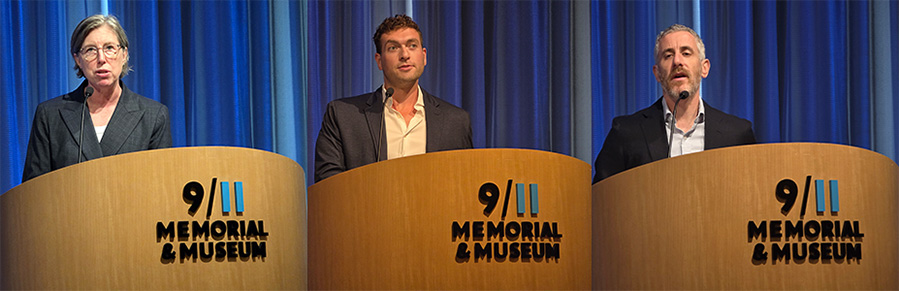
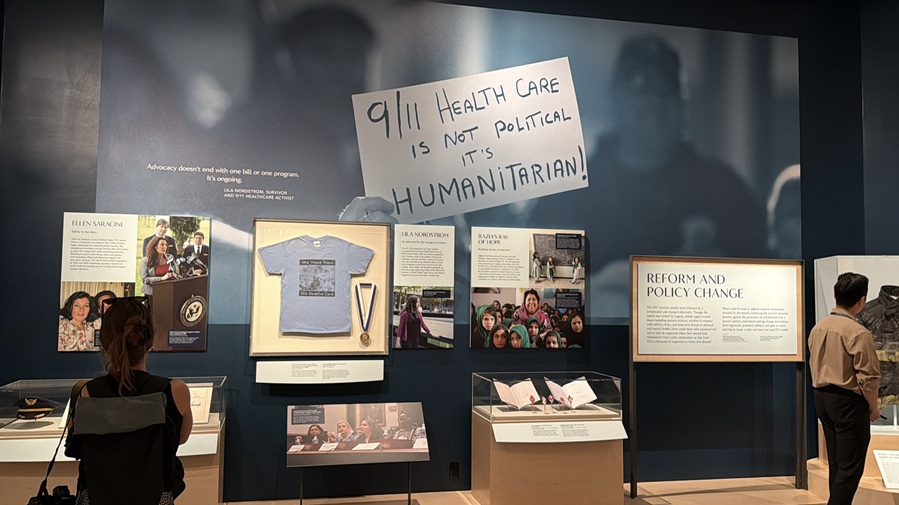
Shibbir Ahmed, NEW YORK — The 9/11 Memorial & Museum on 31St August Monday unveiled a new exhibition highlighting the enduring legacy of service inspired by the September 11 attacks, as New York prepares to mark the 25th anniversary of the tragedy. Titled “In Their Honor: 25 Years of 9/11-Inspired Service,” the exhibition offers a look at how individuals and communities transformed the aftermath of the attacks into acts of service and public commitment.

The exhibition was previewed for members of the media during a briefing at the 9/11 Memorial & Museum in Lower Manhattan. It will open to the public on September 12, 2026, one day after the 25th anniversary of the attacks.

The afternoon program began with remarks from Beth Hillman, President and CEO of the 9/11 Memorial & Museum, followed by comments from 9/11 family member Logan Miller and Noah Rauch, Senior Vice President of Education and Public Programming.

The museum’s new exhibition comes as New York and the nation prepare for a major commemoration of the nearly 3,000 people killed in the September 11, 2001 terrorist attacks. The exhibition focuses on the continuing impact of September 11 beyond the immediate loss of life, emphasizing the service and civic engagement that emerged in the years following the attacks.

Museum officials said the exhibition explores the ways people responded to the attacks through service, volunteering and efforts to help others, demonstrating how the legacy of September 11 continues to shape communities a quarter-century later.

Monday’s media program also included a guided preview of the exhibition, giving journalists an early look before its public opening. The museum is also preparing for the 25th-anniversary commemoration on September 11, which will bring families of victims, survivors, first responders and government and community leaders together at the World Trade Center site.

As the anniversary approaches, the museum’s programming is placing particular emphasis not only on remembering those who were killed, but also on the long-term consequences of the attacks and the continuing acts of service inspired by their memory.

The 25th anniversary will mark a quarter-century since the attacks on the World Trade Center, the Pentagon and United Airlines Flight 93. For many families and survivors, the anniversary remains both a day of remembrance and an opportunity to reflect on how the events of September 11 have shaped the lives of subsequent generations. The “In Their Honor” exhibition will open to visitors at the 9/11 Memorial & Museum on September 12.


Trump Announces Historic $65B-Barrel Venezuela Oil Deal

Shibbir Ahmed, WASHINGTON DC — U.S. President Donald Trump has announced what he called the “biggest oil deal in world history,” saying the United States has secured majority control of more than 65 billion barrels of proven Venezuelan oil reserves through partnerships with private businesses. The agreement places Venezuela’s vast oil resources at the center of a new U.S.-Venezuela energy relationship and could reshape the global oil market.

Trump said Secretary of State Marco Rubio and Secretary of War Pete Hegseth worked with Venezuelan interim President Delcy Rodríguez to finalize the agreement. Trump also said the arrangement would come at no cost to American taxpayers. The agreement reportedly covers the development of 17 strategic Venezuelan oil fields with a proven potential of about 65 billion barrels. The plan also includes expansion into eight additional oil blocks.

25-Year Energy Agreement

Rodríguez said Sunday that the broader energy agreement will remain in effect for 25 years and is designed to significantly increase Venezuela’s oil production. The initial target is approximately 1.5 million barrels per day, compared with current production of around 1.25 million barrels per day. Venezuela holds the world’s largest proven oil reserves but has struggled for years with declining production, damaged infrastructure and sanctions.

Rodríguez said Venezuela would retain sovereignty over its natural resources while using the agreement to attract investment and rebuild its oil industry. She estimated that the agreement could generate approximately $209 billion in revenue for the Venezuelan government, based on an assumed oil price of $65 a barrel.

What Does the U.S. Actually Control?

Despite Trump’s description of the agreement, the 65 billion barrels should not be interpreted as the United States simply acquiring 65 billion barrels of oil. The agreement concerns control and development rights over oil reserves through public-private partnerships. Reuters reported that Trump provided few details when he first announced the agreement, saying the U.S. had secured majority control of more than 65 billion barrels of proven Venezuelan reserves through a partnership with private business.

Other reports indicate that the structure could give a U.S.-linked joint venture a majority share of production from the fields, while Venezuela continues to assert ownership and sovereignty over its natural resources. The precise financial and legal structure of the agreement remains an important issue as additional details emerge.

Billions of Dollars in Investment

Reviving Venezuela’s oil sector will require substantial investment. Much of the country’s energy infrastructure has deteriorated after years of underinvestment, economic turmoil and sanctions. The agreement is expected to bring major American private-sector involvement into Venezuela’s oil industry, with companies including Chevron positioned to participate in the new framework.

For Washington, the deal could provide greater access to one of the world’s largest petroleum reserves while potentially increasing global oil supplies. For Caracas, the agreement represents an opportunity to rebuild its energy industry, increase production and generate badly needed government revenue.

Global Energy Implications

The scale of the agreement makes it significant well beyond Venezuela and the United States. A sustained increase in Venezuelan production could add substantial heavy crude supplies to international markets and strengthen the country’s position as a major global energy producer. The deal could also deepen U.S. influence over Venezuela’s economy and energy sector, raising questions about sovereignty, investment, environmental concerns and the future balance of power in Latin America’s oil industry.

For now, the agreement represents one of the most consequential developments in the global oil market in years — and its ultimate impact will depend on how quickly Venezuela’s damaged infrastructure can be rebuilt and production expanded.