Saima Wazed Resigns as WHO Regional Director, Denies Allegations

NEW YORK: Saima Wazed has resigned as the World Health Organization’s (WHO) Regional Director for South-East Asia. According to her resignation letter seen by Reuters, she stepped down amid investigations by the WHO and Bangladeshi authorities into allegations of fraud and document forgery. Her resignation took effect immediately.

Wazed assumed the position of WHO Regional Director for South-East Asia in early 2024 for a five-year term. However, she had been on unpaid administrative leave since July 2025. Earlier, in March 2025, Bangladesh’s Anti-Corruption Commission filed a case against her over allegations of fraud and forgery.

According to the Reuters report, allegations against Wazed included financial irregularities related to a trip to China, providing inaccurate information concerning her educational qualifications, and the alleged illegal acquisition of land in Bangladesh. Wazed has denied the allegations.

A July 3, 2026 letter from her lawyers, seen by Reuters, said the allegation concerning expenses from her China trip did not involve travel fraud. Instead, they said an assistant had made an administrative error while processing the repayment of routine expenses. The amount involved was $901.

Responding to questions about her educational qualifications, Wazed said she had received an honorary doctorate in recognition of her work on autism in Bangladesh and had informed WHO Director-General Tedros Adhanom Ghebreyesus about it.

Regarding the land allegations, Wazed said in her resignation letter that she had acquired the property before joining the WHO. She also said she was entitled to the land under a Bangladeshi law applicable to members of the family of Bangladesh’s founding leader, Sheikh Mujibur Rahman.

In her resignation letter, Wazed further alleged that she had been prevented from effectively carrying out her responsibilities. She said the situation had destroyed her trust and confidence in the WHO leadership. She also said nearly a year without a salary had made her financial situation unsustainable.

The WHO told Reuters that a committee had recommended removing Wazed from her position one day before her resignation. The organization said her resignation would now be considered by the Regional Committee and the Executive Board. A WHO spokesperson said the process had been handled with fairness and appropriate procedures while protecting the organization’s interests and ability to fulfill its responsibilities.

The WHO is preparing to begin the process of selecting Wazed’s successor. Two Reuters sources said nominations are expected to be announced on October 12, applications are expected to be reviewed in December, and the election is planned for January 24. Until a new Regional Director is elected, Dr. Nilesh Buddh will serve in the role.

The Regional Director for WHO’s South-East Asia Region is one of the organization’s key leadership positions. The position involves overseeing the WHO’s response to disease outbreaks and emergencies and helping implement the organization’s policies in accordance with regional circumstances. Member states elect the Regional Director every five years. Bangladesh and India are among the countries in the region.


I Will Return to Bangladesh in December: Sheikh Hasina

Shibbir Ahmed, New York: Former Bangladesh Prime Minister Sheikh Hasina has said she intends to return to Bangladesh in December despite knowing that she could be arrested, tortured or even killed upon arrival. In an interview with Anandabazar Patrika, published on Thursday, Hasina said she had made the decision after considering all possible consequences. The interview was conducted by journalist Agni Roy in New Delhi and was first published in the newspaper’s print edition.

Asked how she planned to return and whether she expected to be arrested immediately, Hasina said she was aware of the risks regardless of whether she travelled by air or road. She said she could be arrested as soon as she entered Bangladesh and that there was also a possibility of being taken to an undisclosed location and subjected to prolonged mistreatment. Despite those risks, she said the difficult circumstances faced by people in Bangladesh had influenced her decision to return.

Hasina also said that the Awami League has a longstanding organisational structure that allows the party to function even when its president is absent. Referring to the party’s history, she said its leadership arrangements had continued during earlier periods when political activities were restricted.

During the interview, Hasina also discussed Bangladesh’s current political environment, including the relationship between the Bangladesh Nationalist Party and Jamaat-e-Islami. She alleged that Jamaat-e-Islami had collaborated with Pakistani forces during the 1971 Liberation War and accused the current authorities of reviving the International Crimes Tribunal and using it against her. She also rejected the legal proceedings against her, describing them as unjust. Hasina further argued that BNP and Jamaat-e-Islami were politically closely aligned and said she saw little substantive difference between the two.

Hasina was also asked about the decision of Bangladesh Prime Minister Tarique Rahman not to visit India despite an invitation. She dismissed the suggestion that a statement she made at an August 5 press conference had prevented the Bangladeshi prime minister from travelling to India. She referred to Tarique Rahman’s years in London and questioned why his political activities there had not prevented relations between Britain and Bangladesh from continuing.

She also alleged that instructions connected to the 2024 political movement had been issued from abroad. These are claims made by Hasina and were presented in the context of the interview.

Hasina’s announcement is not the first time she has spoken about returning to Bangladesh in December. In July, she told Reuters that she planned to return despite the possibility of arrest or death.

She also reiterated her intention to return during a virtual media interaction on August 5, saying she was prepared for detention or imprisonment. The latest Anandabazar interview, however, provides a more detailed account of her stated reasoning and the risks she says she is prepared to face.

Source: Anandabazar Patrika, interview by Agni Roy, published September 10, 2026.


Grameen Kalyan Must Pay Tk 666 Crore in Taxes: High Court

DHAKA: The High Court has paved the way for Grameen Kalyan to pay Tk 666.91 crore in taxes to the National Board of Revenue (NBR), dismissing two rules that had earlier been issued in connection with the tax dispute. A High Court Division bench comprising Justice Md Mozibur Rahman Miah and Justice Rezaul Karim pronounced the judgment after hearing the petitions.

Senior Advocate Abdullah Al Mamun appeared for Grameen Kalyan, while Deputy Attorney General Abdus Samad Azad represented the state. According to the state lawyer, following Thursday’s judgment, Grameen Kalyan will have to pay a total of Tk 666.91 crore to the NBR for the tax years from 2012 to 2017. The dispute concerns tax assessments made by the NBR for those years. Grameen Kalyan had challenged the tax demands before the High Court.

The case had previously gone through another round of proceedings. In August 2024, an earlier High Court bench had rejected Grameen Kalyan’s petitions, effectively allowing the NBR to recover the disputed taxes.

However, that judgment was subsequently withdrawn after concerns arose over a possible conflict of interest involving one of the judges, who had previously appeared as a lawyer for the government in the same matter. The case was then sent for a fresh hearing. Following the renewed hearing, the newly constituted High Court bench dismissed the two rules, resulting in the latest ruling in favour of the NBR’s tax claim.

Grameen Kalyan is a non-profit social business organisation founded by Nobel laureate economist Dr Muhammad Yunus. The latest judgment clears a major legal hurdle to the recovery of the disputed tax amount for the 2012–2017 tax years. It was not immediately clear whether Grameen Kalyan would challenge the judgment before the Appellate Division.


Bangladesh Condemns Israeli Settlement Plan in West Bank

DHAKA: Bangladesh has strongly condemned Israel’s plan to advance settlement construction in the E1 area of the occupied West Bank, saying the move violates international law and threatens prospects for a viable two-state solution.

In a statement issued today, Bangladesh’s Ministry of Foreign Affairs said the planned settlement expansion was contrary to international law and relevant United Nations Security Council resolutions.

The ministry said the proposed construction would further undermine the territorial integrity of the occupied Palestinian territory and diminish prospects for the establishment of a viable and sovereign Palestinian state. Bangladesh called on Israel to immediately halt all settlement activities in the occupied Palestinian territory.

Dhaka also reaffirmed its unwavering support for the legitimate and inalienable rights of the Palestinian people, including their right to establish an independent and sovereign State of Palestine based on the pre-1967 borders, with East Jerusalem as its capital.

Bangladesh urged the international community to intensify diplomatic efforts to prevent actions that could undermine Palestinian statehood and to advance a just, comprehensive and lasting peace in the Middle East based on international law and the two-state solution.

“Bangladesh stands in solidarity with the people of Palestine and remains committed to supporting their legitimate aspirations for freedom, dignity, justice and statehood,” the statement said.


Bangladesh Missions Operate Mobile Consular Camps in 63 Countries: Khalilur Rahman

Shibbir Ahmed, UN, New York: Bangladesh’s diplomatic missions in 63 countries are operating mobile consular camps to make essential government services more accessible to Bangladeshi expatriates, Foreign Minister and President of the 81st United Nations General Assembly Dr. Khalilur Rahman has said.

According to Rahman, the initiative is aimed at bringing consular services closer to expatriate Bangladeshis, particularly those living far from the country’s embassies and consulates.

Through mobile consular camps, expatriates can access a range of services without having to travel long distances to diplomatic missions. Depending on the mission and the specific camp, services may include passport-related assistance, document attestation, birth registration, citizenship-related services and other consular facilities.

Bangladesh’s diplomatic missions have been organizing mobile consular camps in different countries for several years. The Bangladesh Embassy in Washington, for example, regularly conducts such outreach programs in different U.S. cities. The embassy has also announced a mobile consular camp in Oklahoma City on September 12 and 13, 2026.

The mobile camps are particularly important for Bangladeshis living outside major metropolitan areas, allowing them to receive government services closer to their communities.

Rahman’s remarks highlight the government’s efforts to expand access to consular services for the country’s large overseas community. By taking services directly to expatriate communities, Bangladesh’s missions are seeking to make consular assistance more accessible and convenient.

The figure of 63 countries is attributed to Rahman’s statement. Bangladesh’s missions are independently documented as conducting mobile consular outreach in several countries, although a publicly available official source confirming the full 63-country figure was not located at the time of publication.


Khalilur Rahman Puts UN Reform at Top of Presidency Agenda

Shibbir Ahmed, United Nations, New York: Bangladesh’s Foreign Minister Dr. Khalilur Rahman has assumed the presidency of the 81st session of the United Nations General Assembly, pledging to prioritize dialogue, cooperation, rebuilding trust and meaningful reform of the world body. Speaking to reporters at UN Headquarters in New York on Tuesday ahead of the formal opening of the 81st session, Rahman said the multilateral system is facing unprecedented pressure and a growing deficit of trust.

Against this backdrop, he stressed the importance of finding common ground among countries despite their differences and pursuing solutions through dialogue and cooperation. According to the United Nations, Rahman was elected president of the General Assembly on June 2, 2026, and formally took office on September 8. He will preside over the 193-member General Assembly for the next year. The theme of the 81st session is “Restoring Trust, Managing Transformation: A United Nations That Delivers for All.”

Rahman acknowledged that many international disputes cannot be resolved quickly. However, he said disagreements should not prevent countries from identifying areas of common interest and working together. He said his presidency would remain firmly grounded in the UN Charter and the mandates entrusted to the organization by its member states. He also emphasized that global challenges can be addressed more effectively when countries work collectively and seek solutions through dialogue rather than confrontation.

UN Reform a Key Priority

Meaningful reform of the United Nations will be one of the central priorities of Rahman’s presidency. He said deeper reform is necessary to make the world body more effective and better prepared to respond to the challenges of the future. According to Rahman, public confidence in the United Nations has declined, making it necessary to strengthen the organization not only for the present but also for the generations ahead.

His broader agenda for the 81st session includes peace and security, progress toward the Sustainable Development Goals, climate and environmental protection, human rights, governance of emerging technologies including artificial intelligence, and reform of the United Nations. Rahman also pledged continued support for UN Secretary-General António Guterres’ reform efforts.

Giving Greater Space to Voices Beyond Governments

Rahman also called for greater participation in UN affairs by civil society, the media, academics, industry and innovation communities. Referring to the opening words of the UN Charter, “We the peoples of the United Nations,” he said the organization should not be viewed solely as an institution of member states.

He stressed the need to create greater opportunities for people from different sectors to contribute their views and participate in the work of the United Nations. While “Restoring Trust, Managing Transformation” remains the central theme of his presidency, Rahman said making the United Nations fit for the future would also be a major objective.

Pledge to Keep Rohingya Voices Heard

Responding to a question about how the United Nations can represent stateless populations, particularly the Rohingya, Rahman said the concept of “the peoples of the United Nations” should not be restricted by nationality or legal status.

Drawing on his previous experience as Bangladesh’s High Representative on Rohingya Issues, he said he had witnessed firsthand the suffering of forcibly displaced Rohingyas and their strong desire to return to their homeland.

Recalling a visit by UN Secretary-General António Guterres to the Rohingya refugee camps in Bangladesh, Rahman said refugees had repeatedly expressed their desire to return home. He said Bangladesh had helped bring the voices of the Rohingya to the United Nations and pledged to continue raising their concerns during his presidency.

Dialogue During High-Level Week

Rahman described the presence of world leaders at the upcoming high-level week as an important opportunity to promote dialogue and diplomacy. The General Debate of the 81st General Assembly is scheduled to take place from September 22 to 28, bringing together heads of state and government and senior representatives from around the world.

Rahman expressed hope that world leaders would use their addresses to emphasize dialogue and diplomacy as means of resolving conflicts and reaffirm their commitments to development, human well-being and human rights. He said the presidency would review the priorities outlined by world leaders and seek areas that could form the basis of a common agenda.

“I Will Be President for All Countries”

Rahman emphasized that, as president of the General Assembly, he would represent all member states, regardless of whether they supported his election. He also addressed the selection of the next UN secretary-general, saying he would remain faithful to the process established by the UN Charter.

Under the Charter, the Security Council recommends a candidate for secretary-general and the General Assembly makes the appointment. Rahman said he would work closely with member states and the president of the Security Council to facilitate the process and ensure a smooth transition of leadership.

The 80th session of the General Assembly concluded at UN Headquarters on September 8, followed by Rahman’s formal assumption of the presidency of the 81st session. His election marks Bangladesh’s return to the presidency of the General Assembly after four decades. Former Bangladeshi Foreign Minister Humayun Rashid Choudhury presided over the 41st session in 1986-87.

Rahman, who first attended the United Nations as a member of Bangladesh’s delegation in 1985, described his return to the organization four decades later as a remarkable moment, while noting how dramatically the world has changed during the intervening years.

As president of the 81st session, Rahman will seek to promote dialogue in a deeply divided world, rebuild confidence in multilateralism and help make the United Nations more effective in confronting the challenges of the future.


‘This Is Not 1945’: Bangladesh’s Khalilur Rahman Opens UNGA 81

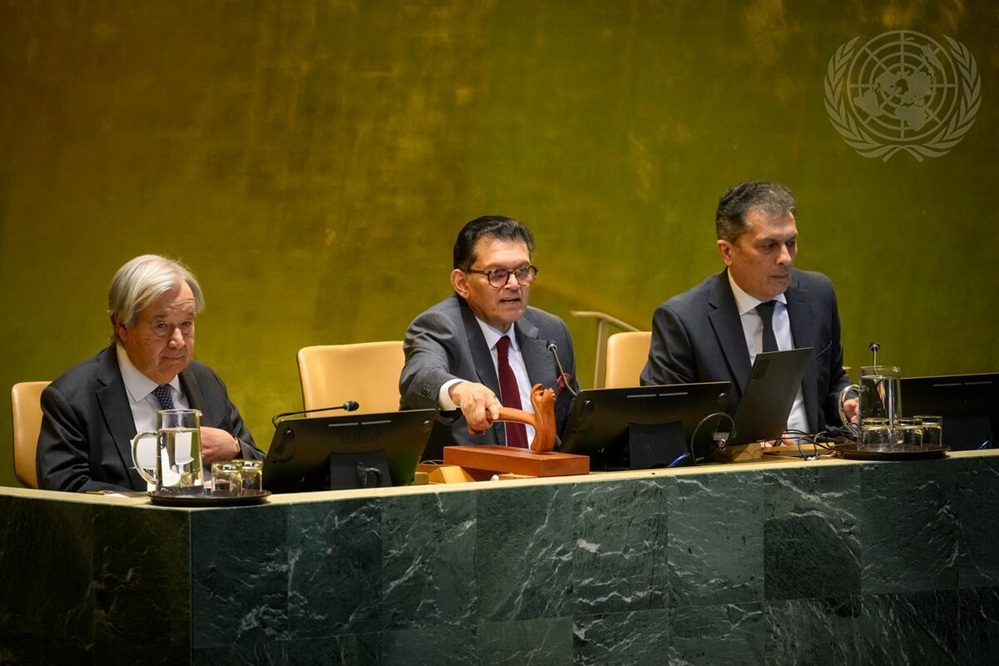
Shibbir Ahmed, UN, New York: The United Nations General Assembly opened its 81st session on Tuesday at United Nations Headquarters in New York, with Bangladesh’s veteran diplomat Khalilur Rahman taking over as president and calling for renewed global trust in the international organization amid wars, humanitarian crises, climate change and deepening geopolitical divisions.

Rahman formally assumed the presidency after receiving the traditional Icelandic wooden gavel from outgoing General Assembly President Annalena Baerbock. In his opening remarks, he said the United Nations must adapt to the realities of a rapidly changing world and become more responsive to the needs and expectations of people across the globe.

“We must make the United Nations fit for the future,” Rahman said, stressing the importance of listening to civil society and giving greater space to voices outside governments and traditional diplomatic institutions.

“We have a situation where trust is in deficit. This is not 1945. This is the 81st session. The world has moved on. The Organization must move on, and I’ll help that process,” he said.

Rahman has placed restoring trust and managing global transformation at the center of his presidency. His agenda includes strengthening international peace and security, accelerating progress toward the 2030 Sustainable Development Goals, addressing climate change, protecting human rights, supporting refugees and migrants, promoting responsible technological development and advancing reform of the United Nations and the broader multilateral system.
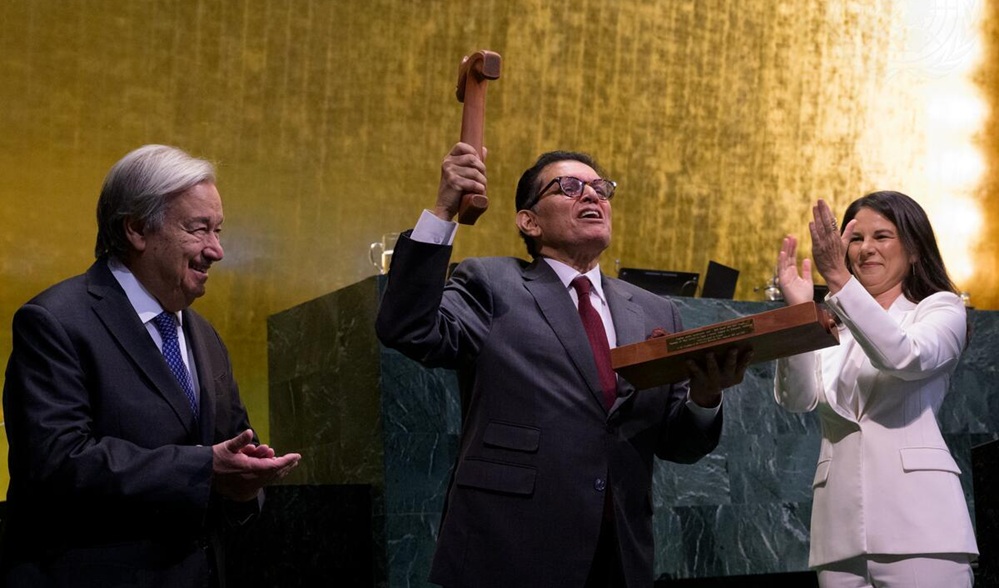
The new session begins at a time of heightened international tensions, with conflicts in several regions, growing humanitarian emergencies, geopolitical rivalries, persistent poverty and inequality, and increasing concerns over climate-related disasters. The risk of nuclear escalation has also added to concerns about international peace and security.

United Nations Secretary-General António Guterres, speaking at the opening of the session, said rebuilding confidence in the multilateral system had become one of the defining challenges of the current era.

“Rebuilding trust in the multilateral system is the defining challenge of our time,” Guterres said, arguing that international cooperation remains essential at a moment when the world is confronting crises that cannot be effectively addressed by individual countries acting alone.

Guterres said institutions across the multilateral system, including the Security Council and international financial institutions, are under growing pressure to respond to the realities of the present day. He warned that international law and human rights are too often violated with impunity, while geopolitical mistrust and suspicion continue to prevent the international community from reaching effective solutions.

Despite those difficulties, Guterres said he remained hopeful about the ability of the General Assembly to contribute to a better future. Through diplomacy, dialogue and cooperation, he said, countries can work to rebuild trust and goodwill and help ensure that future generations inherit a more peaceful and sustainable world.

The opening of the 81st session also marked the conclusion of Baerbock’s term as president of the General Assembly. Addressing member states at the final meeting of the 80th session, she defended the continuing importance of the United Nations despite criticism of its shortcomings.

Baerbock said she was more convinced than ever of the importance and necessity of the organization. She pointed to the work of United Nations agencies and peacekeeping missions around the world as evidence of the practical impact of the international body.

She cited the role of the United Nations Children’s Fund in helping millions of children and the contribution of peacekeepers to protecting civilians in conflict-affected areas. Baerbock also warned that the positive work of the United Nations often receives less public attention than negative developments, particularly in an environment where divisive and hateful content can spread rapidly.

Climate change and sustainable development are expected to remain major issues during the new session. Rahman has called for stronger international efforts to build climate resilience and protect the environment, while also accelerating progress toward the 2030 Sustainable Development Goals.

The new president has emphasized the need to ensure that development reaches vulnerable populations and that no country is excluded from international efforts to address poverty, inequality, education, health, food security and other development challenges.

Human rights and humanitarian action are also central to the new presidency. Continuing conflicts and instability have displaced millions of people, increasing pressure on the international community to protect refugees and migrants and provide assistance to populations affected by war and persecution.

The rapid development of artificial intelligence and other emerging technologies is another issue expected to receive greater attention. Rahman has called for technological innovation that is inclusive and responsibly governed, with appropriate safeguards to protect people and future generations.

United Nations reform is also expected to feature prominently during the 81st session. The international political and economic landscape has changed substantially since the organization was established in 1945, prompting continued debate over whether its institutions adequately reflect the realities of the contemporary world.

Questions surrounding representation, inclusiveness and the effectiveness of international decision-making have become increasingly important, particularly for developing countries seeking a greater voice in global affairs.

Another major diplomatic issue during the coming year will be the selection of the next United Nations secretary-general. Guterres is scheduled to complete his term, with his successor expected to take office in January 2027.

Rahman brings extensive diplomatic experience to the presidency of the General Assembly. He previously served as foreign minister of Bangladesh and held senior positions including national security adviser and high representative for the Rohingya issue in Bangladesh’s interim government. He has also held senior positions within the United Nations system and was a founding member of East West University in Dhaka.

His assumption of the presidency gives Bangladesh a prominent role in one of the international community’s most representative forums at a particularly challenging moment for multilateral diplomacy.

As the 81st session begins, the central challenge for the General Assembly will be whether countries can overcome deep political divisions and rebuild confidence in international cooperation. For Rahman, the task is rooted in a simple premise: the world has changed significantly since 1945, and the United Nations must evolve with it.


Bangladesh, US discuss boosting trade and investment

DHAKA: Bangladesh and the United States discussed ways to increase US investment, expand bilateral trade and create a more business-friendly environment during a meeting between Commerce Minister Khandker Abdul Muktadir and US Ambassador to Bangladesh Brent T. Christensen. The meeting was held Monday at the Federation of Bangladesh Chambers of Commerce and Industry (FBCCI) office in Dhaka. The two sides discussed expanding bilateral trade, cooperation in the energy sector and recent policy reforms, according to information released following the meeting.

US ambassador stresses transparency in major projects

During the meeting, Ambassador Christensen highlighted the importance of maintaining a transparent and competitive environment for major infrastructure projects. Speaking about a floating liquefied natural gas (LNG) terminal, or FSRU project, the ambassador said greater transparency and open competition would help strengthen the confidence of foreign investors.

He also said US companies are interested in working in Bangladesh and emphasized the importance of ensuring fair opportunities for competition. Commerce Minister Khandker Abdul Muktadir welcomed US investors and said proposals from US companies demonstrating the ability to deliver an FSRU within the shortest possible timeframe would receive priority consideration.

Import policy also discussed

The meeting also covered Bangladesh’s new import policy. The US ambassador welcomed several positive changes in the new policy but said some provisions could be made more business-friendly. The commerce minister said the import policy is an ongoing process and that necessary reforms are being reviewed regularly in line with market conditions and economic realities.

The two sides also discussed the removal of an earlier requirement for foreign companies to appoint local agents when purchasing strategic equipment. The minister said allowing direct engagement with manufacturers has improved transparency in the procurement process and reduced the influence of intermediaries.

Energy cooperation

Energy cooperation was another key issue discussed at the meeting. Ambassador Christensen described Bangladesh’s agreement with international energy supplier Gunvor as a positive development. The commerce minister said the government would continue to give the highest priority to protecting Bangladesh’s national interests in all such arrangements.

Officials from Bangladesh’s Ministry of Industries, Ministry of Commerce and the US Embassy also attended the meeting. Both sides expressed hope that regular discussions would help further strengthen the commercial relationship between Bangladesh and the United States.


President calls for resolving all outstanding issues with India

DHAKA – President Mirza Fakhrul Islam Alamgir today laid emphasis on quick resolving the outstanding issues between Bangladesh and India through discussions to further strengthen and sustain the existing relations between the two countries. “Mutual trust and confidence between the peoples of the two countries would increase further if matters of mutual interest were resolved through fair and mutually acceptable solutions,” he said.

He made the remarks when Indian High Commissioner to Bangladesh Dinesh Trivedi paid a courtesy call on the President at Bangabhaban here this morning. President’s Press Secretary Md Sarwar Alam said during a briefing after the meeting. The President urged India to take effective measures to ensure a fair share of the waters of common rivers, including the Ganges and the Teesta.

Indian High Commissioner to Bangladesh Dinesh Trivedi informed the President that his government was taking positive measures in this regard. The President said Bangladesh attaches special importance to its relations with India as its closest neighbour and an important trade and development partner. President Alamgir said Bangladesh is interested in building a respectful, forward-looking, mutually respectful and mutually beneficial partnership with India while upholding sovereign equality, national interests and dignity, and the welfare of the people.

During the meeting, the Indian High Commissioner congratulated Mirza Fakhrul Islam Alamgir on assuming office as President. Mentioning that India attaches great importance to its relations with Bangladesh, High Commissioner Trivedi reiterated his country’s commitment to further expanding cooperation between the two countries in various fields, including bilateral relations.

He said his country is keen to further consolidate, improve and strengthen relations between the two countries based on mutual respect, trust and cooperation. The President thanked the High Commissioner for his congratulations and requested him to convey his sincere gratitude and greetings to the President of India.

“There is immense scope for further expanding cooperation in various fields, including trade, water resources management, technology, connectivity, culture and people-to-people relations between the two countries,” the president said.

India and Bangladesh can work more closely to achieve common peace, development and prosperity by utilizing the capabilities and potential of the peoples of both countries, he added. The Indian High Commissioner expressed hope that the two countries would continue to work together and sought the President’s cooperation in discharging his responsibilities.

The President wished him a successful tenure and expressed hope that relations between the two countries would become more fruitful, positive and people-oriented in his tenure. Senior officials from the President’s Office, the Ministry of Foreign Affairs and the Indian High Commission were present during the meeting.


UN Calls for Independent Oversight of Bangladesh Security Forces

Shibbir Ahmed, UN, New York: The United Nations has called for the establishment of a strong and independent national institution to oversee the activities of Bangladesh’s security and law enforcement agencies. UN High Commissioner for Human Rights Volker Türk made the remarks on Monday, September 7, during the 63rd session of the UN Human Rights Council in Geneva, while addressing global human rights issues and developments in Bangladesh.

Türk reiterated the UN’s call for effective and independent oversight of law enforcement agencies in Bangladesh. He stressed the importance of ensuring accountability and providing mechanisms for independent investigations into allegations of human rights violations involving security and law enforcement personnel.

Recommendations Following the July-August 2024 Events

The UN’s latest remarks follow its fact-finding report on the human rights situation surrounding the July-August 2024 protests in Bangladesh. The UN Human Rights Office published its fact-finding report on February 12, 2025, containing a series of recommendations concerning accountability, institutional reform, independent investigations and civilian oversight.

The recommendations also called for strengthening the independence and effectiveness of Bangladesh’s National Human Rights Commission, including ensuring that it has the necessary authority and capacity to investigate allegations of human rights violations involving security forces.

Oversight, Not Direct UN Control

The UN’s call does not mean that the United Nations is seeking to directly control or supervise Bangladesh’s security forces. Rather, the recommendation calls for Bangladesh to establish an independent and effective national oversight mechanism capable of monitoring security and law enforcement agencies and independently investigating allegations of human rights abuses. The latest statement by the UN human rights chief is part of the organization’s continuing call for stronger accountability, institutional reform and human rights protections in Bangladesh.