Mamdani Orders NYPD Use-of-Force Review

Shibbir Ahmed, New York — New York City Mayor Zohran Mamdani on Monday ordered a comprehensive review of the New York Police Department’s (NYPD) use-of-force policies and practices, marking the first such review in a decade as his administration introduces new measures aimed at strengthening police accountability. The announcement follows renewed scrutiny of the NYPD after an officer facing disciplinary charges related to the 2024 fatal shooting of 19-year-old Win Rozario retired before a disciplinary trial could take place.

The administration said the review would take place over the coming months and include public engagement with communities across New York City. The new measures also include additional funding for independent police oversight, changes to disciplinary procedures and greater transparency for families affected by serious police incidents.

“When the government uses force against a New Yorker, the standard for accountability must be at its highest,” Mamdani said in a statement released by City Hall. The mayor said the review would examine whether police policies provide officers with appropriate guidance and training while ensuring that force is used lawfully and only when necessary.

The reforms follow the death of Win Rozario, a 19-year-old Queens resident who was fatally shot by NYPD officers during a mental health crisis in March 2024. According to reporting by CBS New York, Rozario called 911 while experiencing a mental health crisis. Responding officers encountered him inside his family’s home, where body-camera footage showed him approaching officers with a pair of scissors as police deployed Tasers before firing their weapons.

The shooting prompted protests and renewed debate over police responses to people experiencing mental health emergencies. One of the officers involved later faced disciplinary charges brought by the Civilian Complaint Review Board, the city agency responsible for investigating allegations of misconduct by NYPD officers.

However, the officer retired with a disability pension before the disciplinary trial could proceed, preventing the case from reaching a final disciplinary determination. City Hall said the retirement exposed weaknesses in the procedures used to manage disciplinary cases involving officers who leave the department before their cases are resolved. The administration’s new measures are intended to reduce the likelihood of similar cases ending without a completed disciplinary process.

A central component of Mamdani’s announcement is an additional $2.6 million for the Office of the Inspector General for the NYPD. The independent oversight office examines police policies, practices and procedures and makes recommendations intended to improve the department’s performance and accountability. According to the mayor’s office, the additional funding will restore staffing to a historic peak and triple the office’s current headcount.

The administration said the expanded resources would strengthen the office’s ability to investigate policies and practices that could undermine accountability in cases involving police misconduct. The funding increase comes amid broader debate over how New York City should balance police oversight, officer accountability and public safety.

The administration also announced changes intended to help ensure that disciplinary proceedings are completed before officers retire. The NYPD has implemented a new notification system designed to prioritize the resolution of disciplinary cases before an officer leaves the department. The city will also formalize the department’s practice of notifying the New York State Division of Criminal Justice Services when an officer retires with pending disciplinary charges.

The department will submit relevant personnel information for decertification when applicable, a process intended to help prevent officers facing serious unresolved disciplinary matters from avoiding scrutiny by moving to another law enforcement agency in New York State.

The reforms do not mean that every officer facing allegations will automatically be barred from future employment. Their effect will depend on the circumstances of individual cases and the applicable state rules. The administration also said the NYPD would maintain full and timely compliance with the state’s STAT Act, which requires reporting data related to deaths involving police.

Another element of the reforms concerns communication with the public and families following incidents in which people are killed or seriously injured during encounters with police.

The NYPD will standardize and formalize its procedures for sharing information after critical incidents, according to City Hall. The changes include providing final reports from the department’s Force Investigation Division to families or their representatives who request them.

The administration said the measures are intended to make it easier for affected families to understand how the city investigates serious incidents and reaches conclusions about police conduct. Greater access to information could also help address concerns that families have raised about delays or a lack of clarity following police-involved deaths.

The announcement comes as Mamdani faces pressure from some progressive supporters to pursue more substantial changes to the NYPD. During his mayoral campaign, Mamdani advocated shifting some responsibilities away from police officers and toward mental health professionals, particularly in situations involving people experiencing mental health crises.

The implementation of those proposals has drawn scrutiny from supporters who want faster action. Mamdani has also faced criticism over his decision to retain Police Commissioner Jessica Tisch, who served in the previous administration.

Recent criticism intensified after a separate shooting involving federal immigration officers in New York City. Some progressive allies have called for stronger changes to the city’s public safety leadership. The mayor’s latest announcement addresses several accountability concerns, although it does not itself represent a wholesale restructuring of the NYPD.

Police union representatives criticized the announcement, arguing that the city should also address concerns about the fairness and effectiveness of the civilian complaint process. Patrick Hendry, president of the Police Benevolent Association, said the proposed changes would not improve public safety and characterized them as an attempt to satisfy the mayor’s progressive supporters.

Other police union representatives also questioned the administration’s approach, arguing that officers need support and that oversight bodies must be held accountable for their own procedures. The criticism highlights a continuing divide over how the city should address allegations of police misconduct while maintaining effective law enforcement.

The administration, meanwhile, says the reforms are intended to ensure that serious allegations receive appropriate scrutiny and that disciplinary cases are not left unresolved because an officer retires.

The comprehensive review of NYPD use-of-force policies is expected to take place over the coming months, with community engagement forming part of the process. The review will examine existing policies and practices, while the administration’s new oversight measures are intended to improve the handling of disciplinary proceedings and communication following serious incidents.

The announcement does not establish the outcome of the review or specify which use-of-force policies will ultimately change. Its impact will depend on the recommendations that emerge, how the NYPD implements them and whether the changes address concerns raised by families, community organizations, oversight officials and police representatives.

For New Yorkers, the central questions are whether the review leads to clearer rules governing police use of force, more consistent disciplinary procedures and greater transparency when serious incidents occur.

Mamdani’s announcement marks a new phase in the city’s debate over police accountability, with the coming months likely to determine whether the review produces substantive changes to NYPD policies and practices.
Trump Weighs US Action Against Yemen’s Houthis

Shibbir Ahmed, Washington DC — US President Donald Trump is weighing whether the United States should join Saudi Arabia in military strikes against Yemen’s Iran-aligned Houthi movement, as a series of missile and drone attacks on Saudi territory intensifies concerns about a wider Middle East conflict.

Trump said on Saturday, October 10, that Washington was evaluating whether to participate in Saudi strikes against the Houthis following attacks on King Khalid International Airport in Riyadh and other Saudi targets. As of Monday, no US decision to launch direct strikes against the group had been confirmed in the reporting available.

The escalating confrontation presents a growing challenge for Washington and Riyadh, which are seeking to counter Houthi military advances near the strategically important Red Sea shipping corridor while protecting Saudi airports, military facilities and energy infrastructure.

Trump’s comments followed renewed Houthi attacks on Saudi Arabia, including a deadly strike targeting Riyadh’s airport complex. Asked whether the United States might join Saudi military operations, Trump said Washington would consider the possibility and make a decision after reviewing the latest developments. The administration’s next steps could have significant implications for the conflict. Direct American strikes would expand Washington’s military role in Yemen at a time when the United States is already involved in a broader confrontation with Iran.

For now, the distinction between considering military intervention and authorizing an attack remains important. No confirmed announcement of new US strikes against the Houthis had emerged in the reporting reviewed for this article.

Saudi Arabia has faced an intensifying campaign of missile and drone attacks attributed to the Houthis, who have claimed responsibility for strikes against Saudi airports and other infrastructure. The attacks have disrupted aviation operations and heightened concerns about the vulnerability of critical civilian facilities. A deadly strike on Riyadh’s King Khalid International Airport has prompted Saudi authorities to investigate how the country’s air-defense systems failed to prevent the attack.

Saudi Arabia has also conducted airstrikes against Houthi positions in Yemen, including reported operations in al-Jawf province. Despite the Saudi-led campaign, the Houthis have continued to threaten Saudi infrastructure. The repeated attacks have increased pressure on the Saudi government to strengthen its defenses and seek additional military support from its international partners.

The conflict is closely linked to the struggle for control and security along Yemen’s Red Sea coastline, particularly near the Bab el-Mandeb Strait. The narrow waterway connects the Red Sea with the Gulf of Aden and serves as an important passage for international shipping, including commercial goods and energy supplies moving between Europe and Asia.

Saudi Arabia has supported Yemeni government-aligned forces seeking to reverse recent Houthi advances near the shipping corridor. The Saudi-led coalition has provided air support as its partners attempt to regain territory. However, military gains have been uneven, and the Houthis continue to pose a threat to shipping and regional infrastructure. A broader confrontation could increase risks for commercial vessels, raise shipping and insurance costs, and place additional pressure on global energy markets.

Saudi Arabia’s renewed involvement in Yemen’s civil war reflects concerns that Houthi advances could strengthen the group’s ability to threaten the kingdom and important regional trade routes. Riyadh must balance the need to protect its territory against the risks of a prolonged military campaign. Continued airstrikes could weaken Houthi capabilities, but they may also provoke additional retaliation against airports, oil facilities and other strategic targets.

The Associated Press has reported that Saudi authorities are examining the failure of air defenses to stop the deadly attack on Riyadh airport. The incident has intensified questions about the kingdom’s ability to defend its infrastructure against coordinated missile and drone attacks. The possibility of expanded American assistance has therefore become an important issue for Saudi security planners.

Amid the escalation, Iran has offered to facilitate dialogue between Saudi Arabia and the Houthis. Iranian Foreign Ministry spokesperson Esmaeil Baghaei said on Monday that Tehran remained willing to help facilitate discussions between the parties. The offer presents a potential diplomatic avenue even as the conflict intensifies. Iran has longstanding ties with the Houthi movement, while Saudi Arabia views the group’s military activities as a direct security threat. Whether Tehran can help produce a meaningful reduction in violence remains uncertain. No agreement to halt the attacks was confirmed in the reporting available on Monday.

The United Arab Emirates has called for renewed cooperation among Gulf countries on regional security and defense following the attacks on Saudi Arabia. UAE presidential adviser Anwar Gargash warned that attacks against the kingdom threaten the security of the wider Gulf region.

The appeal reflects concerns that individual countries may struggle to counter increasingly sophisticated missile and drone threats without closer regional coordination. Saudi Arabia and the UAE have previously cooperated in Yemen, although they have also supported different factions within the broader anti-Houthi coalition. If Washington authorizes direct strikes against the Houthis, the decision could reshape the military and diplomatic dynamics of the conflict. Potential consequences include

American involvement could increase pressure on Houthi forces but also trigger retaliation against US or allied interests. Further escalation could endanger vessels operating near the Bab el-Mandeb Strait and surrounding waters. Continued attacks on Saudi facilities could affect confidence in regional energy security. Regional governments may face increased pressure to negotiate a halt to attacks before the conflict expands further.

The actual consequences would depend on the scope of any US operation, the response from the Houthis and Iran, and whether diplomatic channels remain open. The immediate focus is on whether Trump authorizes direct US military action, whether Saudi Arabia can improve its defenses against incoming attacks, and whether Iran’s offer to mediate leads to substantive negotiations.

Saudi Arabia faces continued security threats, while the United States must weigh the potential benefits of military intervention against the possibility of a broader and more difficult conflict.

For now, Washington’s position remains under consideration rather than a confirmed decision to launch strikes. The coming days could prove significant for regional security, the future of Yemen’s conflict and the safety of one of the world’s most important maritime trade corridors.


Trump Says Nobel Prize Is ‘Discredited’

Shibbir Ahmed, Washington DC — U.S. President Donald Trump has claimed he should have received the Nobel Peace Prize, calling the award “forever discredited” after former International Criminal Court judge Navi Pillay was named this year’s laureate. In a Truth Social post Friday following a rally in Syracuse, New York, Trump repeated his claim that he had “settled eight Wars” and said he was close to resolving two more conflicts involving Iran and Russia’s war against Ukraine.

“The United States of America, represented by me, as your President, should have received the Nobel Peace Prize, but didn’t,” Trump wrote. He also criticized Norway over the decision and questioned Pillay’s qualifications, accusing her of being hostile toward Israel.

Pillay, a South African jurist, previously served as a judge at the International Criminal Court and as the United Nations high commissioner for human rights. She also chaired a UN commission that concluded Israel had committed genocide in Gaza, a finding strongly rejected by the Israeli government.

Trump argued that international organizations had played no role in the conflicts he says he helped resolve. Pillay previously joked that she might share the prize with Trump after learning of the award.

Last year, Venezuelan opposition leader María Corina Machado presented Trump with her Nobel Peace Prize medal. However, the Norwegian Nobel Committee clarified that presenting the physical medal does not transfer the award or laureate status to another person. The committee has emphasized that the Nobel Peace Prize remains officially linked to the individual or organization selected by the committee.


New York Labor League President Khokon Dies at 58; Body Sent to Bangladesh

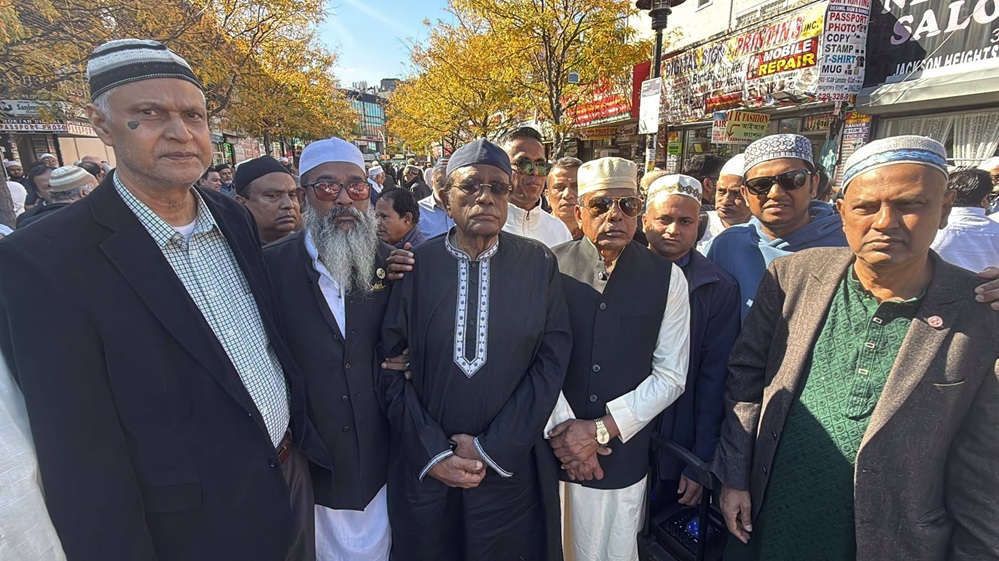
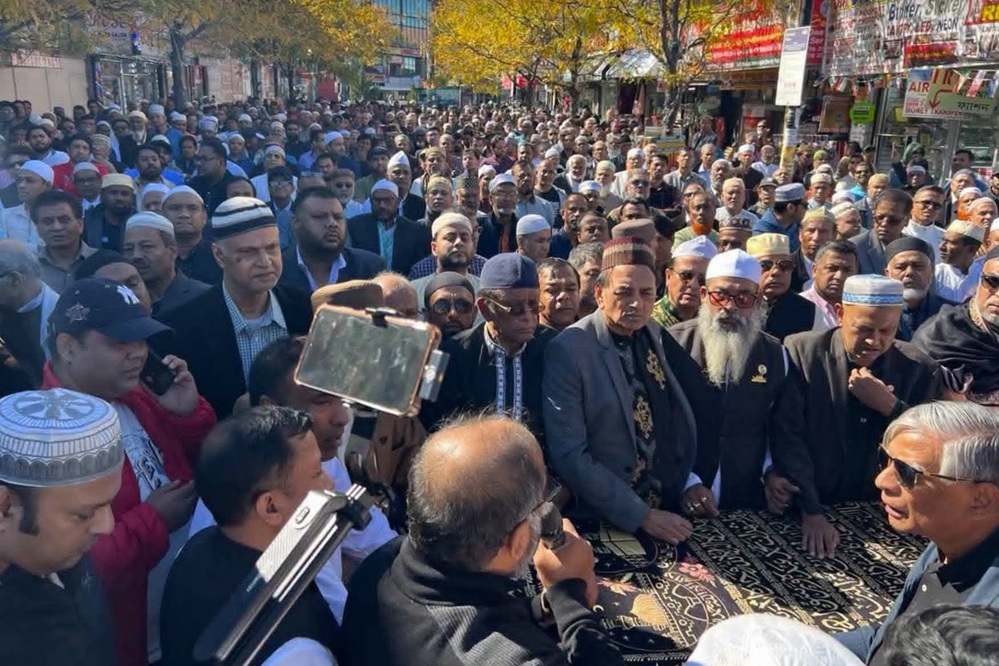
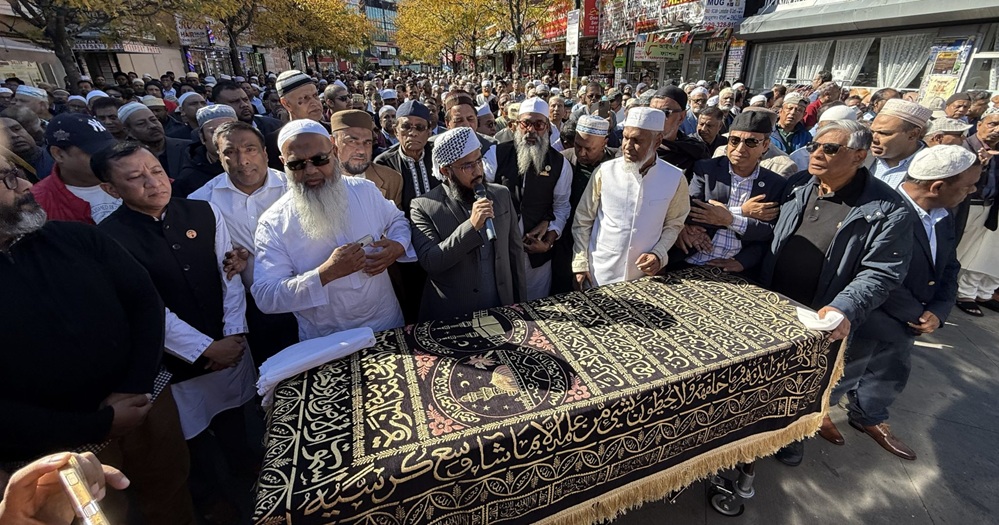
Shibbir Ahmed, New York — Kazi Azizul Haque Khokon, 58, president of the United States Labor League, was remembered with tears, prayers and heartfelt tributes as hundreds of Bangladeshi expatriates from across the political spectrum gathered to pay their final respects to the community leader in New York City.

Thousands of worshippers and mourners attended his funeral prayers after Jumu’ah on October 9 at Diversity Plaza in Jackson Heights, Queens. Community members, political leaders and longtime acquaintances gathered to bid farewell to Khokon, whose death had left many in the Bangladeshi diaspora in mourning.

Khokon reportedly suffered a cardiac emergency while traveling by bus to work on October 3. When he could not be located, a report was filed with police. Friends and political associates searched for him before his body was found at Bellevue’s morgue on the evening of October 7.

Originally from Magura, Bangladesh, Khokon came to the United States in 1992. According to people familiar with his circumstances, he had not obtained permanent immigration status and spent his years in the country living as a bachelor.

Before the funeral prayers, Jewel Ahmed, secretary of the U.S. Labor League, appealed to anyone who had outstanding financial matters with Khokon to contact him. Hossain Rana, an Awami League leader and one of the owners of Obosor Book Corner, where Khokon worked in Jackson Heights, also asked anyone who believed Khokon had wronged them to forgive him.

Ataur Rahman Selim, president of the Bangladesh Society, prayed for the forgiveness of Khokon’s soul and said the organization was taking responsibility for the funeral arrangements and the costs associated with sending his body to Bangladesh.

The funeral drew a broad cross-section of the Bangladeshi-American political and community leadership. Those attending included Moin Chowdhury, a Democratic Party district leader-at-large and attorney; Siddiqur Rahman, president of the U.S. Awami League; General Secretary Abdus Samad Azad; spokesperson Dr. Masudul Hasan; Awami League leader Engineer Mohammad Ali Siddiqui; Haji Enam; Misbah Ahmed; Rafiqul Rahman and Imdad Chowdhury, president and general secretary of the New York City Awami League, respectively.

Also present were Mujibur Rahman Mia, president of the State Awami League and a freedom fighter; General Secretary Shaheen Azmal; Abdur Rahim Badsha, chief adviser to the U.S. Labor League; H.M. Iqbal and Syed Kibria Zaman, president and general secretary of the Swechchhasebak League; former president Nuruzzaman Sardar; Momtaz Shahnaz, president of the Women’s Awami League; Shahahana Rahman, an executive committee member of the U.S. Awami League; former member of parliament Nazrul Islam Babu; Mahmud Hasan and Hridoy Mia, president and general secretary of the U.S. Chhatra League; Harun Bhuiyan and Fahad Solaiman, president and general secretary of the JBBBA; and Mahiyuddin Dewan and Mohammad Ali, senior vice president and general secretary of the Bangladesh Society, among others.

Following the funeral prayers, a vehicle carrying Khokon’s coffin departed for John F. Kennedy International Airport. His body was scheduled to leave for Dhaka on an Emirates flight that night, according to the information provided by community representatives.

Meanwhile, members of the Awami League and affiliated organizations gathered at Nabanna Party Hall on the evening of October 8 in response to a call from the Labor League. They reportedly raised approximately $10,000 to assist with arrangements related to Khokon’s death and support his family.

Jewel Ahmed and Dr. Masudul Hasan said the collected funds, along with cash reportedly found in Khokon’s pocket, would be sent to his brothers and sisters in Magura. Khokon’s funeral brought together political colleagues, community leaders and expatriates from different backgrounds, reflecting the connections he had built during his decades in the United States. As his body was prepared for its final journey to Bangladesh, members of the community offered prayers and expressed condolences to his family.


US Imposes New Sanctions on International Criminal Court, Warns of Further Action

Shibbir Ahmed, Washington DC — The United States has announced new sanctions-related measures against the International Criminal Court (ICC), with President Donald Trump’s administration warning that it will continue efforts to restrict the court’s activities unless its concerns are addressed.

In a statement explaining the decision, the administration said the measures were intended to protect American citizens, military personnel, and political leaders from what it considers the ICC’s unlawful assertion of jurisdiction over US nationals.

The administration emphasized that the United States is not a party to the Rome Statute, the treaty establishing the ICC, and rejects the court’s authority to prosecute Americans. It specifically cited concerns involving US servicemembers, Border Patrol agents, and elected officials responsible for national security.

According to the statement, Washington intends to prohibit certain transactions with the court and restrict its access to resources. The administration also warned that it could expand its efforts to dismantle the institution if the ICC and its member states fail to address American concerns.

The administration said it had given the court and its member states more than a year to respond to its demands. It argued that neither the court nor its member states had taken sufficient steps to resolve the dispute.

The latest action was taken under Section 1(a)(ii)(A) of Executive Order 14203, issued by President Trump on February 6, 2025. The US Treasury Department’s Office of Foreign Assets Control also announced related measures and general licenses permitting certain transactions involving the court. <Cite refs={[“turn378094search0″,”turn378094search1”]}/>

Despite the sanctions, the administration said it remained open to a diplomatic solution. It called on countries that are parties to the ICC to engage in discussions aimed at addressing Washington’s objections, warning that additional measures could follow if negotiations fail.

The ICC, based in The Hague, Netherlands, prosecutes individuals accused of genocide, war crimes, crimes against humanity, and the crime of aggression under the conditions established by its founding treaty.

The United States has long opposed the court’s jurisdiction over American nationals, arguing that the country has not consented to the Rome Statute. The dispute has intensified amid broader disagreements over the court’s investigations and legal actions involving US interests and allies.

The ICC has previously condemned US sanctions targeting its judges and officials, describing such measures as threats to judicial independence and the international rule of law. The court has maintained that it will continue carrying out its mandate to pursue accountability for serious international crimes and provide justice for victims. <Cite refs={[“turn378094search4″,”turn378094news8”]}/>

The latest US measures are expected to further strain relations between Washington and countries supporting the ICC, while raising renewed questions about the court’s financial operations, international cooperation, and the limits of its jurisdiction.


UN Warns Global Economic Growth Will Slow to 2.6% in 2026

Shibbir Ahmed, New York — The United Nations has warned that global economic growth is expected to slow to 2.6% in 2026, down from 2.9% in 2025, as escalating tensions in the Middle East, rising energy costs and growing uncertainty in international trade put pressure on the world economy.

According to the United Nations Conference on Trade and Development (UNCTAD), the latest economic outlook highlights the vulnerability of developing economies to geopolitical shocks and rising import costs. The agency cautions that the effects of the Middle East crisis are extending beyond the region, affecting energy markets, business confidence and the broader outlook for global trade.

The report comes at a time when governments and businesses are confronting a combination of geopolitical instability, inflationary pressures and changing international economic relationships.

The conflict in the Middle East has intensified concerns about global energy supplies, particularly as uncertainty surrounding oil production and shipping routes threatens to increase costs for businesses and consumers.

Higher energy prices can affect transportation, manufacturing, electricity generation and food distribution, creating additional pressure on household budgets and business operating expenses. Countries that rely heavily on imported fuel are particularly exposed, as rising import bills can weaken their financial positions and increase inflationary pressures.

UNCTAD’s assessment indicates that geopolitical instability is becoming an increasingly important factor in the global economic outlook. Continued uncertainty could discourage investment, disrupt supply chains and limit the ability of governments to support economic activity.

Developing Economies Face Growing Pressure
Developing countries are expected to experience uneven economic conditions as higher energy costs combine with existing financial challenges. Nations dependent on imported fuel and external borrowing could face greater difficulties financing infrastructure, public services and industrial development.

UNCTAD projects growth in developing economies at 4% in 2026, compared with 4.7% in 2025. Although the projected rate remains above the global average, the slowdown highlights the difficulties facing countries attempting to sustain economic expansion amid volatile international conditions.

The agency has also raised concerns about unequal access to investment, technology and higher-value industries. Economies with limited industrial capacity may struggle to capture the benefits of global trade and technological advances, widening existing development gaps.

International trade continues to provide opportunities for economic expansion, but shifting geopolitical relationships and changing supply chains are creating new challenges for businesses.

Demand for semiconductors, advanced computing equipment and artificial intelligence infrastructure has supported activity in parts of the global economy. However, UNCTAD warns that the benefits of technological investment remain concentrated in a relatively small number of economies and companies.

For countries seeking sustainable growth, strengthening domestic industries, improving access to technology and diversifying export markets will remain important priorities. The UN’s forecast underscores the uncertainty facing the world economy as policymakers respond to energy market volatility, geopolitical tensions and changing trade patterns.

The direction of oil prices, the security of major shipping routes and the progress of diplomatic efforts in the Middle East will be important factors influencing economic conditions in the coming months. While the global economy is still projected to expand in 2026, the lower growth forecast signals that countries may face a more difficult environment for investment, job creation and improvements in living standards.

The UNCTAD assessment reinforces the importance of international cooperation, resilient supply chains and policies that help vulnerable economies withstand external shocks.


Trump Rules Out Iran Strikes Before US Midterm Elections

Shibbir Ahmed, Washington DC — US President Donald Trump has announced that the United States will not launch new military attacks on Iran before the November 3 midterm elections, citing what he described as productive discussions with Tehran. The announcement signals a temporary pause in the prospect of renewed US strikes as diplomatic efforts continue amid a prolonged regional conflict.

Trump made the announcement on Thursday, October 8, through a social media post, saying his administration was engaged in productive discussions with the Islamic Republic of Iran. His remarks come as the conflict continues to affect regional security, energy markets and international shipping routes.

The decision provides a clearer indication of Washington’s immediate military intentions, although it does not establish whether a longer-term agreement with Iran is within reach. Trump has previously left open the possibility of renewed military action after the elections.

Trump’s announcement follows weeks of uncertainty over whether Washington would resume military operations against Iran. The president has indicated that diplomatic engagement remains an option, even as his administration maintains pressure on Tehran.

In his statement, Trump said discussions with Iranian officials were productive and ruled out attacks before the midterm elections. However, the announcement did not confirm that a comprehensive peace agreement had been reached or that the two governments had resolved their central disagreements.

The United States and Iran have exchanged proposals aimed at ending the conflict and addressing regional security concerns. Negotiations have also involved the strategic Strait of Hormuz, a critical waterway for global oil shipments. The immediate challenge for diplomats will be to turn discussions into concrete commitments that can reduce hostilities and restore confidence in regional stability.

Although Trump has ruled out attacks before November 3, broader security concerns remain. Washington has continued to apply economic pressure on Iran, while military deployments and regional tensions have underscored the uncertainty surrounding the conflict.

The announcement should not be interpreted as confirmation that military action has been permanently ruled out. Trump has previously suggested that further escalation could remain an option after the elections, depending on developments. Iran’s response, the progress of negotiations and the actions of other regional actors will likely influence the next phase of the crisis.

For neighboring countries and US allies, the immediate priority remains preventing further escalation and protecting civilian infrastructure, maritime traffic and commercial aviation.

Energy markets responded to Trump’s comments as investors reassessed the likelihood of an immediate escalation. Oil prices declined on Friday following the announcement. Brent crude fell by $1.70 to $102.58 per barrel, while US West Texas Intermediate crude dropped by $1.08 to $90.41 per barrel in the reported trading session.

The movement reflects the sensitivity of global energy markets to developments involving Iran and the Strait of Hormuz. Any disruption to shipping through the waterway could affect crude supplies, transportation costs and energy prices internationally.

Nevertheless, a single announcement does not eliminate the risks facing oil markets. The duration of any price relief will depend on whether diplomatic progress continues and whether shipping and energy infrastructure remain secure.

The US midterm elections will determine control of Congress and are a significant political test for the Trump administration. Foreign policy, military spending, inflation and fuel prices have all become important considerations in the domestic political environment.

Trump’s announcement establishes a stated limit on military action before election day. However, the president has not ruled out all future military options, and the precise relationship between the electoral timetable and subsequent security decisions remains uncertain.

The administration must also weigh diplomatic objectives against the potential consequences of renewed conflict, including risks to US personnel, regional partners and the global economy. Attention will now turn to whether Washington and Tehran can make tangible progress in negotiations before the election deadline.

President Donald Trump’s decision not to launch attacks on Iran before the November 3 midterm elections marks an important development in US foreign policy and the wider Middle East crisis. His reference to productive discussions offers a potential opening for diplomacy, while the market reaction demonstrates the economic importance of developments involving Iran.

However, the announcement is not a peace agreement, and major security questions remain unresolved. The coming weeks will be critical in determining whether negotiations can produce lasting progress or whether the risk of renewed confrontation will persist beyond the election.


UN Warns Gaza Crisis Deepens Amid Aid, Reconstruction Challenges

Shibbir Ahmed, New York — Humanitarian conditions in Gaza remain severe as shortages of medical supplies, damaged infrastructure and obstacles to reconstruction continue to challenge efforts to restore essential services.

The United Nations and its humanitarian agencies have repeatedly warned that Gaza’s health system remains under enormous pressure. In a UN Geneva briefing earlier this month, the World Health Organization said that no hospital in Gaza was fully functional, citing chronic shortages of medicines and medical equipment.

WHO said medical supplies can face lengthy approval procedures before entering Gaza. According to the agency, medical shipments had waited a median of 74 days for approval, while some equipment had been repeatedly rejected or delayed.

The consequences extend beyond hospitals. Without adequate diagnostic equipment and laboratory supplies, health authorities face greater difficulty identifying and responding to disease outbreaks. The humanitarian situation is also tied closely to the enormous scale of physical destruction.

A recent UN Trade and Development assessment estimated that Gaza’s recovery and reconstruction needs have reached approximately $71.5 billion. The assessment, based on work by the World Bank, European Union and United Nations, estimated physical infrastructure damage at $35.2 billion and economic and social losses at $22.7 billion as of early 2026.

Housing represents the largest category of damage and reconstruction needs. Educational and healthcare facilities have also suffered extensive damage, with more than half of hospitals and primary healthcare clinics reported as non-functional in the assessment.

Agriculture has been severely affected as well. UNCTAD reported that less than 1.5% of Gaza’s cropland remained accessible and undamaged, increasing dependence on humanitarian food assistance.

The humanitarian crisis is unfolding alongside continuing political disputes over Gaza’s future, security arrangements, disarmament and reconstruction.

A Washington Post report published Thursday said reconstruction remains largely stalled despite a U.S.-backed framework, citing disagreements over implementation and security arrangements. The report said hundreds of thousands of Palestinians continue to live amid extensive destruction and inadequate infrastructure.

For international aid agencies, the challenge is therefore twofold: providing immediate assistance while establishing conditions that allow Gaza’s basic infrastructure and economy to recover.

UNCTAD said large-scale international financial and technical assistance will be required for recovery. It identified rebuilding agriculture, industry, construction, energy and technology as important elements of longer-term economic recovery.

The UN’s humanitarian agencies continue to call for predictable and sufficient access for medical and humanitarian supplies, warning that the scale of need remains far greater than current response capacity.


U.S.-Iran Tensions Escalate as Tanker Attacks Raise Risks in Strait of Hormuz

WASHINGTON DC — Tensions between the United States and Iran are intensifying as risks to commercial shipping in and around the Strait of Hormuz increase, raising fresh concerns about global energy supplies and maritime security.

Iran has warned regional countries that attempts to establish or use alternative oil-export routes could be considered hostile, according to regional officials briefed on Tehran’s position. The warnings come after a sharp increase in attacks and incidents involving commercial vessels in the Gulf and the Strait of Hormuz.

Reuters reported Thursday that tanker attacks last week reached their highest level since the current Iran war began. The increase has contributed to a significant decline in vessel traffic through the strategic waterway.

The latest reported incident involved the chemical tanker Acers, which was struck by multiple projectiles north of Qatar. Maritime authorities said members of the crew sustained minor injuries. The incident occurred outside the Strait itself but highlighted concerns that the maritime security threat could extend to approaches involving Qatar, Bahrain, Saudi Arabia, Kuwait and Iraq.

The Strait of Hormuz is one of the world’s most important energy corridors. Before the current conflict, shipments equivalent to roughly 20% of global oil and fuel flows passed through the waterway. Disruptions there can therefore affect not only countries in the Middle East but also energy prices, transportation costs and consumers worldwide.

The United States is considering additional measures toward Iran, while military activity and the security situation in the region continue to evolve. Reuters reported that U.S. naval and other options are under consideration as Washington weighs its response.

Oil-producing countries in the Gulf have been seeking alternative transportation arrangements, including routes that use the Omani side of the Strait before transferring shipments farther out in the Gulf of Oman.

The crisis is also affecting shipping companies. Higher risks and insurance and logistics costs are adding pressure to international trade, while companies are adjusting routes and fees in response to the uncertain security environment.

For Americans, the immediate concern is the potential economic impact. Prolonged disruption around Hormuz could place additional pressure on crude oil, gasoline, diesel and transportation prices.

The situation remains fluid, with governments and shipping operators closely monitoring developments across the Gulf.


Bangladeshi Community Leaders Visit Ailing 1971 Freedom Fighter Harun Chowdhury

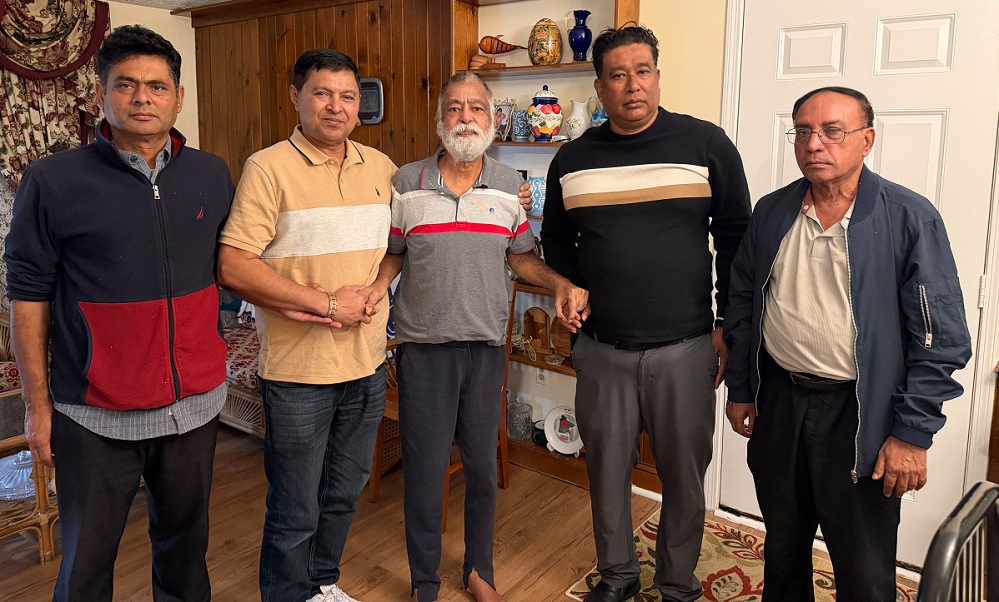
VIRGINIA — A group of Bangladeshi community leaders and journalists recently visited veteran journalist and 1971 Liberation War freedom fighter Harun Chowdhury at his Virginia home, offering support and checking on his health.

The delegation included Shibbir Ahmed, ZI Russell, Sheikh Selim, Sadek M. Khan and Jewel Barua. They spent time with the 77-year-old former wartime leader, who is now largely confined to his home because of age-related health problems.

According to family members, Chowdhury is managing several chronic conditions, including diabetes, high cholesterol and high blood pressure. His health problems have significantly reduced his mobility, and he requires assistance with many everyday activities.

The visit provided an opportunity for the group to reminisce about their years of friendship and professional association with Chowdhury. Conversations centered on shared memories, journalism and his long involvement in the Bangladeshi community in the United States.

Chowdhury’s connection to Bangladesh’s Liberation War is a defining part of his life story. During the 1971 war, he trained at Melaghar in Agartala, India, and served with Sector 2’s K Force under Major General Khaled Mosharraf and Major Haider. He later commanded operations in the Srinagar thana area.

After independence, Chowdhury established a career in journalism and literature. He served for many years as the Washington, D.C., representative of Weekly Thikana and wrote extensively about the Liberation War and the media.

Among his published works are Amar Muktijuddho Amar Ahankar 1971, a memoir of his wartime experience, and Shangbadiker Shongbad, a chronicle of journalism. Both were published by Anannya Prokashoni.

The visitors said Chowdhury’s decades of service to Bangladesh, journalism and the expatriate community remain an important part of his legacy. They also encouraged members of the Bangladeshi-American community and his former colleagues to remember him and his family in their thoughts and prayers as he faces continuing health challenges.