Wall Street Mixed as Nvidia CEO’s Resignation Shakes Investors

NEW YORK – U.S. stocks traded mixed on Friday as investors assessed the sudden departure of Nvidia Chief Executive Officer Jensen Huang, which has raised fresh concerns about the future of the artificial intelligence industry. The Dow Jones Industrial Average rose 0.2% in morning trading, while the S&P 500 slipped 0.1% and the Nasdaq Composite declined 0.4%, according to the Associated Press.

The market remained volatile following Thursday’s sharp movements in technology stocks. Nvidia shares had plunged sharply after the company announced Huang’s departure. The company’s chief financial officer, Colette Kress, was named interim chief executive. Huang’s departure has raised questions about the company’s future leadership, its position in the global AI industry and the broader technology investment market.

Despite the uncertainty, Nvidia shares showed signs of stabilization in premarket trading on Friday. The broader S&P 500 was on track for a weekly gain of approximately 2.8%, potentially ending a losing streak that began in early October.

Investors were also monitoring rising oil prices, government bond yields and upcoming U.S. economic data for indications about inflation and the Federal Reserve’s future interest-rate decisions. Market analysts say developments involving major technology companies and the outlook for interest rates are likely to remain key factors influencing Wall Street in the coming sessions.


AI Chatbots Fuel US Election Disinformation

Mashiur Rahman, New York – Concerns are intensifying over inaccurate and misleading information generated by artificial intelligence (AI) chatbots ahead of the upcoming U.S. midterm elections. Researchers warn that an influx of logistical voting errors, candidates’ identity confusion, and the recycling of Russian-backed propaganda is systematically corrupting the digital information landscape.

The November 3 federal election marks the first time that major tech platforms are deploying direct, embedded AI features at scale. This rollout comes at a critical time as millions of American voters are actively turning to AI tools for election-related instructions, procedures, and political research. However, multi-platform evaluations indicate that these chatbots frequently rely on low-quality, open-internet sources—including public forums like Reddit—to formulate responses, thereby polluting an online ecosystem already saturated with disinformation.

A recent study conducted by Forum AI, an artificial intelligence evaluation firm, revealed that nearly 40% of election-related responses from major chatbots contained at least one factual error. Surprisingly, the models were significantly more prone to hallucinating voting administrative procedures and logistics than information regarding candidates’ platforms.

For example, Anthropic’s chatbot, Claude, confused North Carolina Congressman Don Davis with another individual, incorrectly describing him as a former school superintendent. Furthermore, researchers have documented instances where major AI engines completely miscalculated voter deadlines, providing advice that could cause a voter to request a ballot too late to cast a legitimate vote.

Beyond localized errors, researchers are heavily alarmed by how vulnerable AI models are to foreign information operations. In late October, Russian influence operations, notably Storm-1516, launched a deepfake campaign targeting the Texas Senate race involving Democrat James Talarico. The operation circulated an AI-generated video under a fraudulent account named “Zyon Lewis,” in which a fictionalized former student baselessly accused Talarico of sexual misconduct.

When the independent watchdog organization NewsGuard queried major search engines and tools, Google’s AI Overview, Gemini, and Microsoft’s Copilot all repeated the fabricated allegation as factual, drawing content from unverified online echo chambers.

Microsoft later addressed the error, explaining that the situation was developing rapidly amid a localized shortage of reliable data, causing Copilot to initially hallucinate the narrative. Microsoft noted that the model has since been updated to identify the claim as entirely fabricated. Google also maintained that it enforces strict quality-control parameters and specific guidelines to filter out false election-related claims across its AI features.

Despite the systemic errors, research shows that AI chatbots are not entirely counterproductive. According to the non-partisan research body Brennan Center for Justice, popular AI platforms have generally refused to endorse widespread electoral conspiracy theories, such as claims that voting machines are pre-rigged. This indicates that chatbots can serve as a baseline defense against certain institutional rumors.

Voter trust, however, remains shaky. A recent survey conducted by the National Conference on Citizenship indicated that while two out of every five Americans utilize AI tools to check ballot measures and candidate information, only 40% trust the AI to deliver correct times, locations, and procedures for physical voting. Furthermore, 60% of respondents stated they have little to no confidence that AI tools can provide neutral information about political candidates.


Off-Duty NYPD Stabbed During Attempted Robbery in Bronx

Md. Mashiur Rahman Majumder, New York — An off-duty NYPD detective was stabbed several times during what authorities described as an apparent attempted robbery in the Norwood section of the Bronx on Friday afternoon. The incident happened shortly before 2 p.m. near Rochambeau Avenue and East 206th Street, according to police and local reports. The detective was taken to Jacobi Medical Center for treatment and was reported to be in stable condition.

New York City Mayor Zohran Mamdani said preliminary information indicated that the detective was attacked during an attempted robbery. Mamdani and NYPD Commissioner Jessica Tisch visited the detective and his family at Jacobi Hospital following the incident. Authorities said the investigation remained active Friday evening. Reports indicated that two suspects fled the scene on e-bikes or scooters after the attack. Police circulated images of the suspects as investigators worked to identify and locate them.

Sources familiar with the investigation told local media that the detective is assigned to the NYPD’s 44th Precinct. Additional reports said the suspects approached the officer as he was near his vehicle and attempted to rob him before the confrontation turned violent.

The detective sustained multiple injuries and was transported by emergency medical personnel to Jacobi Medical Center. Officials did not initially release his identity publicly through the NYPD, while the investigation into the circumstances of the attack continued.

The incident also led the NYPD to cancel a previously scheduled briefing at One Police Plaza where Commissioner Tisch and Mayor Mamdani were expected to discuss the city’s quarterly crime statistics.

Police continued searching for the suspects as investigators gathered evidence from the scene. No final determination had been announced regarding the identities or motives of those responsible beyond the preliminary robbery information. The investigation remains ongoing.


America-Bangladesh Press Club Marks 18th Anniversary in New York

Md. Mashiur Rahman Majumder, New York — The America-Bangladesh Press Club marked its 18th anniversary with a seminar, publication of a commemorative magazine, awards and a cultural program in New York. The event was held Tuesday, September 29, at the Gulshan Terrace auditorium in Woodside. The seminar focused on the theme “The Global Media Crisis: Challenges to Media Survival,” bringing together journalists, editors, academics and diplomats to discuss the changing media landscape in Bangladesh, the United States and around the world.

Speakers examined the challenges facing Bangladesh’s media, the professional experiences of Bangladeshi journalists living in the United States, and the impact of social media, artificial intelligence and changing audience habits on traditional journalism. Several speakers emphasized the importance of responsible, objective and investigative journalism. They also discussed concerns over political favoritism, misinformation and declining public trust in news organizations.

The seminar was chaired by America-Bangladesh Press Club President Shawkat Osman Rachi and moderated by former club president Darpan Kabir. Guests included Gholam Mortuza, Press Minister at the Bangladesh Embassy in Washington, D.C.; Mohammad Mozammel Haque, Consul General of Bangladesh in New York; and veteran journalist Manzur Ahmed. Panelists included veteran journalist Saeed Tarek; journalist Moinuddin Naser; Bangladesh Patrika editor Dr. Wazed A. Khan; Janmabhumi editor Ratan Talukdar; Prothom Alo North America editor Ibrahim Chowdhury; Probash editor and former Press Club president Mohammad Sayeed; and Shoeb Ahmed Bhuiyan, a lecturer at Columbia University.

Press Club General Secretary Mashiur Rahman Majumder delivered the welcome address. Treasurer Mallika Khan Muna, Vice President Mohammad Manzurul Haque and Joint General Secretary Abu Bakar Siddiq also delivered congratulatory remarks. During the seminar, moderator Darpan Kabir read an article titled “How Is Bangladesh’s Media Doing?” by Matiur Rahman Chowdhury, editor-in-chief of Manab Zamin. Panelists subsequently discussed various aspects of the article and the broader challenges facing journalism.

Veteran journalist Manzur Ahmed said that when media outlets engage in misinformation, propaganda or attempts to conceal the truth, audiences will turn to social media and other alternative sources for information. Such practices, he said, can undermine the credibility of mainstream media. He also stressed the importance of journalists developing strong news-writing skills and maintaining a habit of reading and learning, noting concerns over the decline of traditional reporting skills.

Bangladesh Embassy Press Minister Gholam Mortuza discussed the role of media owners and editors in the challenges facing Bangladesh’s media. He said political favoritism has contributed to a loss of public confidence in some media organizations. Consul General Mohammad Mozammel Haque said audiences want accurate information and objective journalism. He noted that social media has become an important source of information in today’s media environment.

Veteran journalist Saeed Tarek said journalism in Bangladesh has changed significantly from the 1960s and 1970s. He pointed to the challenges created by social media and also noted that financial difficulties, including problems with journalists receiving regular salaries, can affect responsible journalism.

Dr. Wazed A. Khan said the media industry is facing challenges worldwide as audience behavior continues to change. He highlighted the growing influence of social media and artificial intelligence on print and electronic media and emphasized the responsibility of professional news organizations to verify information and counter misinformation.

Journalist Moinuddin Naser stressed the importance of integrity in journalism, saying honesty must remain a fundamental principle of the profession. Shoeb Ahmed Bhuiyan said responsible journalism becomes difficult when journalists become overly aligned with those in power. He also noted that a country’s economic conditions can have an impact on its media industry and broader society.

Probash editor Mohammad Sayeed said Bangla-language media outlets in the diaspora play an important role in building community connections and maintaining ties between Bangladesh and expatriate Bangladeshis. He also pointed to declining readership and challenges facing community newspapers abroad.

Ibrahim Chowdhury, editor of Prothom Alo North America, said the media crisis is not new and has appeared in different forms over time. He cautioned against attributing the current challenges solely to artificial intelligence or technology, saying changes in technology, audience behavior, news consumption and media business models have all contributed to the transformation of journalism.

Janmabhumi editor Ratan Talukdar said media challenges existed in the past and will continue in the future. He emphasized the importance of remaining vigilant to prevent false information from being presented as news. Following the seminar, organizers cut a cake to mark the Press Club’s 18th anniversary. The commemorative publication “Alokbartika”, released to mark the club’s milestone, was also unveiled during the event. Publication editor Tofazzal Liton delivered remarks on the occasion.

The America-Bangladesh Press Club also honored singer M.A. Soaib and actress Moushumi with special commemorative awards. Renowned singer Rathindranath Roy presented the award to M.A. Soaib, while Press Minister Gholam Mortuza and Consul General Mohammad Mozammel Haque presented the award to actress Moushumi.

Guests were welcomed with roses by representatives of the Press Club. The evening concluded with a cultural program featuring musical performances by M.A. Soaib and Tina Russell. Community leaders, journalists, businesspeople, cultural figures and Press Club members attended the anniversary celebration with their families.


New NYC Laws and Rules Taking Effect in October 2026

Mashiur Rahman, New York — New York City is implementing several new laws and rules in October 2026, affecting consumers, rent-stabilized tenants, businesses and commercial waste operations across the city. Among the changes taking effect this month are a new “Click-to-Cancel” rule for subscriptions, new restrictions on certain menstrual and intimate-care products, updated protections for small-business owners during city inspections, and changes to commercial waste requirements.

One of the most significant changes for consumers took effect October 1, when New York City’s new Click-to-Cancel rule became effective. The rule requires businesses offering automatic-renewal or continuous-service subscriptions to clearly explain subscription terms and provide customers with a straightforward way to cancel. In general, the cancellation process must be available through the same method used to sign up.

Businesses that violate the rule may face civil penalties beginning at $525 per violation, as well as potential restitution to affected consumers. The city’s Department of Consumer and Worker Protection (DCWP) is responsible for enforcement. The city also launched a complaint process allowing New Yorkers to report businesses that make subscription cancellation unnecessarily difficult.

For rent-stabilized apartments, leases beginning between October 1, 2026, and September 30, 2027 will have a 0% guideline adjustment for both one-year and two-year leases under the NYC Rent Guidelines Board’s adopted Order No. 58. The same 0% guideline applies to the covered rent-stabilized loft units during the period. The Rent Guidelines Board establishes annual rent adjustments for rent-stabilized apartments and other covered housing units in New York City.

Another local law takes effect October 10, 2026, restricting the sale, offering for sale and distribution of certain menstrual and intimate-care products containing specified intentionally added ingredients considered harmful to human health. The law also provides for the development of health-based threshold levels after relevant New York State Department of Health regulations are established.

Changes to New York City’s Commercial Waste Zone program are also scheduled to take effect October 16. The Department of Sanitation says the implementation will cover commercial waste zones in Brooklyn East, Manhattan Northeast, Queens, West and Manhattan West. Businesses producing commercial waste in participating zones are required to work with an authorized commercial waste carter during the applicable implementation period. Businesses in Brooklyn North and Upper Manhattan also began their Commercial Waste Zone contract sign-up period on October 1.

Beginning October 1, inspectors from several city agencies must provide storefront businesses with a physical copy of the updated Business Owner Bill of Rights at the beginning of onsite inspections, along with information about accessing the city’s customer-service survey and translated versions of the document.

The requirement applies to inspectors from agencies including the Department of Buildings, Department of Consumer and Worker Protection, Department of Environmental Protection, FDNY, Department of Health and Mental Hygiene, Department of Parks and Recreation, Department of Sanitation and Department of Transportation.

The updated requirements are part of Mayor Zohran Mamdani’s Executive Order No. 18, which also directs city agencies to prominently post the updated Business Owner Bill of Rights at public offices and service locations serving businesses.

With several of these measures now taking effect, October marks a significant month of regulatory changes for New York City residents and businesses. The changes cover consumer subscriptions, rent-stabilized housing, personal-care products, commercial waste and interactions between city inspectors and small businesses.


Large Crowd Joins Muslim Day Parade in New York Despite Heavy Rain

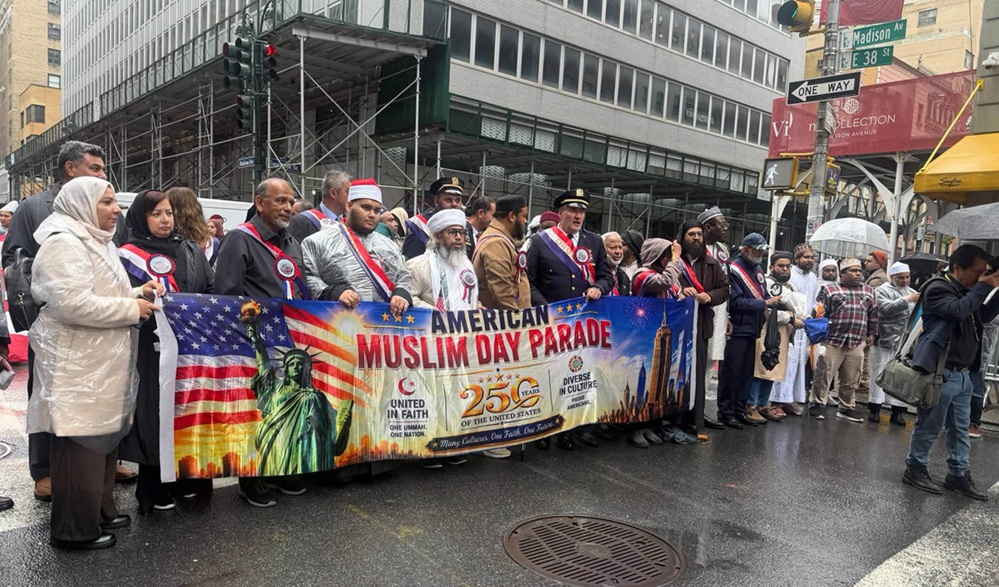
Md. Mashiur Rahman Majumder, New York — Thousands of people gathered along Manhattan’s Madison Avenue on Sunday September 27, 2026 for the Muslim Day Parade, turning out despite heavy rain to celebrate faith, cultural diversity and community unity. Parents accompanied by their children, students, teachers, imams, community leaders and representatives of religious and social organizations took part in the annual event. The strong turnout despite the unfavorable weather highlighted the diversity and community spirit of Muslim New Yorkers.

Held against the backdrop of the 250th anniversary of the United States, this year’s parade carried the theme “United in Faith, Diverse in Culture.” Organizers also promoted the messages “One Ummah, One Nation, Proud Americans” and “Love for All, Hatred for None.”

Participants representing different languages, nationalities and cultural backgrounds joined the procession, reflecting the diverse character of the Muslim American community. Religious and community leaders were joined by Muslim officers of the New York City Police Department (NYPD), members of the Fire Department of the City of New York (FDNY), representatives of Islamic organizations, law enforcement personnel and elected officials.

Despite the persistent rain, the participation of community members helped turn the parade into a major gathering celebrating Muslim American identity and community engagement. Mohammad Razvi, president of the Council of Peoples Organization (COPO) and convener of the parade, thanked participants and everyone involved in organizing the event. He also expressed appreciation to organizers, volunteers, partner organizations and sponsors who worked behind the scenes to make the parade possible.
Razvi said New York’s Muslim community represents unity and peace, adding that the large turnout despite the rain demonstrated the strength of that unity. Students and members of the school community from Elham Academy in Queens also participated in the parade. For the students, the event provided an opportunity to celebrate their faith and heritage while taking part in a broader community gathering. Parents and teachers joined the students and shared the experience with them.

Imam Muhammad Shahidullah, founder of Elham Academy and chief executive officer of Save the People, said Islam is a religion of peace. He highlighted the contributions of Muslim Americans to the United States and said Muslims have played an important role in the country’s education, service, culture and development.

Shahidullah said the Muslim community would continue working alongside people of all ethnicities and faiths to showcase the values of Islam and contribute to the continued progress of the United States. The parade’s organizing committee included Tahir Mustafa Kukigi, Rafiq Mohamed, Ibrahim Ahmed, Ainul Haque, Zilfa Baksh, Ed Powell, Sakibeh Mustafa, Souleymane Konate, Bajah Ruhi, Kenan Taskent, Ahmad Ali, Hafida Torres, Moni Lutfi, Imam Muhammad Shahidullah and Mohammad Razvi.

According to the parade’s promotional materials, participating organizations included COPO, Darul Uloom New York, Save the People, Al-Amin School, Jalalabad Foundation for Children and Youth, Africa Community Services, African Cultures Promotions, Albiana Islamic Cultural Center, Al-Ihsan Academy, Al-Iman School, Al-Mamur School, American Council of Minority Women, Basti, Council of African Imams, Islamic Leadership School, Jamaica Muslim Center and Jamaica Bangladesh Friends Society.
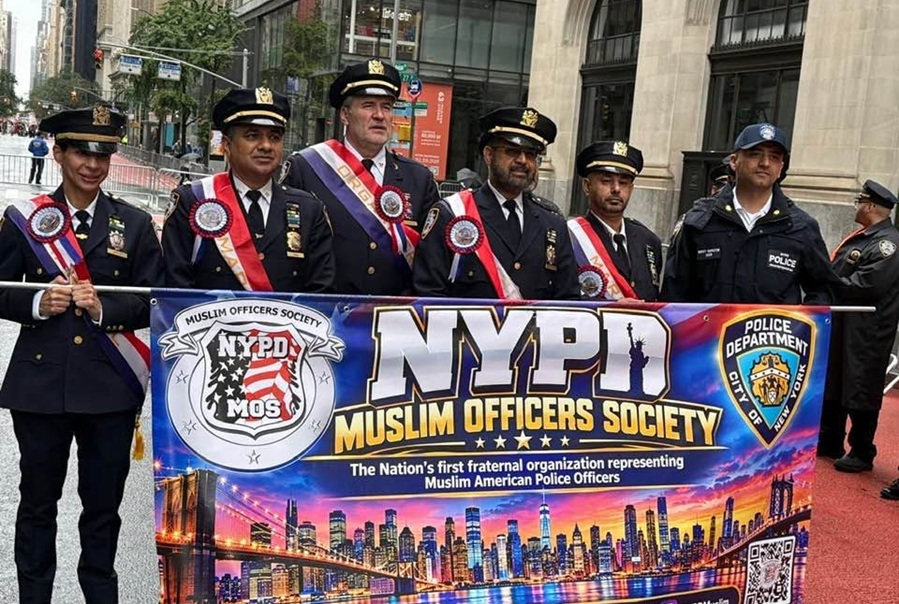
The promotional materials also listed numerous mosques, schools and community organizations, including Al-Madani Mosque, Masjid Al-Hikmah, Masjid Al-Ghaffar, Makki Mosque, Masjid Asri, Miraj Islamic School, Razi School, Yankasa Association of USA, Moroccan Society of New York, Yemeni American Association of New York, Yonkers Islamic Center, Elham for All, New York Imam Council, Islamic Schools Association, Caribbean American Muslim Association and Smile of Life.

The heavy rain did little to dampen participation. Organizers said the parade sent an important message to younger generations: people can take pride in their faith and cultural identity while embracing other communities and contributing to a peaceful and united America.


Trump Reportedly Rejects Iran’s Proposal to Reopen Strait of Hormuz

Washington DC — U.S. President Donald Trump has reportedly rejected an Iranian proposal aimed at reopening the Strait of Hormuz within seven days and ending fighting across the region, according to a report by The Wall Street Journal cited by Reuters.

Iran has been seeking an agreement that would reopen the strategically important waterway and establish a pause in the wider regional conflict. Tehran said the proposal was transmitted to the United States through Qatari mediators.

Iranian Foreign Minister Abbas Araqchi said the plan would trigger a seven-day countdown to reopening the strait if Washington agreed to the terms. Tehran has also called for the lifting of U.S. restrictions affecting Iranian ports, the release of frozen Iranian funds and the removal of oil sanctions.

However, The Wall Street Journal reported that Trump had rejected the proposal. Reuters said it could not immediately independently confirm the report, and Iran was still awaiting an official U.S. response.

The uncertainty comes as the Strait of Hormuz remains central to the international economic consequences of the conflict. The waterway is a critical route for global energy shipments, and prolonged disruption has contributed to concerns about oil supplies and shipping costs.

Iran has said it is prepared to discuss broader issues after hostilities are paused, but Tehran has ruled out concessions on several aspects of its nuclear program. The latest developments leave the diplomatic initiative in an uncertain position as Washington considers its response and regional tensions continue.


Where Is the Future of Our Youth?

Mashiur Rahman Majumdar: A significant share of Bangladesh’s population is young. This large youth population represents an enormous opportunity for the country. At the same time, failure to create adequate employment and develop the necessary skills could turn that opportunity into a serious economic and social challenge.

When a young person completes an education and then spends years waiting for employment, the consequences extend beyond individual hardship. The country also loses the productive potential of a generation. Expanding access to education alone is therefore not enough. Education must be connected more closely to the actual demands of the labor market.

Young people need practical training and opportunities in technology, artificial intelligence, information technology, modern agriculture, manufacturing, healthcare and entrepreneurship. Equal opportunities must also be ensured for young women and those living in economically disadvantaged or underserved regions.

Creating employment is not solely the responsibility of the government. The private sector, educational institutions and industries must work together to develop a workforce equipped for a changing economy. Young people should have opportunities not only to seek jobs, but also to become entrepreneurs, skilled professionals and innovators.

Investing in young people is, in reality, an investment in the country’s future. The decisions made today will determine whether tomorrow’s Bangladesh is more skilled, productive and competitive in the global economy.

  • Journalist, Bronx, New York.


Democracy’s Strength Lies in Institutions, Not Individuals

A democratic state does not depend solely on holding elections. Its long-term stability depends on the strength of public institutions, accountability, the rule of law, and the protection of citizens’ rights. Governments may change and political leaders may come and go, but strong and impartial institutions provide continuity and stability to the state.

For Bangladesh, the key question in advancing democracy should therefore not simply be who is in power, but how effectively and accountably the country’s institutions function. The Election Commission, judiciary, civil administration, law enforcement agencies and local government institutions all need to earn and maintain public confidence.

Political differences and competition are natural features of a democracy. However, political conflicts should never be allowed to weaken state institutions. Those in power must remain accountable, while opposition political forces must also respect democratic rules and the law.

The most effective way to strengthen democracy is to build a political culture in which the transfer of power is accepted as a normal part of democratic life and state institutions serve the public interest rather than the interests of any individual or political group.

The fundamental challenge for Bangladesh’s democratic future is clear: Can the country move beyond personality-driven politics and build institutions strong enough to serve the people and withstand political change?


President Calls for Stronger Local Government

DHAKA: President Mirza Fakhrul Islam Alamgir today said democracy must be institutionalized and the local government system strengthened to consolidate democracy in the country. He made the remarks when administrators from 33 district councils paid a courtesy call on him at Bangabhaban this afternoon. Describing local government as one of the key pillars of democracy, the president urged the district council administrators to work actively to eliminate corruption left behind by the previous era.

During the meeting, the district council administrators placed several demands before the president, including raising their status. The president assured them of government cooperation in resolving their problems, saying, “This government is the government of the people and will take quick steps in this regard.”

Fakhrul Islam said the government is working seriously to strengthen the local government system as part of efforts to decentralize power. The president also recalled the active participation of district council administrators in restoring democracy and their role in the long-running movement against fascism. He urged the administrators to bring greater dynamism to development activities, ensure effective citizen services at the local level, and maintain administrative transparency.