New York — Abdulrahman El Bahnasawy, 28, a resident of Ontario, Canada, has been sentenced to an additional 50 years in federal prison for attacking two correctional officers at a Pennsylvania prison in 2020 while serving a separate sentence for plotting a mass-casualty terrorist attack in New York City on behalf of ISIS. According to a U.S. Department of Justice announcement dated Monday, October 19, 2026, the new sentence will run consecutively to the 40-year prison term Bahnasawy is already serving for his role in the 2016 New York City terror plot.
According to court records, Bahnasawy attacked two correctional officers at U.S. Penitentiary Allenwood on December 7, 2020, using a weapon made from part of a steel desk in his cell. He stabbed one officer in the head and face. When a second officer intervened to help, he stabbed her in the hand. The first officer eventually lost his right eye as a result of the attack.
After Bahnasawy was restrained, authorities discovered a note inside his sock stating, “This is a terrorist attack for the Islamic State.” Investigators also found a pledge of allegiance to the Islamic State of Iraq and al-Sham, commonly known as ISIS, taped inside a locker door in his prison cell.
In November 2025, Bahnasawy pleaded guilty to multiple offenses, including assault, assault with intent to commit murder, possessing contraband inside a prison, and providing material support to ISIS, a designated foreign terrorist organization.
Assistant Attorney General for National Security John A. Eisenberg said the additional sentence would help ensure that Bahnasawy remains in prison for a long time after carrying out another violent attack in the name of ISIS.
U.S. Attorney Brian D. Miller for the Middle District of Pennsylvania said the sentence reflects the government’s commitment to prosecuting people who commit violence in the name of ISIS, including those who carry out attacks behind prison walls.
Bahnasawy was arrested in May 2016 after traveling from Canada to the New York City area in preparation for a planned terrorist attack. At the time, he was 20 years old and had conspired with Talha Haroon and Russell Salic to plan bombings and shootings in heavily populated areas of New York City during the Islamic holy month of Ramadan. The alleged plot was intended to cause mass casualties on behalf of ISIS.
An undercover FBI agent infiltrated the group by posing as an ISIS supporter willing to participate in the planned attacks. Bahnasawy has remained in custody since his arrest. The FBI’s Philadelphia Field Office investigated the prison attack case. Assistant U.S. Attorney Geoffrey MacArthur and Deputy Chief Larry Schneider of the Justice Department’s National Security Division Counterterrorism Section prosecuted the case.
Enamul and Two Other Bangladeshis Detained in New York
New York: Several Bangladeshis have been detained by U.S. Immigration and Customs Enforcement (ICE) in New York State, raising concern within the expatriate community. Among those detained is Inamul Haque Inam, a familiar face in the Bangladeshi community and a cultural worker. Inam was detained last Wednesday. Since then, acquaintances have said they have been unable to contact him.
Inam came to the United States about 42 years ago. He lived for a long time in Jamaica, New York. Alongside his cultural activities, he was involved in organizing entertainment events. Inam used to bring actors, actresses and singers from Bangladesh to the United States to take part in various events. In the 1990s, artists such as Ferdous Wahid and Kumar Bishwajit visited New York at his invitation.
A few years ago, Inam moved to Virginia. Later, he began living in Buffalo, a city about 400 miles from New York City. Some acquaintances have claimed that despite living in the United States for many years, he was unable to obtain the necessary documents for lawful residence. However, no statement from the relevant authorities has been obtained regarding this claim.
ICE also detained another Bangladeshi businessman in Buffalo about a week ago. The man, known as Babu, owns a Bangladeshi restaurant on Kenmore Avenue. He was originally from the T&T Colony area of Moghbazar in Dhaka. He has not yet been released following his detention, according to people who know him. His restaurant has also closed.
Earlier, Bangladeshi national Zakir Hossain was detained in Buffalo. Although he had a green card, he did not have it with him at the time of his detention. He was subsequently released. These incidents have increased concern among the Bangladeshi community in Buffalo.
A report published on September 1 by Western New York media outlets Buffalo Toronto Public Media (BTPM) and WXXI News said the number of people detained by ICE in Upstate New York had exceeded 600 in July 2026.
An analysis of government data cited in the report also showed that the number of people detained by ICE across New York State had reached approximately 1,500 by the same period. The analysis found that nearly four out of every five people detained in Upstate New York had no criminal history. However, the U.S. Department of Homeland Security disputed the accuracy of the data and analysis.
JFK Airport Protest Against Dr. Yunus Over Bangladesh Politics
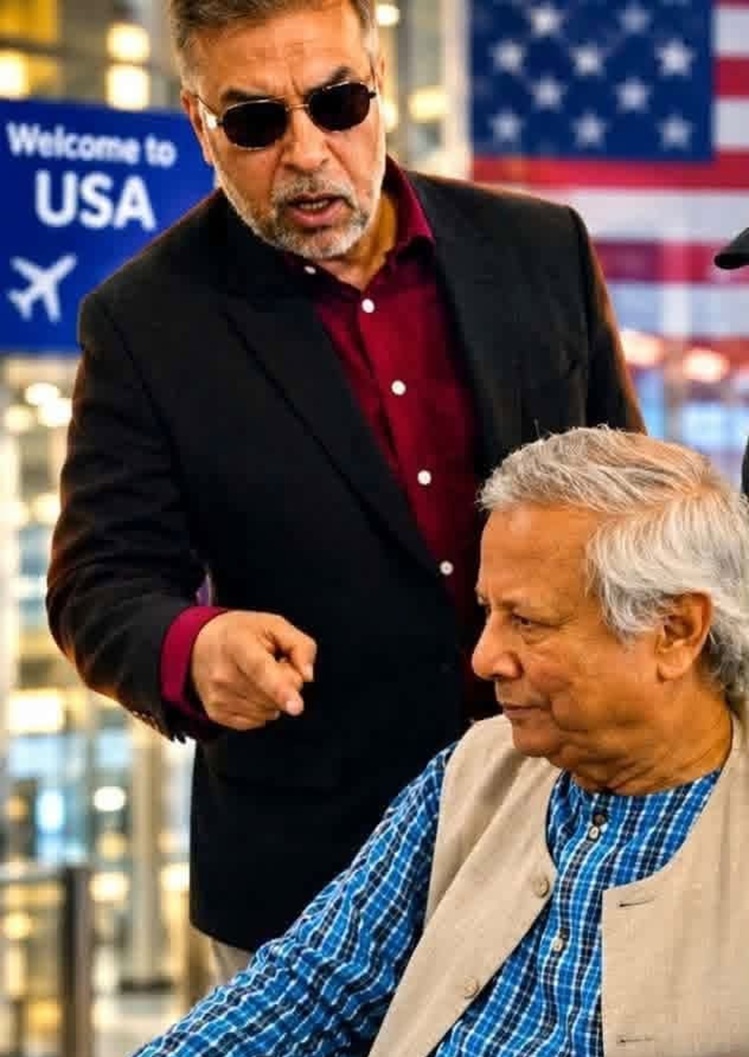
NEW YORK: Activists affiliated with the Awami League have claimed that they staged a protest against Dr. Muhammad Yunus at John F. Kennedy International Airport in New York on October 12, expressing anger over Bangladesh’s political situation and the restrictions imposed on their party’s political activities. In a social media post accompanying a video, the activists claimed that a group led by Imdad Chowdhury, general secretary of the New York Metropolitan Awami League, confronted Yunus at the airport.
According to the post, other participants included Mizan Chowdhury, general secretary of the US Jubo League; Sakhawat Hossain Chanchal, vice president of the New York Metropolitan Awami League; Tanvir Kaisar, general secretary of the Jackson Heights Awami League; and Jubo League leader Sagor.
The post raised several allegations concerning Bangladesh’s political environment, including claims of political repression, mob violence, police killings, attacks on opposition activists, arrests, assaults, killings, torture, and vandalism and looting of homes and businesses. These allegations reflect the protesters’ claims and have not been independently verified in connection with the airport incident.
The activists also expressed anger over the ban on the Awami League’s political activities and questioned the purpose of Yunus’s visit to the United States. According to the social media account, they sought answers from him about Bangladesh’s political situation. The post further claimed that Yunus left the area quickly with his associates without responding to their questions. The circumstances of the encounter could not be independently established from the account provided.
Dr. Muhammad Yunus assumed leadership of Bangladesh’s interim government after Sheikh Hasina’s government fell in August 2024 following a student-led mass uprising. The political transition prompted discussions about democratic reform, accountability, judicial independence, and investigations into alleged human rights violations committed under the previous administration.
At the same time, the interim government faced criticism over political violence, retaliatory attacks, arrests, and law enforcement practices. Following the change of government, cases were filed against numerous Awami League leaders and activists, and several were arrested. Concerns were also raised about alleged politically motivated harassment, arbitrary detention, and the need to uphold due process.
These developments have placed political accountability and human rights protection at the center of Bangladesh’s ongoing political debate. Ensuring justice for past abuses while protecting the legal rights and security of citizens regardless of political affiliation remains a significant challenge.
Imdad Chowdhury confronts Dr. Muhammad Yunus at New York’s JFK International Airport, raising questions about Bangladesh’s political situation and the ban on Awami League activities, according to a social media post accompanying the video.
On May 11, 2025, Yunus’s interim government announced a decision to prohibit all activities of the Awami League under the Anti-Terrorism Act. The government said the measure was taken in the interest of national security while legal proceedings concerning serious allegations against the party were underway. Allegations of involvement in deaths during the 2024 uprising were among the issues cited in the context of the decision.
The Awami League rejected the ban, calling it unacceptable. The decision triggered debate over the party’s ability to conduct public political activities, maintain its organizational structure, and participate in the country’s political process.
The restrictions also raised broader questions about political pluralism, freedom of association, and the distinction between prosecuting individuals accused of crimes and restricting the activities of an entire political organization.
Human Rights Watch’s World Report 2026 raised concerns about arrests under the interim government, including the detention of thousands of people described as political opponents. The report discussed the detention of Awami League leaders, members, and supporters, difficulties in obtaining bail, and the importance of ensuring due process. The broader human rights debate has focused on whether arrests are based on credible evidence and whether detainees receive fair treatment under the law. Human rights advocates have emphasized that allegations of criminal conduct should be investigated individually and adjudicated through independent legal proceedings.
Concerns have also persisted over mob attacks, harassment of political opponents, and obstruction of political meetings and demonstrations. Public humiliation, physical assaults, and organized pressure intended to silence political activity pose challenges to the rule of law and the protection of civil liberties.
In a July 2025 assessment, Human Rights Watch said retaliatory violence and human rights violations had continued following the fall of Sheikh Hasina’s government. The organization cited attacks on Hindu homes in Rangpur and clashes in Gopalganj in which five people were killed. It also expressed concern over the detention of people considered supporters of the Awami League following the Gopalganj violence.
These incidents underscored the risks of political retaliation during periods of transition. Human rights advocates have stressed that allegations against individuals or groups should be addressed through impartial investigations, credible evidence, and fair judicial proceedings rather than collective punishment.
Bangladesh’s political landscape has continued to evolve following the February 2026 national election. As a result, scrutiny of the interim government’s decisions has increasingly intersected with questions about political rights, arrests, and freedom of expression under the current administration.
In an October 5, 2026, report, Human Rights Watch said police took approximately 290 people into custody from a meeting of a left-wing political party in Dhaka. According to the report, authorities alleged that those detained had attended a clandestine meeting of the banned Awami League. The organization also reported that 27 of the detainees were subsequently sent to court custody.
The reported incident renewed concerns about the use of mass detention in cases involving alleged political affiliation or participation in gatherings associated with a banned party. Human rights advocates argue that accountability for abuses committed under previous administrations must go hand in hand with protections against arbitrary detention and politically motivated restrictions under the current government. Political affiliation alone should not determine a person’s right to freedom, a fair hearing, or peaceful political participation.
Bangladesh’s political divisions have also become increasingly visible among expatriate communities in the United States. Political rallies, competing slogans, and allegations of confrontations involving supporters of rival parties have highlighted tensions within the Bangladeshi diaspora, particularly in New York.
The claimed October 12 protest against Yunus at JFK Airport is another example of how developments in Bangladesh continue to shape political activism among expatriate Awami League supporters.
The airport incident also highlights the competing narratives surrounding Bangladesh’s political transition. Supporters of the former ruling party have raised concerns about political exclusion and alleged repression, while the authorities have cited accountability for serious alleged crimes as a justification for restrictions and legal proceedings.
The claims surrounding the airport encounter, however, should be distinguished from independently established facts about the incident and the broader political allegations.
Bangladesh’s political future will depend in part on whether the country can pursue accountability for past human rights violations while safeguarding political freedoms, public safety, and the rule of law. Allegations of crimes should be investigated impartially, with individuals held accountable on the basis of evidence and through fair legal proceedings. At the same time, political identity should not be grounds for collective punishment, arbitrary detention, or violence.
As Bangladesh continues to navigate the consequences of the 2024 political upheaval and the subsequent transition of power, ensuring equal protection under the law and meaningful political participation remains essential to restoring public confidence in democratic institutions.
Mass arrests in Bangladesh raise concerns over political repression
Elaine Pearson – The mass arrest of attendees at a meeting of a small left-wing political party in Dhaka on September 26 marks the latest reported incident raising concerns about civil and political rights in Bangladesh.
Police took approximately 290 supporters of the Jatiya Samajtantrik Dal (JSD) into custody after members of the ruling Bangladesh Nationalist Party’s (BNP) youth wing, Jubo Dal, alleged that the gathering was a “secret” meeting of the banned Awami League, led by former Prime Minister Sheikh Hasina. A court subsequently remanded 27 of those arrested to custody over allegations that they had chanted “Joy Bangla,” or “Victory to Bengal,” a slogan associated with the Awami League.
The JSD was part of a 14-party alliance led by the Awami League, which governed Bangladesh from 2009 until 2024. That government was toppled following student-led protests in which hundreds of people were killed by security forces.
The BNP, now in power, faced severe repression during the Awami League’s tenure. However, since taking office following the February elections, the BNP government has also targeted people perceived as political opponents. Hundreds of Awami League members are reportedly in jail, many without formal charges.
Police have repeatedly raided gatherings allegedly involving Awami League supporters. On September 26, the same day as the JSD meeting in Dhaka, police in Barisal detained 12 Awami League activists accused of holding a “secret” meeting to “plan sabotage.” Two days later, another 15 people were arrested in Dhaka under the Anti-Terrorism Act of 2009 on similar allegations. Those detained in both cases said they had gathered to commemorate Hasina’s birthday.
During Hasina’s rule, Bangladesh experienced widespread and serious human rights violations, including extrajudicial killings, enforced disappearances, torture, and the arbitrary detention of political opponents.
The BNP came to power promising to restore human rights and uphold the rule of law. Yet its reported use of arbitrary detention against perceived opponents, alongside the rollback of human rights safeguards proposed by the interim government, raises questions about its commitment to those promises.
International human rights law protects freedom of expression and freedom of association. These rights apply to everyone, regardless of political affiliation. Past abuses committed under the Awami League government cannot justify similar violations by the BNP government today.
Bangladesh’s political history offers repeated warnings about the consequences of suppressing dissent. Protecting civil liberties, ensuring due process, and allowing peaceful political participation are essential to preventing another cycle of repression. Political accountability must apply to every government, regardless of which party holds power.
———————
Elaine Pearson, HRW, London
BNP Government Moves to Turn Awami League Ban Ordinance into Law with Punitive Provisions
The BNP government is set to transform the interim government’s “anti-terrorism ordinance,” which banned the activities of the Awami League, into law. The proposed legislation includes punitive measures. During the interim government, the BNP had opposed the idea of banning any political party through executive orders, stating that the public should decide. However, after coming to power, the government is taking steps to convert the ordinance into law. Until the executive order is officially revoked, the Awami League remains under restrictions. Once the law, including punitive provisions, is enacted, the party will face even greater limitations in carrying out political activities.
The 133rd ordinance issued by the interim government was introduced in the 13th Parliament on March 13. On that day, a 14-member special committee was formed to review the ordinances. Under Article 93 of the Constitution, an ordinance lapses if not passed by Parliament within 30 days, which in this case would have been April 12.
Last Thursday, the special committee recommended that 98 ordinances be converted into law without any changes. Fifteen ordinances were proposed for amendments before being presented as bills. Sixteen ordinances are not to be introduced at this time, and four were repealed based on recommendations from Hefazat.
Among the 15 ordinances recommended for amendment and presentation as bills is the “Anti-Terrorism Ordinance” issued on May 11, 2025. This ordinance, by amending Sections 18 and 20 of the 2009 Anti-Terrorism Act, banned the activities of the Awami League and all its affiliated organizations. The same law had banned the activities of the student wing, Chhatra League, in October 2024.
On May 9 last year, NCP leaders staged a protest at the residence of then Chief Advisor Dr. Muhammad Yunus, demanding the ban on the Awami League. Later, other parties, including Jamaat-e-Islami, Gana Odhikar Parishad, Islami Andolon, AB Party, and Bangladesh Khalafat Majlis, joined the movement.
On the night of May 11, an emergency meeting of the advisory council at Yunus’ residence amended two sections of the Anti-Terrorism Act. It allowed the government to ban the activities of individuals or organizations involved in terrorism through executive orders. On the same day, a government notification stated that the Awami League’s activities would remain banned until trials in the International Crimes Tribunal concluded.
The interim government did not directly ban the Awami League. However, under the restrictions of Section 20 of the ordinance, the party cannot hold rallies, meetings, or assemblies; its offices must remain closed; bank accounts can be frozen; posters and banners cannot be displayed; press releases cannot be issued; and the party is barred from publishing in media or social platforms and holding press conferences.
The law proposes that banned organizations conducting activities could face four to 14 years of imprisonment. The ordinance itself did not specify penalties for violations, meaning the Awami League had been under restriction without legal consequences for noncompliance.
The parliamentary special committee, consulting with relevant ministries, recommended the passage of the anti-terrorism ordinance as law. The Ministry of Home Affairs noted that “the ordinance does not contain any penal provisions for banned organizations, but punitive measures can be added.”
Although it is unclear what specific penalties will be included, government sources indicate that existing provisions under Section 16 of the law would apply to restricted organizations. Awami League leaders have refrained from making formal statements on the matter. However, Presidium member and former minister Abdur Rahman told reporters that the public will ultimately decide. He added that facing restrictions is not new for the Awami League, as the party has navigated such challenges in the past.
When asked whether the Awami League would challenge the validity of the ordinance in court, Abdur Rahman said the party would take legal or protest action wherever necessary.
Whose Country Is It? First, Your Own
Desk Report : In the wake of a massive public uprising that toppled the Awami League government, Nobel laureate Professor Dr. Muhammad Yunus responded to the call of movement leaders and assumed a leadership role in the interim government, citing “national rescue” as his mission. At the time, the nation’s hopes were pinned on him, with many believing that his leadership could elevate Bangladesh’s global standing, enhance citizens’ dignity, and unlock long-suppressed potential.
However, from August 8, 2024, when he assumed office, until February 12, 2026, when power was transferred via election, how much of the public’s expectations were actually fulfilled by the Nobel laureate? Kaler Kantho launched an investigation to answer this question.
The inquiry revealed that during his roughly 18-month tenure, Dr. Yunus leveraged his position to secure extensive personal and institutional advantages. One notable example was the rapid approval of Grameen University, a project of the Grameen Trust founded by Dr. Yunus. While 22 other private universities had pending applications for years, Grameen University received approval within just three months—an unusually fast process, facilitated by Dr. Yunus’ role as chief adviser to the interim government.
Further findings indicate that he granted tax exemptions to Grameen Bank for five years, potentially costing the government over BDT 1,000 crore in revenue. In addition, the Grameen Welfare Trust reportedly received BDT 1,043 crore in tax exemptions, and another BDT 666 crore was waived under other financial arrangements. Beyond financial benefits, he used his authority to settle seven ongoing lawsuits against himself, including high-profile corruption cases, and expedited licenses for recruitment agencies and e-wallet services linked to Grameen Trust.
Senior Supreme Court lawyer Manzil Morshed told Kaler Kantho, “Anyone taking office to run the state must ensure there is no conflict between public duty and personal interest. Officials are expected to relinquish profitable positions before assuming government roles. Dr. Yunus, while serving as chief adviser, engaged in activities that raised serious questions about conflicts of interest, potentially violating his oath and deceiving the public.”
The approval of Grameen University raised further concerns. According to the Private University Act of 2010, a minimum reserved fund of BDT 5 crore is required to establish a university in Dhaka. However, the approval for Grameen University cited only BDT 1.5 crore, prompting questions of legality and fairness. Officials from the Ministry of Education and UGC could not provide clear explanations, with some claiming they were not in office at the time, and others saying they could not recall details. The university, meanwhile, insisted that all financial requirements were met and that the initiative was nonprofit.
Additionally, the interim government period saw significant deterioration in law and order, the economy, investment, and public safety. Incidents of mob violence, political clashes, murders, arson, looting, and attacks on journalists reportedly surged. Nonperforming loans, foreign debt, interest rates, and investment stagnation increased, while high inflation affected ordinary citizens’ daily lives. Major development projects stalled, foreign agreements sparked controversy, and no meaningful progress was made on the Rohingya issue. Overall, this period negatively impacted stability, economic momentum, and citizen security.
Legal experts argue that using state authority to benefit personal or affiliated institutions constitutes a conflict of interest and a breach of the oath of office. Dr. Yunus’ actions—rapid license approvals, settlement of pending lawsuits, tax exemptions, and other privileges—have drawn criticism for transparency, accountability, and fairness.
Senior lawyer Manzil Morshed emphasized, “Decisions taken for personal gain while holding a constitutional office constitute a conflict of interest and violation of the oath. Such actions should be annulled, and legal steps taken where necessary.” Similarly, lawyer Dr. Shahdeen Malik noted that under Article 147 of the Constitution, holding profitable engagements while in office is prohibited, raising further questions about the legality of benefits obtained by Dr. Yunus and his affiliated institutions.
In summary, experts conclude that the interim government period witnessed significant concerns regarding ethics, accountability, and constitutional limits in the actions of the chief adviser and related institutions. (Kalerkantha)
Drones from Myanmar Spotted Over Saint Martin’s Sky, Raising Concerns
Desk Report: Drones have been spotted flying near Bangladesh’s airspace close to Saint Martin’s Island in Teknaf, Cox’s Bazar, raising concerns among residents in the border area. On Thursday around 7:00 PM, two drones, colored red and green, were seen hovering in the eastern sky near the island’s jetty for almost an hour. The sighting caused alarm among the local population. Residents suspect that the drones may have been launched from Myanmar for surveillance of the border area.
Foyezul Islam, chairman of the Saint Martin Union Parishad, said, “Two drones were seen flying in the eastern sky near the jetty at night. It is believed that they came from the direction of Myanmar and may be part of the Arakan Army’s border monitoring. In this situation, it is crucial to strengthen our border security.”
Local fisherman Mohammad Azim added, “People gathered after seeing two drones flying in the sky at night. The matter was then reported to the authorities. Many are speculating that the drones came from Myanmar and could belong to the Arakan Army.”
Residents expressed concern over such drone activity, especially given the recent rise in instability along the border. They have called for an immediate investigation and necessary measures, including enhanced border surveillance, to ensure the security of Bangladesh’s airspace.
Putin, Saudi prince seek more efforts to end Mideast war
MOSCOW – Russian President Vladimir Putin on Thursday called for intensifying political and diplomatic efforts to end the Middle East war during a phone call with Saudi Crown Prince Mohammed bin Salman.
“Both sides emphasised the need for a rapid cessation of hostilities and the intensification of political and diplomatic efforts to achieve a long-term settlement of the conflict,” the Kremlin said in a read-out of the call. The call comes after Ukraine signed an air defence deal with Saudi Arabia as the Gulf nation grapples with Iranian drone attacks.
Italy calls for Hormuz ‘humanitarian corridor’ for fertiliser
ROME – Italy’s foreign minister said Thursday he had called for a “humanitarian corridor” for fertiliser and other essentials through the Strait of Hormuz to avoid a food disaster in Africa. Antonio Tajani, who participated by video in a meeting on Iran coordinated by Britain, said in a statement that “ensuring the transport of fertilisers and other humanitarian goods through the Strait of Hormuz is vital.
“Tajani, together with colleagues such as the Dutch Minister and the Deputy Minister of the United Arab Emirates, advocated for the need to work with the UN to establish a ‘humanitarian corridor’ as soon as possible, primarily for fertilisers and all other goods necessary to prevent a new food crisis, particularly in African nations,” the statement said.
Bangladesh receives Georgia State honour for UN Peacekeeping contributions
DHAKA – Bangladesh received a special honour from the U.S. state of Georgia in recognition of its contributions to United Nations peacekeeping missions worldwide. According to an ISPR press release, a resolution was presented to Chief of Army Staff General Waker-Uz-Zaman on Tuesday, acknowledging the professionalism and dedication of Bangladeshi peacekeepers.
Georgia Governor Brian P. Kemp handed over the resolution during a State Senate session. It was adopted with bipartisan support, praising Bangladesh’s significant global role in peacekeeping. The initiative was led by State Senator Sheikh Rahman.
Earlier, the Army Chief met Governor Kemp to discuss issues of mutual interest, including military cooperation. The Army Chief has been on an official visit to the United States since March 28.